
Introduction
This user manual provides detailed instructions for the safe and effective use of the Tidrop Refrigerant Safety Valve Kit. This kit is designed to facilitate the adding or removing of refrigerant in R22 and R410 air conditioning systems, ensuring a secure connection and preventing refrigerant leakage during service. The kit includes two safety valves and a thread transform adapter for versatile application.
Product Overview and Components
The Tidrop Refrigerant Safety Valve Kit consists of the following main components:
- Red Safety Valve: Features a 5/16 SAE interface, specifically designed for use with R410 refrigerant systems.
- Blue Safety Valve: Features a 1/4 SAE interface, specifically designed for use with R22 refrigerant systems.
- Thread Transform Adapter: Converts a 5/16 SAE thread to a 1/4 SAE thread, providing compatibility for various hose connections.

Figure 1: Overview of the Tidrop Refrigerant Safety Valve Kit, displaying the red valve (for R410), the blue valve (for R22), and the 5/16 SAE to 1/4 SAE thread adapter.

Figure 2: Diagram illustrating the components of the safety valve set. The blue valve is for 1/4 SAE (R22), the red valve is for 5/16 SAE (R410), and the adapter transforms 5/16 SAE to 1/4 SAE.
Setup Instructions
Before connecting the safety valves, ensure the air conditioning system is depressurized if necessary and that you are wearing appropriate personal protective equipment (PPE), including safety glasses and gloves.
- Identify Refrigerant Type: Determine whether your AC system uses R22 or R410 refrigerant. This will dictate which safety valve to use.
- Select Correct Valve:
- For R22 systems, use the Blue Safety Valve (1/4 SAE).
- For R410 systems, use the Red Safety Valve (5/16 SAE).
- Attach to AC System: Screw the appropriate safety valve onto the service port of your air conditioning unit. Ensure a snug, hand-tight connection. Do not overtighten.
- Connect Manifold Gauge Hose: Attach your manifold gauge hose to the other end of the safety valve. If your hose has a different thread size (e.g., 1/4 SAE hose to a 5/16 SAE valve), use the provided Thread Transform Adapter as an intermediary.
- Verify Connections: Double-check all connections to ensure they are secure and leak-free before proceeding with any refrigerant work.

Figure 3: Detailed view of the blue safety valve, designed for R22 refrigerant systems with a 1/4 SAE interface.
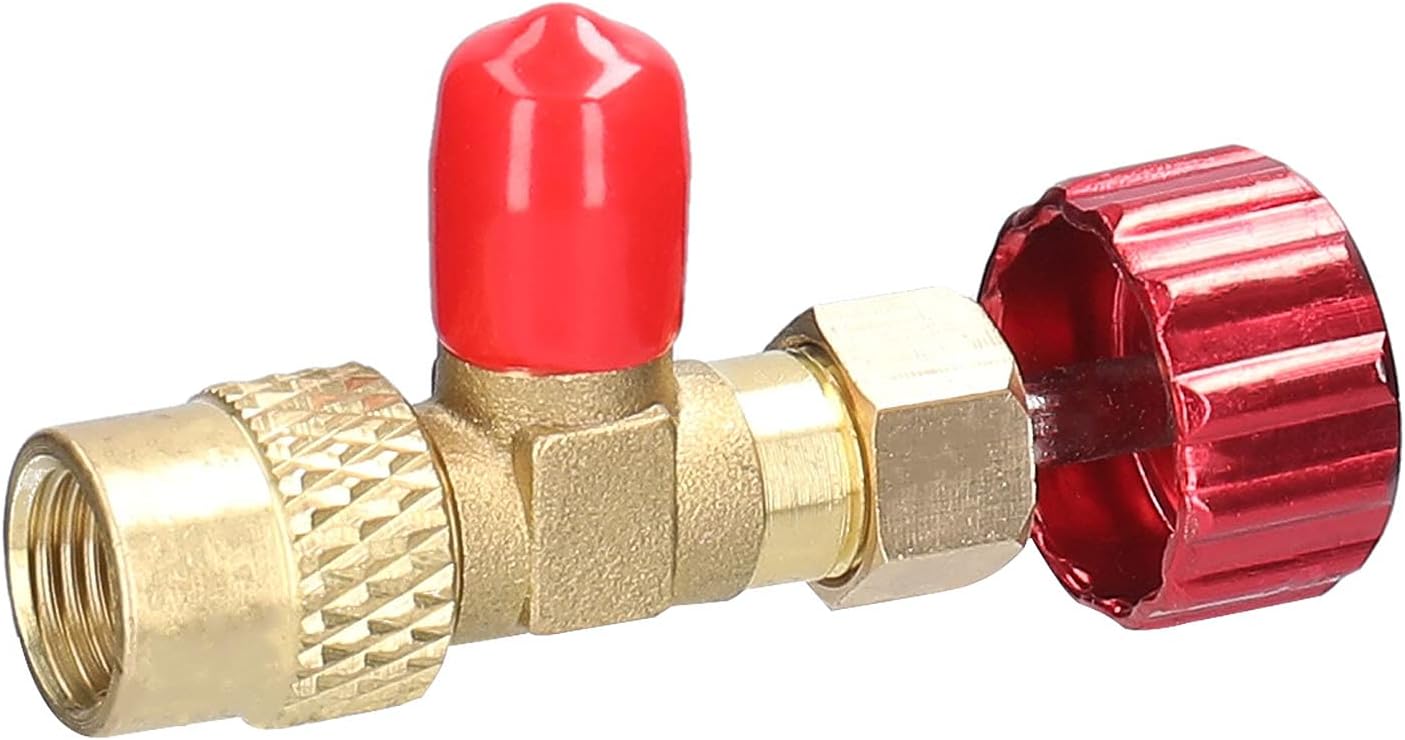
Figure 4: Detailed view of the red safety valve, designed for R410 refrigerant systems with a 5/16 SAE interface.
Operating Instructions
The safety valves are designed for simple operation. The knob on top of each valve controls the flow of refrigerant.
- Opening the Valve: To allow refrigerant flow, turn the knob clockwise (usually marked "ON" or with an arrow indicating flow direction) until it is fully open. This will depress the Schrader valve in the AC system's service port, allowing refrigerant to pass through.
- Closing the Valve: To stop refrigerant flow, turn the knob counter-clockwise (usually marked "OFF" or with an arrow indicating no flow) until it is fully closed. This will retract the pin, sealing the service port and allowing you to disconnect your hoses without significant refrigerant loss.
- Refrigerant Charging/Recovery: Follow standard HVAC procedures for charging or recovering refrigerant, using your manifold gauges in conjunction with these safety valves. Always ensure the valve is closed before disconnecting hoses to prevent refrigerant release.
Important Safety Note: Refrigerant can cause frostbite and other injuries. Always work in a well-ventilated area and wear appropriate safety gear. If you are unsure about any procedure, consult a qualified HVAC technician.
Maintenance
Proper maintenance ensures the longevity and reliable performance of your Tidrop Safety Valve Kit.
- Cleaning: After each use, wipe down the valves with a clean, dry cloth to remove any dirt, oil, or refrigerant residue. Avoid using harsh chemicals that could damage the copper or rubber seals.
- Inspection: Before each use, visually inspect the valves and adapter for any signs of wear, damage, or corrosion. Pay close attention to the threads and the sealing surfaces. Replace the unit if any significant damage is observed.
- Storage: Store the safety valves and adapter in a clean, dry place, away from direct sunlight and extreme temperatures. Keeping them in their original packaging or a protective case is recommended to prevent damage.
Troubleshooting
If you encounter issues while using your Tidrop Safety Valve Kit, refer to the following common problems and solutions:
| Problem | Possible Cause | Solution |
|---|---|---|
| Refrigerant Leakage | Loose connections, damaged O-rings/seals, incorrect valve selection. | Ensure all connections are tight. Inspect O-rings and seals for damage and replace if necessary. Verify the correct valve (R22 or R410) is used for the system. |
| Difficulty Turning Knob | Debris in mechanism, corrosion, overtightening. | Clean the valve thoroughly. Apply a small amount of appropriate lubricant if necessary. Do not overtighten the knob. |
| No Refrigerant Flow | Valve not fully open, system service port blocked, incorrect connection. | Ensure the valve knob is turned fully to the "ON" position. Check the AC system's service port for obstructions. Verify correct valve and adapter usage. |
Specifications
| Feature | Detail |
|---|---|
| Brand | Tidrop |
| Model Name | Safety Valve Kit |
| Material | Copper |
| Connections | 1/4 SAE, 5/16 SAE |
| Refrigerant Compatibility | R22, R410 |
| Adapter Included | 5/16 SAE to 1/4 SAE |
| Manufacturer | BSAJM-E17773 |
| UPC | 738769650562 |
Warranty Information
No specific warranty information is provided in the product details. For details regarding warranty coverage, please refer to the product packaging or contact your point of purchase.
Customer Support
For technical assistance, product inquiries, or support, please contact your retailer or the manufacturer, Tidrop. Please have your product model information and purchase details ready when contacting support.