
Introduction
Thank you for choosing the MAXIMA Sumo Triply Stainless Steel Pressure Cooker. This manual provides essential information for the safe and efficient operation, maintenance, and care of your new appliance. Please read all instructions carefully before first use and retain this manual for future reference.
This pressure cooker features a high-quality triply stainless steel construction, ensuring even heat distribution and durability. It is designed for use on both induction and gas stoves, offering versatility in your kitchen.
Product Overview and Features
The MAXIMA Sumo Pressure Cooker is engineered for efficient and safe cooking. Its design incorporates several key features for user convenience and food quality.

Image: The MAXIMA Sumo Triply Stainless Steel Pressure Cooker, showcasing its sleek design and robust construction, surrounded by fresh vegetables.
Key Features:
- Triply Stainless Steel Construction: Ensures even heat distribution, preventing hot spots and promoting uniform cooking.
- Safety Lid Design: Prevents opening when pressure is still inside, enhancing user safety.
- Food-Grade Silicon Gasket: Durable and long-lasting, ensuring a tight seal for efficient pressure cooking.
- Sturdy Handles: Provides a secure and comfortable grip for safe handling.
- Induction and Gas Stove Compatible: Versatile for various cooking surfaces.
- Dishwasher Safe: Designed for easy cleaning.

Image: A detailed view highlighting the key safety components of the pressure cooker: the heat-resistant valve cap, the pressure lock safety lid, and the rubber gasket.
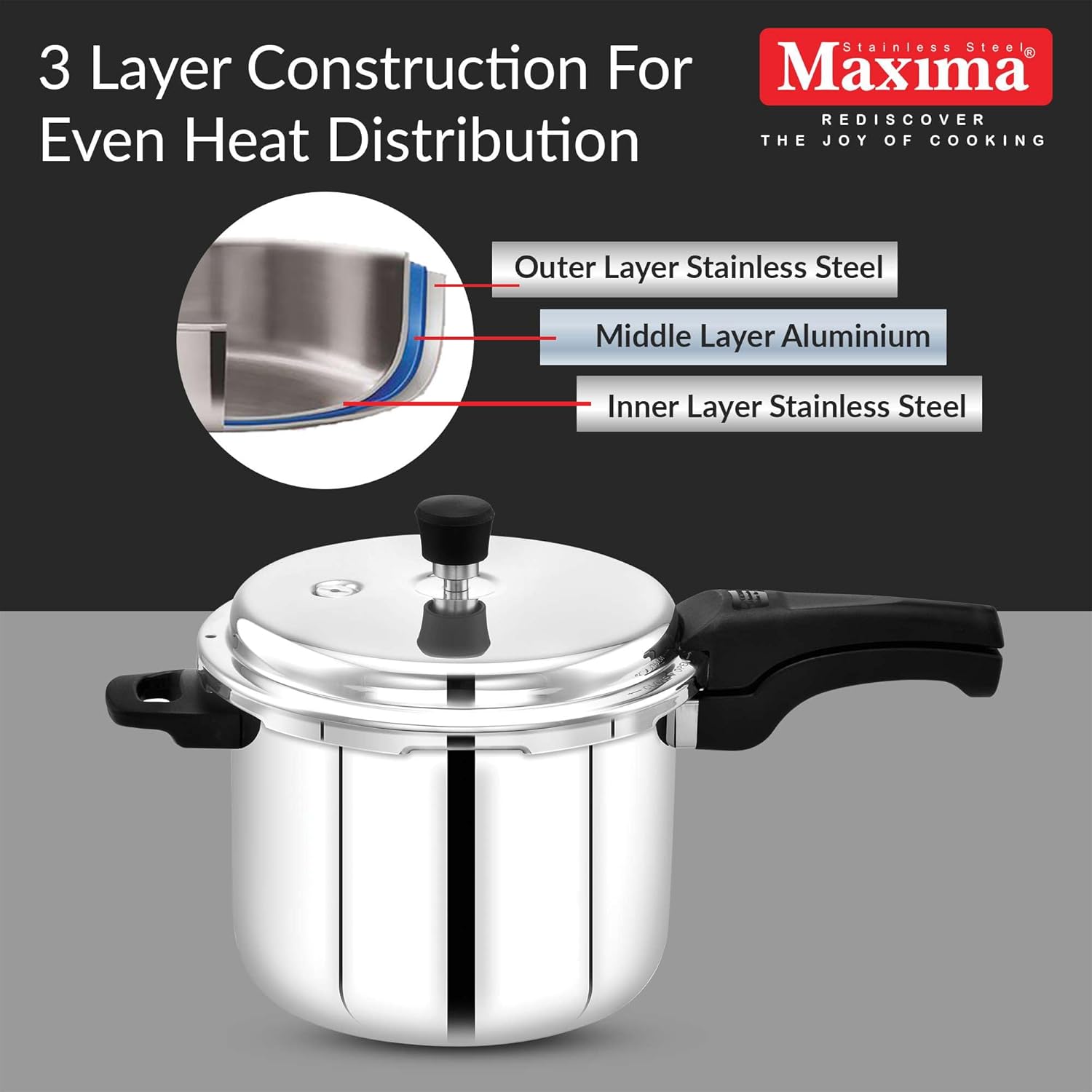
Image: An exploded diagram illustrating the triply construction of the cooker base, showing the outer stainless steel layer, middle aluminum layer, and inner stainless steel layer for optimal heat distribution.
Setup and First Use
- Unpacking: Carefully remove all packaging materials and inspect the pressure cooker for any damage. Ensure all components are present: cooker body, lid, gasket, and weight valve.
- Initial Cleaning: Before first use, wash the cooker body, lid, and all removable parts (gasket, weight valve) with warm soapy water. Rinse thoroughly and dry completely.
- Gasket Placement: Ensure the silicon gasket is properly seated in the groove on the underside of the lid. It should fit snugly and evenly.
- Safety Valve Check: Verify that the safety valve on the lid is clear and free from any obstructions.
Operating Instructions
- Add Ingredients: Place your food and the required amount of liquid into the pressure cooker. Do not fill the cooker more than two-thirds full for most foods, and no more than half full for foods that expand (e.g., rice, beans).
- Close the Lid: Place the lid onto the cooker body, aligning the arrows or marks on the lid and body. Rotate the lid handle until it locks securely into place. Ensure the gasket is properly sealed.
- Apply Heat: Place the pressure cooker on your stove (gas or induction). Use a high heat setting.
- Pressure Build-Up: Steam will begin to escape from the vent pipe. Once a steady stream of steam is visible, place the weight valve (pressure regulator) onto the vent pipe. The cooker will then begin to build pressure.
- Cooking Time: Once the weight valve begins to whistle or rock steadily, reduce the heat to maintain a gentle, consistent pressure. Begin timing your recipe from this point.
- Pressure Release: After cooking, turn off the heat. There are two primary methods for releasing pressure:
- Natural Release: Allow the cooker to cool down naturally. The pressure indicator will drop, and the lid will unlock when all pressure has been released. This method is ideal for foods that benefit from additional cooking time, such as stews and roasts.
- Quick Release (under cold water): For faster pressure release, carefully place the cooker under a stream of cold tap water, avoiding the weight valve and steam vent, until the pressure indicator drops and the lid unlocks. This method is suitable for delicate foods like vegetables. Caution: Do not force the lid open.
- Open the Lid: Once all pressure is released and the lid unlocks, carefully open the lid away from your face to avoid residual steam.
Maintenance and Cleaning
Proper maintenance ensures the longevity and safe operation of your pressure cooker.
- Daily Cleaning: After each use, wash the cooker body, lid, and all removable parts with warm soapy water. Rinse thoroughly and dry immediately to prevent water spots and mineral buildup.
- Dishwasher Safe: The MAXIMA Sumo Pressure Cooker is fully immersible and dishwasher-friendly. Ensure all parts are properly placed in the dishwasher.
- Gasket Care: Regularly inspect the silicon gasket for cracks, hardening, or damage. Replace the gasket if it shows signs of wear to maintain a proper seal. Remove the gasket from the lid for thorough cleaning and allow it to dry completely before reinserting.
- Vent Pipe and Safety Valve: Ensure the vent pipe and safety valve are clear of food particles or blockages. Use a small brush or toothpick if necessary to clean them. A blocked vent pipe can prevent pressure from building or releasing safely.
- Storage: Store the pressure cooker with the lid inverted or slightly ajar to allow air circulation and prevent odors.
Troubleshooting
If you encounter issues with your pressure cooker, refer to the following common problems and solutions:
| Problem | Possible Cause | Solution |
|---|---|---|
| Steam leaking from under the lid | Gasket improperly seated, worn gasket, food debris on rim, lid not closed properly. | Ensure gasket is correctly seated. Clean lid rim and gasket. Replace worn gasket. Ensure lid is securely locked. |
| Pressure not building | Insufficient liquid, vent pipe blocked, lid not sealed, heat too low. | Add more liquid. Clean vent pipe. Ensure lid is sealed. Increase heat. |
| Lid cannot be opened after cooking | Pressure still inside the cooker. | Do not force the lid. Ensure all pressure has been released (pressure indicator dropped). If necessary, run cold water over the lid (avoiding the vent) to cool it down. |
| Food sticking to the bottom | Insufficient liquid, heat too high for too long. | Ensure adequate liquid. Reduce heat once pressure is reached. |
Specifications
- Brand: MAXIMA
- Model: Sumo Pressure Cooker
- Capacity: 1.5 Liters
- Material: Triply Stainless Steel
- Color: Silver
- Finish Type: Stainless Steel
- Special Features: Dishwasher Safe, Induction Compatible Base
- Control Method: Manual
- Operation Mode: Manual
- Closure Type: Outer Lid
- Included Components: Pressure Cooker Body, Lid, Gasket, Weight Valve
Warranty and Support

Image: The MAXIMA Triply Sumo Pressure Cooker, prominently displaying a '5 Years Warranty' badge, emphasizing product reliability.
The MAXIMA Sumo Triply Stainless Steel Pressure Cooker comes with a 5-year warranty from the date of purchase, covering manufacturing defects under normal household use. Please retain your purchase receipt as proof of purchase.
For warranty claims, technical support, or any product-related inquiries, please contact MAXIMA customer service through the contact information provided on the product packaging or the official MAXIMA website.
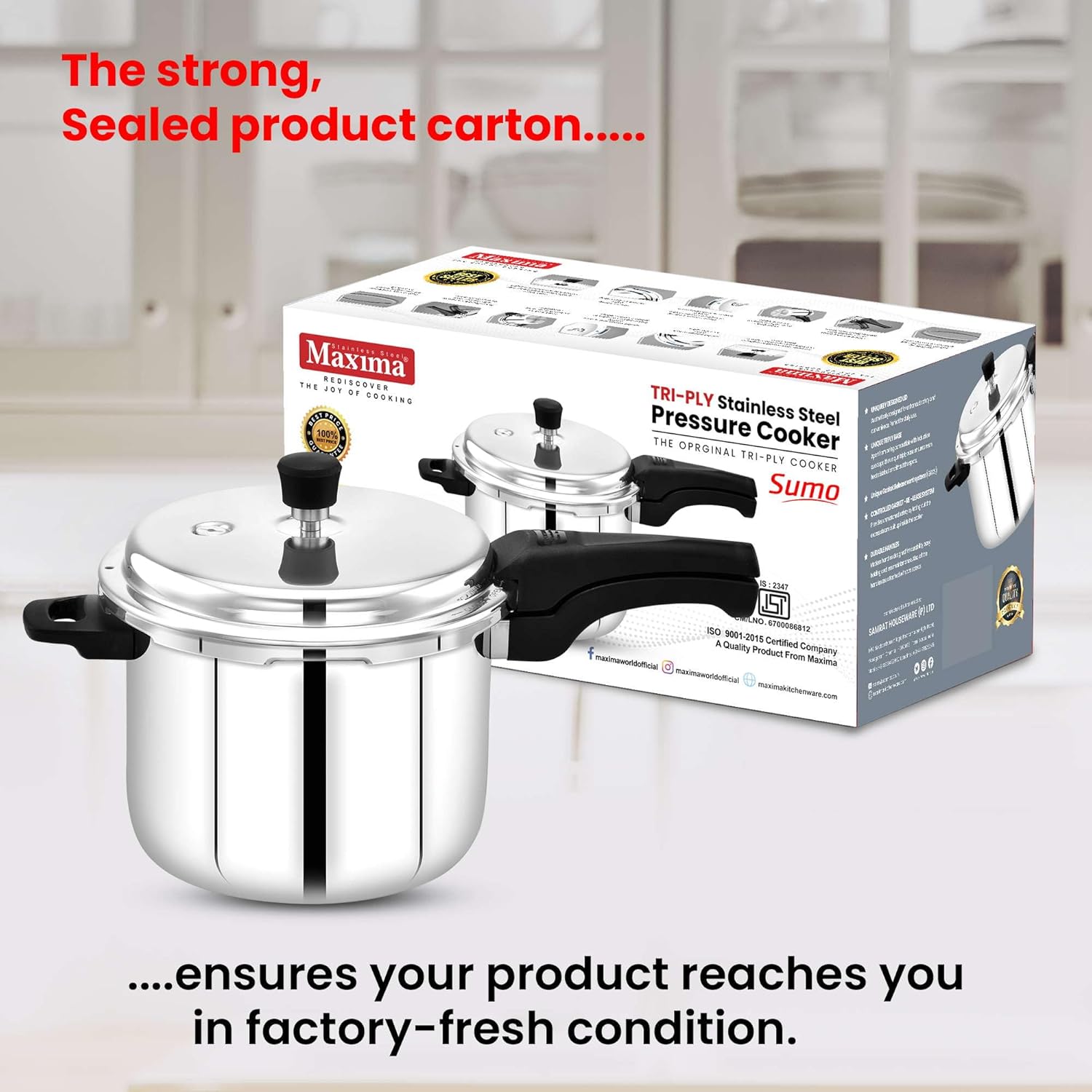
Image: The MAXIMA Sumo Pressure Cooker displayed alongside its sealed product carton, indicating secure packaging for delivery.