
Introduction
The ATNSINC INMP441 is a high-performance, low-power, digital output, omnidirectional MEMS microphone module. It features a 24-bit I2S interface, making it suitable for direct connection to digital processors like DSPs and microcontrollers, including ESP32, without requiring an external audio codec. This module is designed for applications requiring high precision and natural sound reproduction.
Key Features
- High-performance, low-power digital output omnidirectional MEMS microphone.
- Integrated MEMS sensor, signal conditioning, analog-to-digital converter, anti-aliasing filter, and power management.
- Standard 24-bit I2S interface for direct digital processor connection.
- High signal-to-noise ratio (SNR) for clear audio capture.
- Flat wideband frequency response for natural sound reproduction.
- Suitable for near-field applications.
Setup and Connection
The INMP441 module utilizes an I2S interface for digital audio transmission. Proper connection to your microcontroller or DSP is crucial for functionality.
Pin Definitions
| Pin | Description |
|---|---|
| SCK | Serial Data Clock for I2S interface. |
| WS | Word Select for I2S interface (Left/Right channel selection). |
| L/R | Left/Right Channel Selection. Connect to GND for left channel, VDD for right channel. |
| SD | Serial Data Output. |
| VDD | Power Supply (typically 3.3V). |
| GND | Ground. |
Connection Diagram
Refer to the image below for a visual representation of the module's pins and general layout.
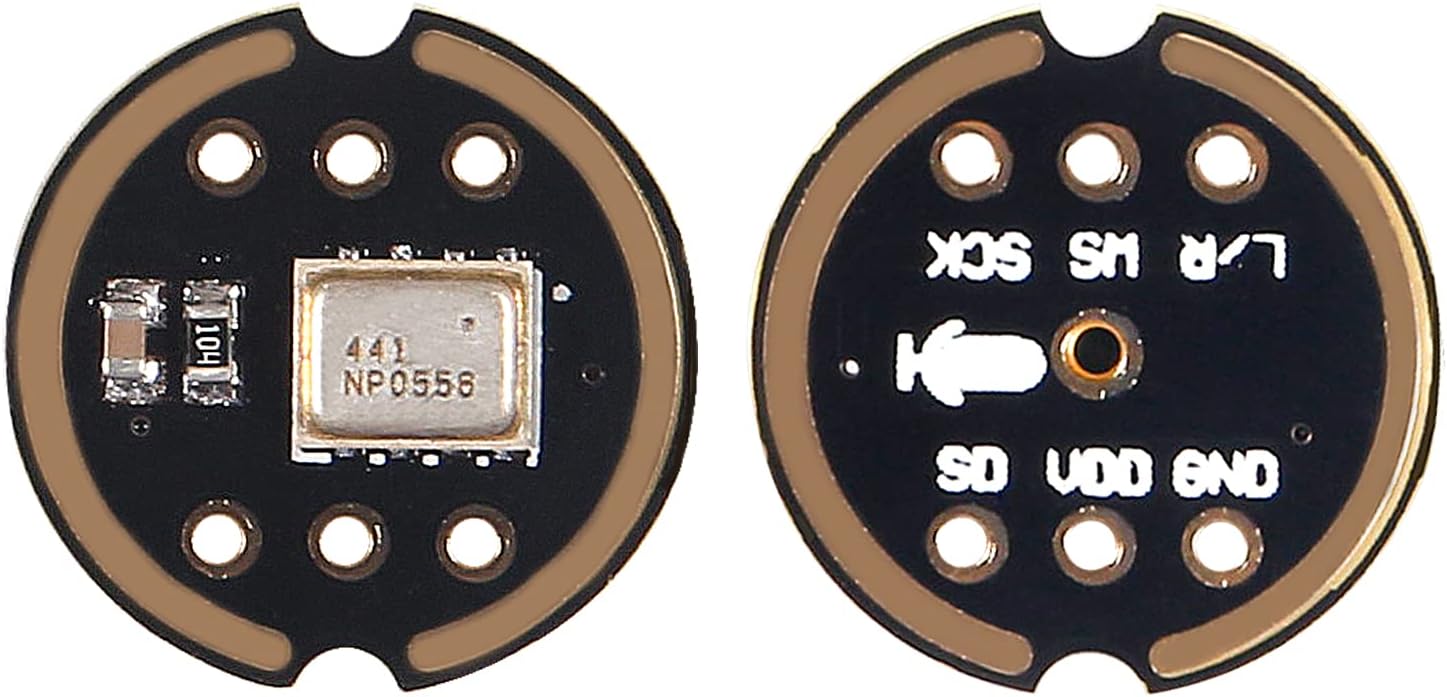
Image: Front and back view of the INMP441 module. The front shows the MEMS sensor and passive components, while the back labels the six connection pins: L/R, WS, SCK, SD, VDD, and GND.

Image: The INMP441 module shown alongside two sets of male header pins, which can be soldered to the module for easier breadboard or PCB connection.

Image: An angled view of the INMP441 module with male header pins soldered into place, illustrating how it appears when ready for use.
Operating Considerations
The INMP441 is an omnidirectional microphone, meaning it captures sound equally from all directions. This characteristic offers certain advantages and requires specific considerations for optimal performance.
Omnidirectional Characteristics
- High Sensitivity: The module is highly sensitive, capable of picking up subtle sounds.
- Wide Pickup Radius: It captures audio from a broad area, making it suitable for recording ambient sound or multiple speakers.
- Ambient Noise: Due to its wide pickup, the microphone may also capture more ambient noise. For applications requiring very clean audio, consider implementing noise reduction techniques in your software or hardware setup.
Application Notes
- Collective Use: Ideal for scenarios like small meetings, ad-hoc discussions, or remote operations where multiple sound sources need to be captured without individual microphone placement.
- Wiring Simplicity: The omnidirectional nature often simplifies wiring compared to setups requiring multiple directional microphones.
- Sound Quality: While providing broad coverage, the sound quality for a single, focused source might not be as precise as a dedicated single-point (directional) microphone unless effective noise reduction is applied.
Technical Specifications
The following table details the key technical specifications of the ATNSINC INMP441 module.
| Feature | Detail |
|---|---|
| Microphone Type | Omnidirectional MEMS |
| Interface | I2S (24-bit) |
| Signal-to-Noise Ratio (SNR) | High |
| Frequency Response | Flat Wideband |
| Power Management | Integrated |
| Supported Processors | DSPs, Microcontrollers (e.g., ESP32) |
| Operating System Compatibility | FreeRTOS, Linux |
| Item Weight | 0.634 ounces |
| Package Dimensions | 3.86 x 2.83 x 0.59 inches |
Module Dimensions
The INMP441 module has compact dimensions, as illustrated below.

Image: Top-down view of the INMP441 module, showing its approximate dimensions of 14mm x 14mm.
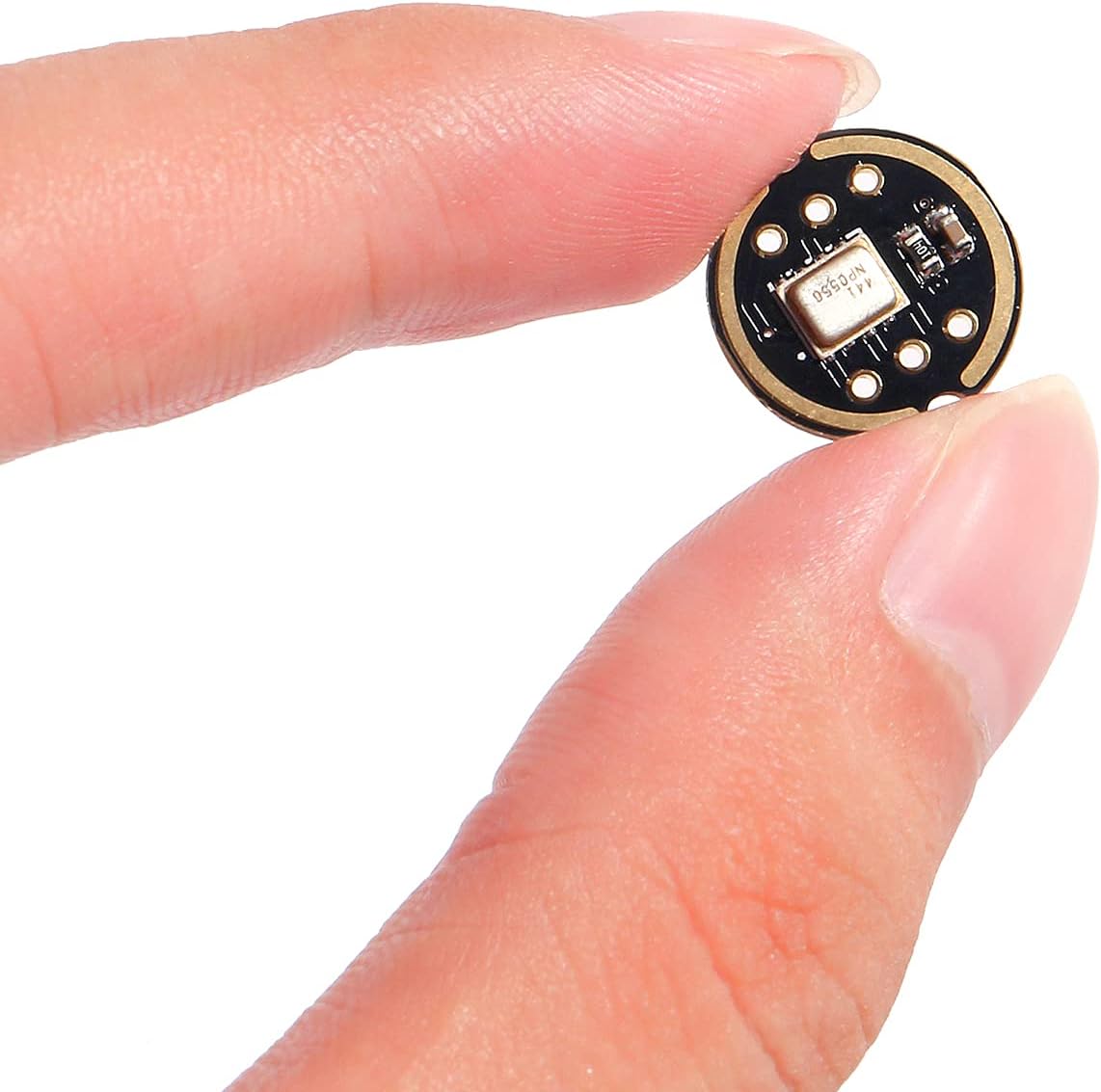
Image: The INMP441 module held between two fingers, demonstrating its compact and miniature size.
Troubleshooting
- No Audio Output:
- Verify all pin connections (SCK, WS, L/R, SD, VDD, GND) are correct and secure.
- Ensure the power supply (VDD) is within the specified operating voltage range (typically 3.3V).
- Check your I2S configuration in the microcontroller/DSP code. Incorrect clock settings or channel selection can prevent audio data transfer.
- Confirm the L/R pin is correctly set for the desired channel (GND for left, VDD for right).
- Poor Audio Quality / Excessive Noise:
- As an omnidirectional microphone, it will pick up ambient noise. Consider physical placement to minimize unwanted sound sources.
- Implement digital noise reduction algorithms in your software.
- Ensure proper grounding to avoid electrical interference.
- Check for loose connections or cold solder joints if pins were manually attached.
- Module Not Detected:
- Double-check power and ground connections.
- Ensure the I2S clock (SCK) and word select (WS) signals are being generated correctly by your host device.
- Consult your microcontroller's I2S documentation for specific setup requirements.
Warranty and Support
For warranty information and technical support, please refer to the official ATNSINC product page or contact ATNSINC customer service directly. Keep your purchase receipt for warranty claims.