
Introduction
The Philips Avent Natural baby bottle is designed to support your baby's natural feeding rhythm, mimicking the experience of breastfeeding. It features a Natural Response nipple that releases milk only when your baby actively drinks, allowing them to control the pace of feeding. This manual provides essential information for the safe and effective use, cleaning, and maintenance of your Philips Avent Natural baby bottle.

Image: Philips Avent Natural Baby Bottle, 9oz, with its packaging, highlighting key features like the Natural Response Nipple, no-drip design, and anti-colic valve.
Key Features
- Natural Response Nipple: Designed to work with your baby's natural drinking rhythm, releasing milk only when actively sucking.
- No-Drip Design: Prevents spills and lost milk, ensuring a clean feeding experience.
- Anti-Colic Valve: Integrated into the nipple to reduce air ingestion, minimizing colic and discomfort.
- Wide Breast-Shaped Nipple: Mimics the shape and feel of a breast for easy latch-on and comfortable feeding, facilitating combination feeding.
- Ergonomic Shape: Easy for parents to hold and for small fingers to grasp.
- BPA-Free Material: Made from polypropylene, ensuring safety for your baby.
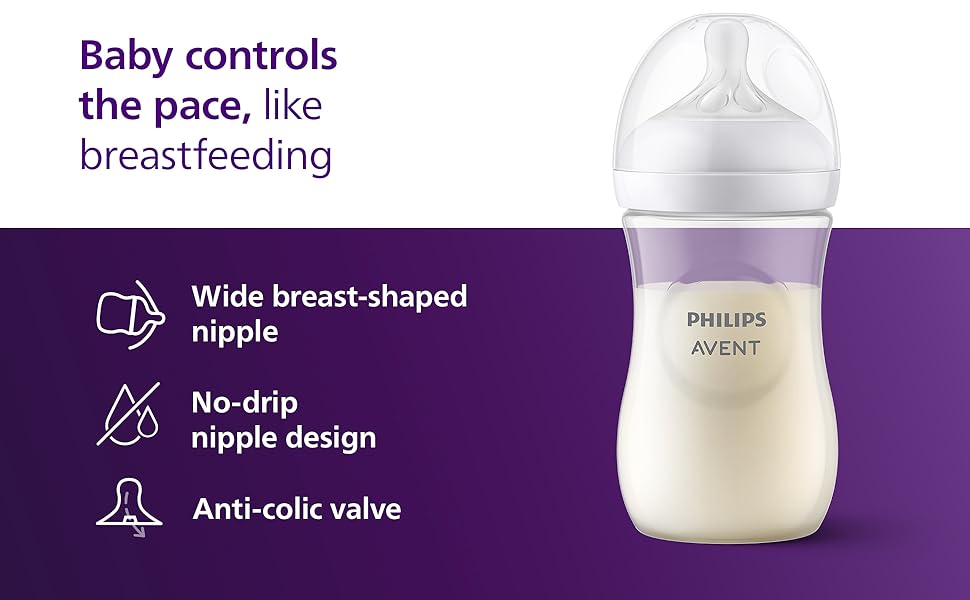
Image: An illustration highlighting the wide breast-shaped nipple, no-drip design, and anti-colic valve of the Philips Avent Natural bottle.
Setup & Assembly
Before first use, disassemble all parts and clean them thoroughly. Sterilize all components according to the cleaning instructions.
Assembly Steps:
- Ensure all parts are clean and sterilized.
- Insert the Natural Response nipple into the screw ring from the top, pulling it until it is securely seated.
- Place the assembled nipple and screw ring onto the bottle and twist clockwise until tight.
- Fill the bottle with the desired amount of milk or formula.
- Place the dome cap over the nipple to keep it hygienic when not in use.
Operating Instructions (Feeding)
The Natural Response nipple is designed to allow your baby to control the flow of milk, similar to breastfeeding. Milk will only be released when your baby actively compresses the nipple with their tongue and gums.
Feeding Guidance:
- Always check the milk temperature before feeding your baby.
- Position the nipple correctly in your baby's mouth, ensuring a wide latch.
- Observe your baby's feeding cues. They will pause to swallow and breathe, during which milk flow will stop, just like during breastfeeding.
- The bottle comes with a Medium Flow nipple (Flow 3). Philips Avent offers 5 different nipple flow rates (Extra Slow, Slow, Medium, Fast, Extra Fast) to match your baby's drinking rhythm.
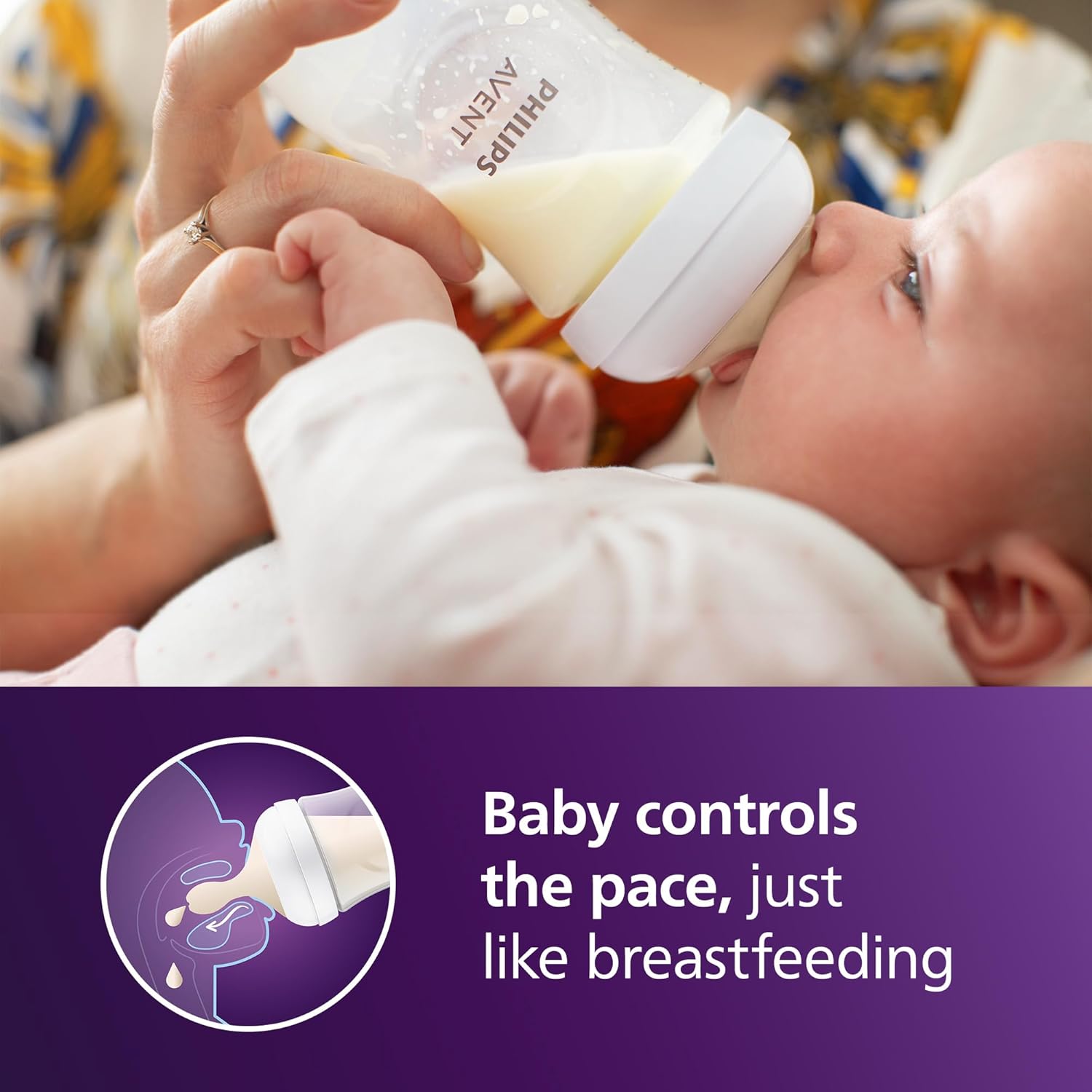
Image: A baby being fed with the Philips Avent Natural bottle, demonstrating the natural feeding position.

Image: A visual guide to Philips Avent Natural Response Nipple flow rates (1-5), with recommendations for when to try a lower or higher flow based on baby's feeding behavior.
Maintenance & Cleaning
Proper cleaning and sterilization are crucial for your baby's health.
Cleaning Instructions:
- Disassemble all parts of the bottle (bottle, nipple, screw ring, dome cap).
- Wash all components thoroughly in warm, soapy water using a soft brush or sponge. Ensure all milk residue is removed.
- Rinse all parts completely under clean running water.
- The bottle and its components are dishwasher safe (top rack only).
Sterilization:
After cleaning, sterilize all parts using one of the following methods:
- Boiling: Place all disassembled parts in a pot of boiling water for 5 minutes. Ensure parts do not touch the sides of the pot to prevent damage.
- Steam Sterilizer: Use a Philips Avent steam sterilizer or another suitable sterilizer according to its instructions.
- Microwave Sterilizer: Use a microwave sterilizer according to its instructions.
Store clean and sterilized parts in a dry, covered container.
Troubleshooting
- Milk not flowing or flowing too slowly:
- Ensure the nipple is correctly assembled and not blocked.
- Check if the nipple flow rate is appropriate for your baby's age and feeding style. It is natural for babies to take 2-3 tries to get milk flowing from a new bottle.
- Consider trying a higher flow nipple if your baby seems frustrated or takes a long time to feed.
- Milk flowing too fast or baby gulping:
- Ensure the nipple is correctly assembled.
- Consider trying a lower flow nipple if milk is leaking from your baby's mouth or they are gulping excessively.
- Colic or discomfort:
- The integrated anti-colic valve is designed to reduce air ingestion. Ensure it is clean and functioning correctly.
- Ensure your baby is latched properly to the nipple.
- Leakage:
- Ensure all parts are correctly assembled and tightened.
- Check the nipple and screw ring for any damage or wear. Replace if necessary.
Product Specifications
| Feature | Detail |
|---|---|
| Model Number | SCY903/01 |
| Product Dimensions | 2.8 x 2.8 x 6.54 inches |
| Item Weight | 3.89 ounces (0.24 Pounds) |
| Material Composition | 80% plastic, 20% silicone |
| Material Free | BPA Free |
| Number Of Items | 1 (bottle with nipple) |
| Style | Natural |
| Dishwasher Safe | Yes |
| Bottle Nipple Type | Vented |
| Bottle Type | Vented Bottle |

Image: A display of various Philips Avent Natural bottle sizes, including 4oz, 9oz, and 11oz options.
Safety Information
- Always use this product with adult supervision.
- Never use feeding nipples as a soother.
- Continuous and prolonged sucking of fluids will cause tooth decay.
- Always check food temperature before feeding.
- Keep all components not in use out of children's reach.
- Inspect before each use and pull the feeding nipple in all directions. Throw away at the first signs of damage or weakness.
Warranty & Support
Specific warranty information for this product is not provided in the available data. For detailed warranty terms, product support, or to purchase replacement parts, please visit the official Philips Avent website or contact their customer service directly. You can find more information at the AVENT Store on Amazon.


