
1. Introduction
This manual provides essential information for the safe and effective installation, operation, and maintenance of your WEIJIA Washer Drive Motor, part numbers W10623547 and W10890624. This motor is designed to replace original parts in various washing machine brands, restoring proper function to your appliance.
The drive motor is a critical component responsible for spinning the washer's spin basket and driving the agitator or spin basket during agitation or tumbling cycles.
2. Safety Information
WARNING: Risk of Electric Shock and Injury
- Always disconnect power to the washer by unplugging it from the electrical outlet or turning off the circuit breaker before attempting any repairs or installation.
- Wear appropriate personal protective equipment, including work gloves, to protect your hands from sharp edges and potential injury.
- If you are unsure about any step, consult a qualified appliance repair technician.
- Ensure the work area is well-lit and clear of obstructions.
- Do not operate the washer with the motor exposed or improperly installed.
3. Product Overview and Compatibility
The WEIJIA Washer Drive Motor (Part Number W10890624, also replaces W10623547) is a direct replacement part for a wide range of washing machines.
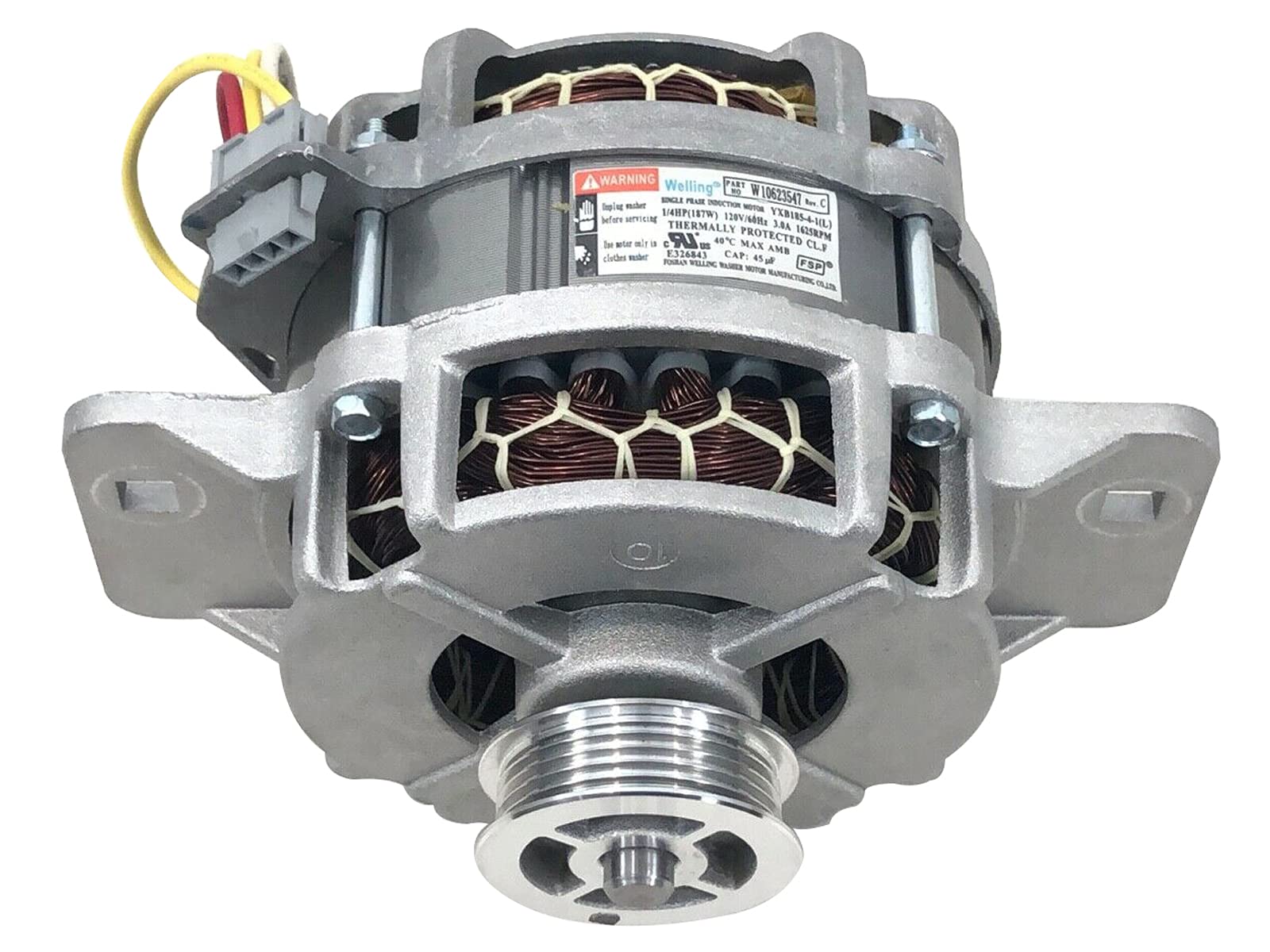
Figure 1: WEIJIA Washer Drive Motor W10890624. This image shows the overall structure of the motor, including the pulley system and electrical connector.
3.1. Key Functions
- Spins the washer's spin basket during the spin cycle.
- Drives the agitator or spin basket during the agitation or tumbling mode.
3.2. Compatible Brands
This drive motor is compatible with washers from the following brands:
- Whirlpool
- Roper
- Admiral
- Maytag
- Hardwick
- Jenn-Air
- Estate
- Magic Chef
- Crosley
- Inglis
- Norge
- Modern Maid
- Amana
- Kenmore
- KitchenAid
- Caloric
- Ikea
3.3. Replaces Old Part Numbers
This motor replaces the following part numbers:
- 4455462
- AP6030697
- EAP11765723
- PS11765723
- W10623547
4. Installation Instructions
Note: Installation of this part requires basic mechanical skills and familiarity with appliance repair. If you are uncomfortable performing this repair, seek professional assistance.
4.1. Tools Required
- Screwdrivers (Phillips and flathead)
- Socket/Nut driver set
- Work gloves
- Flashlight (optional)
4.2. Step-by-Step Installation
- Disconnect Power: Unplug the washer from the electrical outlet. This is a critical safety step.
- Access the Motor: Depending on your washer model, you may need to tilt the washer back, lay it on its side, or remove access panels to reach the drive motor. Refer to your specific washer's service manual for detailed access instructions.
- Locate the Motor: Identify the existing drive motor. It is typically located at the bottom of the washer, connected to the transmission via a belt.
- Disconnect Wiring: Carefully disconnect the electrical wiring harness from the old motor. Note the orientation of the wires if they are not color-coded or keyed.
- Remove Drive Belt: Carefully remove the drive belt from the motor pulley. You may need to release tension on the belt tensioner if present.
- Unmount Old Motor: Remove the bolts or screws securing the old motor to the washer frame. Carefully remove the old motor.
- Install New Motor: Position the new WEIJIA drive motor in place and secure it with the mounting bolts/screws. Ensure it is firmly seated.
- Reattach Drive Belt: Reinstall the drive belt onto the new motor's pulley and the transmission pulley. Ensure the belt is properly aligned and tensioned.
- Reconnect Wiring: Connect the electrical wiring harness to the new motor. Double-check that all connections are secure.
- Reassemble Washer: Reattach any access panels or components that were removed.
- Test Operation: Plug the washer back into the electrical outlet. Run a short cycle (e.g., rinse and spin) to verify proper operation and check for any unusual noises or leaks.

Figure 2: Bottom view of the drive motor. This perspective shows the mounting points and the central shaft.

Figure 3: Close-up of the electrical connector. Ensure proper connection during installation.

Figure 4: Close-up of the motor pulley. The drive belt connects here.
5. Operation Principles
Once installed, the drive motor operates under the control of the washer's main control board. It receives electrical signals to perform specific functions during different cycles:
- Agitation/Tumbling: The motor rotates in specific patterns to move the agitator or tumble the clothes, facilitating the washing process.
- Spin Cycle: The motor rapidly spins the inner basket to extract water from the clothes.
The motor's speed and direction are precisely controlled to ensure efficient and effective washing and drying.
6. Maintenance
The WEIJIA Washer Drive Motor is designed for long-term, maintenance-free operation. However, regular inspection of related components can help prolong the life of your appliance:
- Drive Belt: Periodically inspect the drive belt for signs of wear, cracks, fraying, or looseness. Replace the belt if it shows any damage.
- Motor Mounts: Check that the motor mounting bolts remain tight. Loose mounts can cause excessive vibration and noise.
- Electrical Connections: Ensure the wiring harness connections to the motor are secure and free from corrosion.
Always disconnect power to the washer before performing any inspections or maintenance.
7. Troubleshooting
If your washer exhibits symptoms related to motor failure after installation, review the following common issues. This guide assumes the motor itself is the primary concern.
| Symptom | Possible Cause | Solution |
|---|---|---|
| Washer will not start or agitate/spin | Incorrect wiring connection; faulty lid switch; faulty control board; motor not receiving power. | Verify all electrical connections to the motor are secure. Check the lid switch for continuity. Consult a technician for control board diagnosis. |
| Unusual noises (grinding, humming) | Motor bearing issue (less likely with new motor); obstruction around motor/pulley; loose motor mounts; worn drive belt. | Inspect for obstructions. Ensure motor mounts are tight. Check drive belt condition. |
| Motor gets hot quickly | Overload (e.g., basket not shifting correctly, too much laundry); faulty capacitor (if applicable); internal motor issue. | Ensure washer is not overloaded. Check for proper shifting mechanism function. If issues persist, professional diagnosis is recommended. |
| Motor runs but basket does not spin/agitate | Broken or slipped drive belt; faulty transmission; stripped pulley. | Inspect and replace drive belt if necessary. Check pulley for damage. Transmission issues require further diagnosis. |
| Motor hums but does not turn | Stuck motor; faulty capacitor (if applicable); wiring issue. | Disconnect power and try to manually turn the motor shaft to check for seizure. Verify wiring. |
Disclaimer: This troubleshooting guide is for informational purposes only. Always prioritize safety and disconnect power before inspecting any components. If you are unable to resolve the issue, contact a qualified appliance repair technician.
8. Specifications
| Feature | Detail |
|---|---|
| Part Numbers | W10623547, W10890624 |
| Voltage | 120 Volts |
| Speed | 1625 RPM |
| Current (Approx.) | 3 Amps (as per product description) |
| UPC | 769366910124 |
| Manufacturer | WEIJIA |
9. Support and Warranty
For technical assistance or warranty inquiries regarding your WEIJIA Washer Drive Motor, please refer to the retailer where the product was purchased or contact WEIJIA customer support directly. Keep your purchase receipt as proof of purchase.
Specific warranty terms and conditions may vary. Please consult the product packaging or the manufacturer's official website for detailed warranty information.