
1. Introduction
Thank you for purchasing the Amewi AMXFlight L-39 Albatros RC Aeroplane. This model is a high-performance, remote-controlled jet designed for experienced pilots. Constructed from durable EPO foam, it offers a robust and agile flight experience. This manual provides essential information for the safe assembly, setup, operation, and maintenance of your aircraft. Please read this manual thoroughly before operating the model to ensure safe and correct usage.
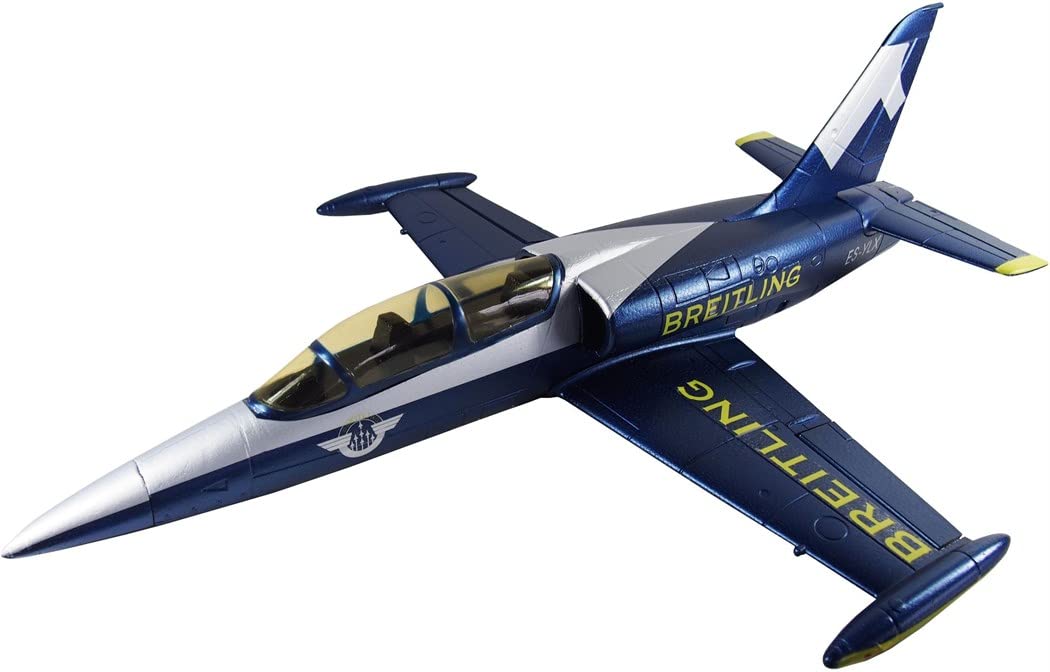
Image 1.1: The Amewi AMXFlight L-39 Albatros RC Aeroplane, featuring a blue and silver Breitling-inspired design. This image displays the full aircraft from a slight angle, highlighting its sleek jet profile and wing structure.
2. Safety Information
Operating a remote-controlled aircraft requires caution and adherence to safety guidelines to prevent injury or damage. This model is intended for teenagers, young adults, and adults. It is not a toy.
- Always operate in open areas: Choose a large, clear flying field away from people, buildings, trees, and power lines.
- Maintain visual contact: Always keep the aircraft in sight and do not fly beyond your visual range.
- Check weather conditions: Do not fly in strong winds, rain, or other adverse weather.
- Battery safety: Use only recommended LiPo batteries and chargers. Never overcharge or discharge batteries. Store batteries in a safe, fireproof location. Disconnect the battery from the aircraft when not in use.
- Propeller/Impeller safety: The impeller jet can cause severe injury. Keep hands, face, and loose clothing away from the impeller when the battery is connected.
- Pre-flight checks: Before each flight, ensure all control surfaces move correctly, the battery is fully charged, and the transmitter is functioning properly.
- Respect local regulations: Be aware of and comply with all local laws and regulations regarding RC aircraft operation.
3. Package Contents
The Amewi AMXFlight L-39 Albatros is a Plug-N-Play (PNP) model, meaning the main components are pre-installed. Please inspect the package contents upon receipt to ensure all items are present and undamaged.
- AMXFlight L-39 Albatros aircraft body (with pre-installed motor, ESC, and servos)
- Wing set
- Horizontal and vertical stabilizers
- Landing gear set
- Small parts bag (screws, pushrods, etc.)
- Instruction Manual
Items required for operation (not included):
- 6-channel 2.4GHz RC transmitter and receiver
- 3S 11.1V LiPo battery (with XT60 connector)
- Compatible LiPo battery charger
4. Assembly
As a PNP model, the assembly of the L-39 Albatros is straightforward. Follow these steps carefully:
- Wing Installation: Carefully slide the main wings onto the fuselage. Secure them using the provided screws or locking mechanism as indicated in the diagrams (refer to specific diagrams in the printed manual for detailed steps). Ensure the wing wires are connected to the appropriate servo leads inside the fuselage.
- Tail Assembly: Attach the horizontal and vertical stabilizers to the rear of the fuselage. Ensure they are correctly aligned and secured. Connect the elevator and rudder pushrods to their respective control horns and servos.
- Landing Gear: Install the main landing gear and nose gear. Ensure they are firmly seated and can withstand landing forces.
- Receiver Installation: Mount your 2.4GHz receiver securely inside the fuselage, away from the ESC and motor wires to minimize interference. Connect the servo leads from the wings and tail to the corresponding channels on your receiver.
Double-check all connections and ensure all screws are tightened before proceeding to setup.
5. Setup
Proper setup is crucial for safe and stable flight.
- Transmitter Binding: Follow your transmitter's instructions to bind it with your receiver. Ensure a solid connection is established.
- Control Surface Check: With the transmitter and receiver powered on, and the flight battery connected (impeller clear!), verify that all control surfaces (ailerons, elevator, rudder) move in the correct direction relative to your stick inputs. Adjust servo reverse settings on your transmitter if necessary.
- Control Throws: Set appropriate control throws (the amount of movement for each control surface) on your transmitter. Start with recommended low rates for initial flights and adjust as you gain experience.
- Center of Gravity (CG): The correct CG is critical for stable flight. Refer to the specific CG location marked on the underside of the wings or specified in the detailed manual. Adjust the battery position within the fuselage to achieve the recommended CG. A nose-heavy aircraft will be more stable but less agile; a tail-heavy aircraft will be unstable and difficult to control.
- ESC Calibration: If required, calibrate the Electronic Speed Controller (ESC) with your transmitter's throttle stick. Consult the ESC manual for specific instructions. The Hobbywing 20A ESC is pre-installed.
6. Operating
Before your first flight, ensure you are familiar with basic RC flight principles and have practiced on a simulator if possible.
- Pre-Flight Checklist:
- Battery fully charged and secured.
- Transmitter battery charged.
- Control surfaces move freely and correctly.
- All connections secure.
- Flying area clear and safe.
- Take-off: Hand launch the aircraft into the wind with a firm, level throw at approximately 75-100% throttle. Alternatively, if equipped with functional landing gear, perform a smooth take-off from a suitable runway. Gradually increase throttle and apply gentle elevator input to lift off.
- Flight Controls: Use the ailerons for roll, elevator for pitch (climb/dive), and rudder for yaw (directional control). Coordinate these controls for smooth maneuvers.
- Landing: Approach the landing area into the wind. Reduce throttle gradually and maintain sufficient airspeed to avoid a stall. Gently flare (pull back on the elevator) just before touchdown to reduce speed and achieve a soft landing.
- Post-Flight: Disconnect the flight battery immediately after landing. Inspect the aircraft for any damage.
7. Maintenance
Regular maintenance will extend the life of your AMXFlight L-39 Albatros.
- Cleaning: Wipe down the aircraft with a soft, damp cloth after each flight to remove dirt and debris. Avoid using harsh chemicals.
- Damage Inspection: Regularly check the EPO foam airframe for cracks or dents. EPO foam is easy to repair using foam-safe glues. Inspect control surfaces, hinges, and pushrods for wear or damage.
- Motor and ESC: Ensure the motor spins freely and there are no obstructions in the impeller. Check the ESC for any signs of overheating or damage.
- Battery Care: Store LiPo batteries at a storage voltage (approximately 3.8V per cell) when not in use for extended periods. Do not store fully charged or fully discharged.
- Storage: Store the aircraft in a cool, dry place, away from direct sunlight and extreme temperatures.
8. Troubleshooting
This section addresses common issues you might encounter.
| Problem | Possible Cause | Solution |
|---|---|---|
| Aircraft does not power on | Disconnected battery, discharged battery, faulty ESC/receiver | Check battery connection, charge battery, inspect ESC/receiver wiring. |
| Controls unresponsive | Transmitter/receiver not bound, faulty servo, loose connection | Re-bind transmitter/receiver, check servo connections, replace faulty servo. |
| Poor flight stability | Incorrect CG, control throws too high, damaged airframe | Adjust battery for correct CG, reduce control throws, inspect and repair airframe. |
| Motor not spinning | ESC not armed, motor/ESC fault, battery issue | Ensure throttle is at zero for ESC arming, check motor/ESC connections, test with a different battery. |
If you encounter issues not listed here, or if the suggested solutions do not resolve the problem, please contact Amewi customer support or your retailer.
9. Specifications
Key technical specifications for the Amewi AMXFlight L-39 Albatros (Model 24095):
- Model: AMXFlight L-39 Albatros
- Model Number: 24095
- Brand: Amewi
- Material: Expanded Polypropylene Foam (EPO)
- Color: Blue / Silver (Breitling Design)
- Motor: 4300KV Brushless Motor (Powerful drive)
- ESC: Hobbywing 20A with XT60 connector
- Recommended Battery: 3S 11.1V LiPo
- Wingspan: 550 mm (approximate, derived from model name)
- Item Weight: 1120 Grams
- Item Dimensions: 68 x 40 x 12 centimetres (approximate packaging/product dimensions)
- Age Range: Teenager, young adult, adult (14+ years recommended)
10. Warranty and Support
For warranty information, please refer to the documentation provided at the time of purchase or contact your retailer directly. Amewi provides a 1-year EU spare part availability duration.
If you require technical assistance or have questions regarding your Amewi AMXFlight L-39 Albatros, please contact your point of purchase or visit the official Amewi website for support contact details.


