
1. Setup
1.1 Initial Inspection
Upon receiving your adidas Adizero Tortoji 2.0 running shoes, carefully inspect them for any signs of damage or manufacturing defects. Ensure both shoes are present and match the expected model and size.
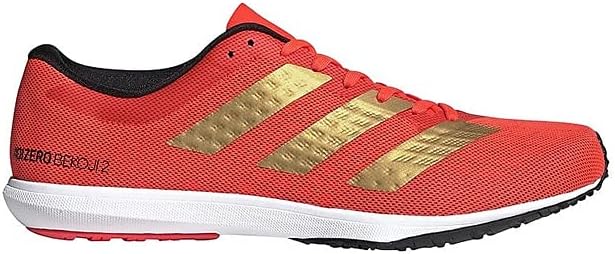
Image: Left side view of the adidas Adizero Tortoji 2.0 running shoe, featuring a red mesh upper, gold adidas stripes, and a white midsole with a black outsole.
1.2 Lacing
Proper lacing is crucial for a secure and comfortable fit. Use the provided laces and ensure they are threaded through all eyelets. Adjust the tension to be snug but not overly tight, allowing for natural foot movement without excessive pressure points.

Image: Close-up of the toe box and lacing system on the adidas Adizero Tortoji 2.0 shoe, highlighting the red mesh material and the gold three-stripe design.
1.3 Fit Assessment
Wear the shoes with your typical running socks. There should be about a thumb's width of space between your longest toe and the end of the shoe. The midfoot should feel secure, and your heel should not slip excessively. Walk and jog briefly to ensure comfort and proper fit before extended use.
2. Operating (Usage)
2.1 Intended Use
The adidas Adizero Tortoji 2.0 (Model BTE61) are designed as lightweight running shoes, suitable for various running activities, including training and racing on roads and tracks. They are engineered for performance and speed.

Image: Angled front view of the adidas Adizero Tortoji 2.0 running shoe, showcasing the toe cap, lacing, and the adidas logo on the tongue.
2.2 Running Surfaces
These shoes are optimized for hard, even surfaces such as asphalt, concrete, and synthetic tracks. While they can be used on light trails, their design prioritizes responsiveness and grip on paved surfaces. Avoid highly uneven or technical terrain to prevent premature wear or injury.
2.3 Water Resistance
Please note that these shoes are Not Water Resistant. Avoid prolonged exposure to wet conditions, as this can affect the shoe's materials, comfort, and performance. If the shoes become wet, follow the drying instructions in the Maintenance section.
3. Maintenance
3.1 Cleaning
To maintain the longevity and appearance of your shoes:
- Remove loose dirt: Use a soft brush or cloth to gently remove any mud or dirt from the upper and outsole.
- Spot clean: For stubborn stains, use a mild soap solution (e.g., dish soap diluted in water) and a soft cloth or sponge. Gently rub the affected area.
- Avoid harsh chemicals: Do not use bleach, strong detergents, or abrasive cleaners, as these can damage the materials.
- Do not machine wash: Machine washing can damage the shoe's structure and materials.
3.2 Drying
If your shoes become wet, follow these steps for proper drying:
- Remove insoles: Take out the insoles to allow for better airflow and faster drying.
- Stuff with paper: Loosely stuff the shoes with newspaper or paper towels to absorb moisture. Replace the paper periodically as it becomes damp.
- Air dry: Place the shoes in a well-ventilated area at room temperature, away from direct sunlight or artificial heat sources (like radiators or dryers). Excessive heat can cause materials to shrink, crack, or deform.
3.3 Storage
Store your shoes in a cool, dry place away from direct sunlight when not in use. Avoid storing them in damp or humid environments, which can promote mold growth or material degradation.
3.4 Regular Inspection
Periodically inspect the outsole for excessive wear, especially in high-impact areas. Check the upper for tears or fraying, and the midsole for any signs of compression or damage. Timely replacement of worn-out shoes is important for continued performance and injury prevention.

Image: Bottom view of the adidas Adizero Tortoji 2.0 running shoe sole, showing the black and red Adiwear rubber outsole pattern and Torsion System branding.
4. Troubleshooting
This section addresses common issues you might encounter with your running shoes.
| Problem | Possible Cause | Solution |
|---|---|---|
| Foot discomfort or pain | Incorrect fit (too tight/loose), improper lacing, worn-out cushioning. | Re-evaluate shoe size and width. Adjust lacing tension. Consider if shoes need replacement due to mileage. |
| Blisters | Friction from ill-fitting shoes or socks, new shoes not broken in. | Ensure proper fit and lacing. Wear appropriate running socks. Gradually break in new shoes. |
| Excessive sole wear | High mileage, specific running gait, use on abrasive surfaces. | Monitor mileage and replace shoes when outsole tread is significantly worn. Consider gait analysis if wear is highly uneven. |
| Squeaking noise | Moisture trapped inside, loose insole, material friction. | Ensure shoes are completely dry. Remove and reinsert insoles. Apply a small amount of baby powder under the insole if needed. |
5. Specifications
Key technical specifications for the adidas Adizero Tortoji 2.0 Running Shoes (Model BTE61):
- Brand: adidas
- Model Number: BTE61
- Department: Unisex
- Closure Type: Lace-Up
- Water Resistance Level: Not Water Resistant
- Sole Thickness: 1.0 inch (2.5 cm)
- Approximate Package Dimensions: 32.8 x 23.4 x 12.6 cm
- Approximate Item Weight: 600 g (package weight)
- Manufacturer: adidas
- First Available Date: 6 November 2025

Image: Detailed view of the heel and midfoot outsole of the adidas Adizero Tortoji 2.0, showing the Adiwear rubber and Torsion System elements for durability and stability.
6. Warranty & Support
For information regarding product warranty, returns, or customer support, please refer to your purchase documentation or contact adidas customer service directly. Warranty terms and conditions may vary based on region and retailer.
You can typically find support contact information on the official adidas website or through the retailer where the product was purchased.
Online Support: Visit the official adidas website for FAQs and contact options.


