
TP-Link TL-WPA7517 KIT
TP-Link Powerline WiFi Extender (TL-WPA7517KIT) User Manual
Model: TL-WPA7517 KIT
1. Introduction
The TP-Link Powerline WiFi Extender (TL-WPA7517KIT) is designed to extend your network using your home's existing electrical wiring. This kit provides fast wired speeds and dual-band Wi-Fi, making it ideal for smart TVs, game consoles, HD video streaming, and lag-free gaming. It offers a plug-and-play setup for quick and seamless wired and wireless connectivity.

Figure 1: The TL-WPA7517KIT includes the TL-WPA7517 Wi-Fi extender and the TL-PA7017 Powerline adapter.
2. Setup Guide
Setting up your TP-Link Powerline WiFi Extender is a straightforward process. Follow these steps for a quick installation:
2.1. Initial Connection (Plug and Play)
Connect the Powerline Adapter (TL-PA7017): Plug the TL-PA7017 adapter into a wall outlet close to your router. Use an Ethernet cable to connect the adapter's Ethernet port to a LAN port on your router.

Figure 2: The TL-PA7017 Powerline adapter connected to a router via Ethernet cable and plugged into a wall outlet.
Connect the Powerline WiFi Extender (TL-WPA7517): Plug the TL-WPA7517 extender into another wall outlet on the same electrical circuit where you want to extend your network. Wait until the Powerline LED (house icon) turns on, indicating a successful powerline connection.
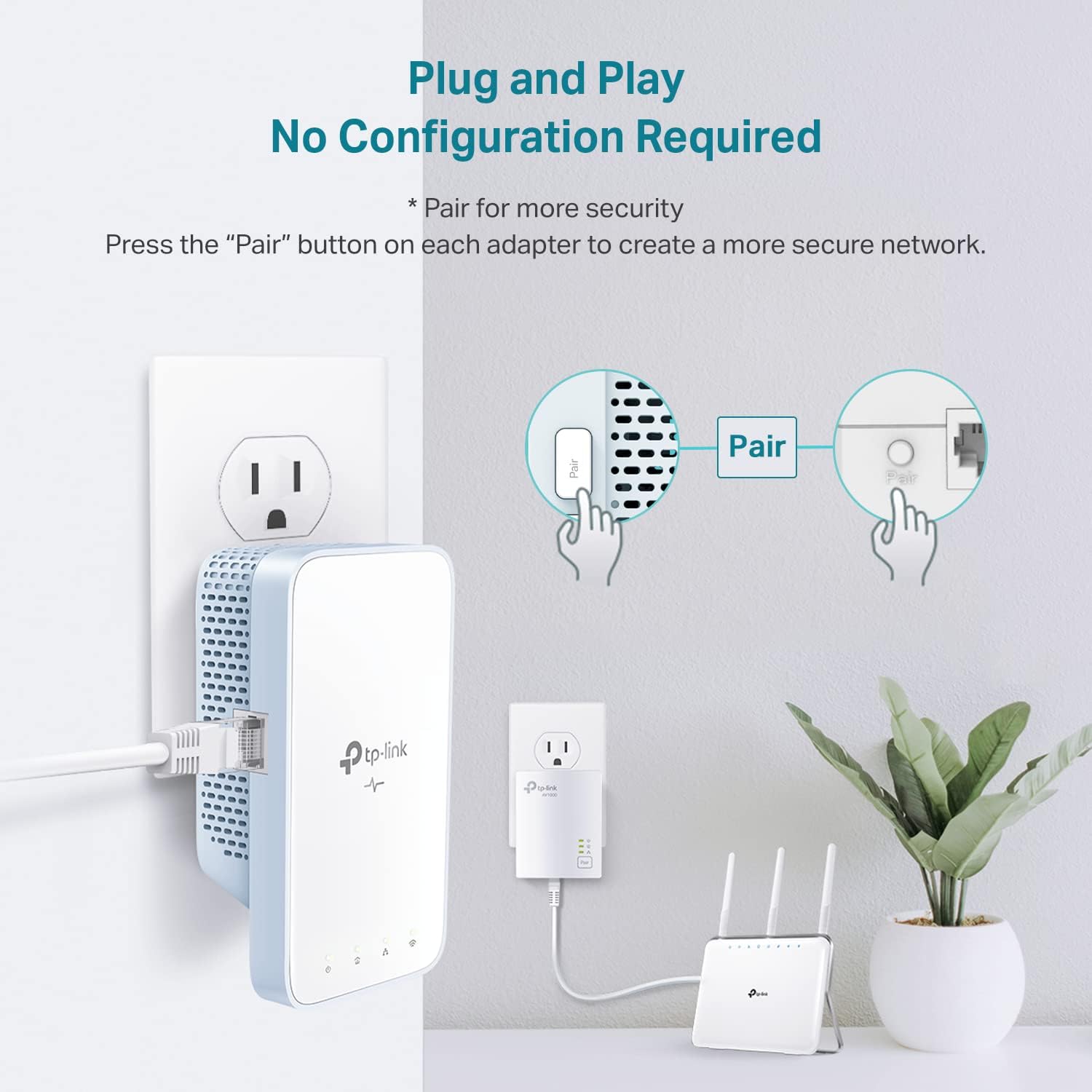
Figure 3: The TL-WPA7517 Wi-Fi extender plugged into a wall outlet, showing the Powerline LED illuminated.
Connect Devices: You can now connect your devices to the internet using the default SSID (network name) and password found on the label at the top of the extender.
2.2. Secure Your Powerline Network by Pairing
To enhance the security of your powerline network, you can pair the devices:
On the TL-PA7017 adapter: Press the Pair button for 1 second. Its Power LED will start blinking.
On the TL-WPA7517 extender: Within 2 minutes, press the extender's Pair button for 1 second. Its Power LED will also start blinking. When the Powerline LED turns on, a secure powerline network has been successfully created.
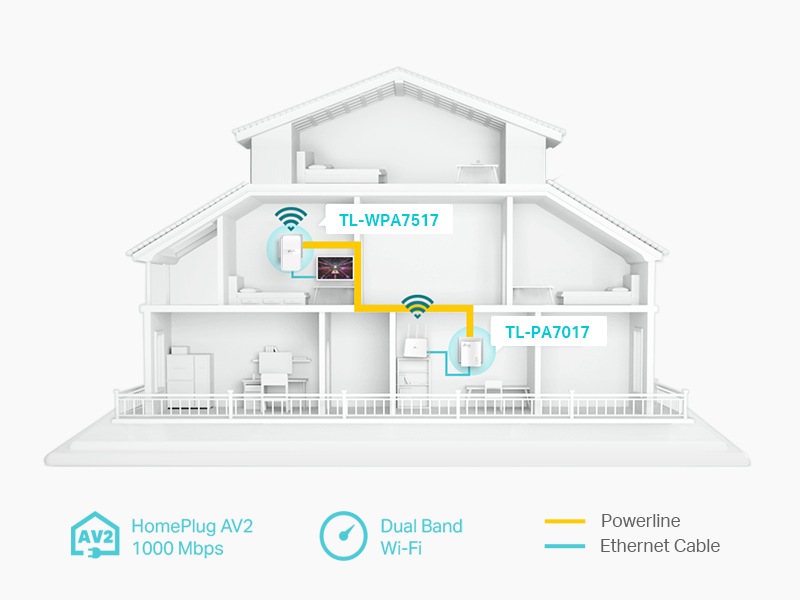
Figure 4: Illustration of pressing the Pair button on both the TL-PA7017 and TL-WPA7517 to establish a secure connection.
2.3. Wi-Fi Clone (One-Touch Wi-Fi Configuration)
The Wi-Fi Clone function allows you to copy your router's Wi-Fi settings (network name and password) to the extender, creating a unified network:
Press the Wi-Fi button on the TL-WPA7517 extender for 1 second. The Wi-Fi LED will start blinking.
Within 2 minutes, press the WPS button on your router. The Wi-Fi LED on the extender will turn solid, indicating that the Wi-Fi settings have been successfully cloned.

Figure 5: Diagram showing the Wi-Fi Clone process, where the extender copies the router's Wi-Fi name and password.
Any setting changes will be automatically applied to the entire powerline network.
3. Operating Your Powerline Network
Once set up, your Powerline WiFi Extender provides seamless network extension. Here are some key operational aspects:
3.1. Network Extension
The Powerline technology uses your home's electrical wiring to transmit network data, eliminating the need for new wires or drilling. This allows the network to pass through walls and floors, providing coverage in areas where Wi-Fi signals might be weak.

Figure 6: Illustration of how Powerline adapters extend network coverage throughout a multi-story home using existing electrical circuits.
3.2. OneMesh Compatibility
The TL-WPA7517KIT is OneMesh compatible. When paired with a TP-Link OneMesh router, it forms a unified mesh network. This provides seamless streaming and uninterrupted connectivity as you move around your home, eliminating dead zones and ensuring a single Wi-Fi name for your entire network.

Figure 7: Diagram showing extended Wi-Fi coverage with OneMesh products, creating a whole-home network.
3.3. Gigabit Ethernet Port
The TL-WPA7517 extender features a Gigabit Ethernet port, allowing you to connect wired devices such as desktop computers, smart TVs, or game consoles for a secure and high-speed connection.
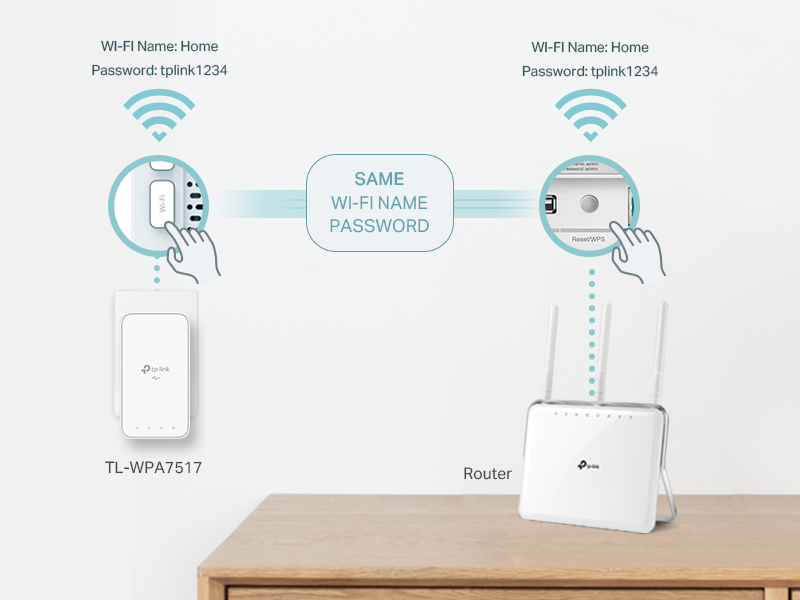
Figure 8: Close-up of the Gigabit Ethernet port on the TL-WPA7517, highlighting its use for various wired devices.
4. Maintenance
Proper maintenance ensures the longevity and optimal performance of your Powerline WiFi Extender.
4.1. LED Control
You can control the LED indicators on your Powerline devices, for example, to turn them off during nighttime to avoid disturbance. This can typically be managed through the TP-Link Tether app or the device's web management interface.
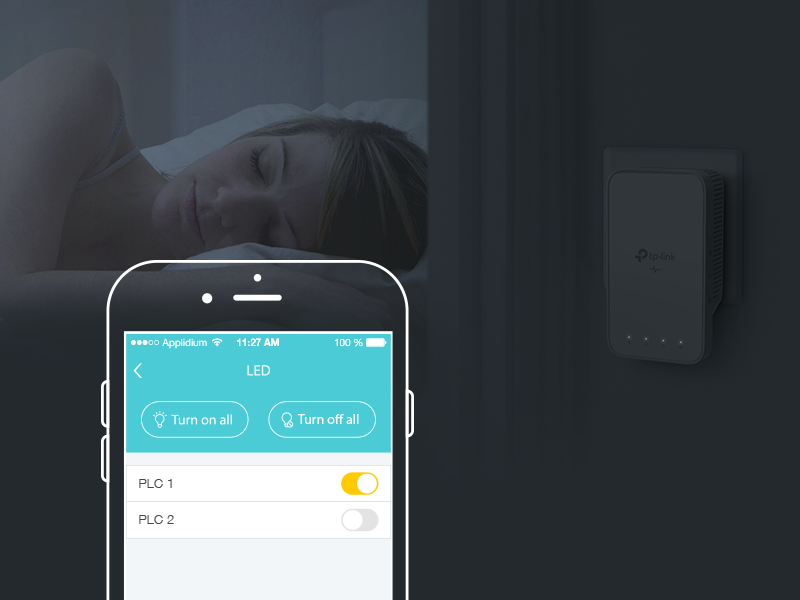
Figure 9: Screenshot of the TP-Link Tether app interface showing options to turn LEDs on or off for connected Powerline devices.
4.2. Firmware Updates
Regularly check for and install firmware updates for your Powerline devices. Firmware updates often include performance improvements, bug fixes, and security enhancements. Visit the TP-Link support website for your model to download the latest firmware and follow the provided update instructions.
4.3. Cleaning
To clean the devices, unplug them from the power outlet and wipe them with a soft, dry cloth. Do not use liquid or aerosol cleaners.
5. Troubleshooting
If you encounter issues with your Powerline WiFi Extender, refer to the following common troubleshooting tips:
No Powerline Connection: Ensure both Powerline devices are plugged into wall outlets on the same electrical circuit. Powerline devices do not work effectively when plugged into power strips, surge protectors, or extension cords. Appliances and devices running on the same circuit may also affect performance.
Slow Speed: Actual data speeds can vary and may be limited by the product's Ethernet port, network conditions (data traffic, electrical noise), and wiring issues. For better performance, ensure devices are on the same electrical circuit and rated for the same HomePlug standard.
Wi-Fi Issues: If Wi-Fi is not extending, ensure the Wi-Fi Clone process was successful. You may need to reset the extender and repeat the Wi-Fi Clone process. Check that your router's WPS function is enabled.
Resetting Devices: If problems persist, you can reset the devices to factory default settings. For the TL-PA7017, press and hold the Pair/Reset button for about 6 seconds until all LEDs turn off and then release. For the TL-WPA7517, press and hold the Pair/Reset button for about 6 seconds until all LEDs turn off and then release.
For more detailed troubleshooting, consult the official TP-Link support resources.
6. Specifications
| Feature | Detail |
|---|---|
| Brand | TP-Link |
| Model Number | TL-WPA7517 KIT |
| Powerline Standard | Homeplug AV2 Compliant |
| Powerline Speed | Up to 1000 Mbps |
| Wi-Fi Speeds | 300 Mbps (2.4GHz), 433 Mbps (5GHz) |
| Ethernet Ports | Gigabit Ethernet Port |
| Compatibility | Compatible with all HomePlug AV and AV2 Standard Powerline adapters. Works with TP-Link OneMesh routers. |
| Operating System Support | Supports Windows 10/8.1/8/7/XP |
| Dimensions | 9.8 x 7.6 x 4 inches (Kit packaging) |
| Weight | 1.28 pounds (Kit packaging) |
| UPC | 845973099688 |
7. Warranty and Support
TP-Link provides support for its products. For warranty information, technical support, and additional resources, please visit the official TP-Link website or refer to the documentation included with your product.
- Official User Guide (PDF): Download User Guide
- Official User Manual (PDF): Download User Manual
- Official Installation Manual (PDF): Download Installation Manual
- TP-Link Support: For free expert support, visit the TP-Link Store on Amazon or their official website.
Please note that warranty service may be subject to the policies of the country where the product was originally purchased.
8. Video Tutorials
Watch these official video tutorials for visual guidance on setting up your TP-Link Powerline Wi-Fi Kit:
How to setup TP-Link Powerline Wi-Fi Kit
This video provides a step-by-step guide on how to set up your TP-Link Powerline Wi-Fi Kit, covering initial connections and pairing processes.
Related documentsTL-WPA7517 KIT


Ask a question about this manual
Ask about setup, troubleshooting, compatibility, parts, safety, or missing instructions. Manuals+ will review the question and use this page’s manual context to help answer it.