
1. Introduction
The VJOYCAR R1 is a universal 3D Head-Up Display (HUD) GPS speedometer designed to enhance driving safety by projecting essential vehicle data directly into your line of sight. Unlike traditional HUDs, the R1 features a 3D reflection display, eliminating the need for windshield film and preventing double images, even under direct sunlight. It operates by collecting data such as speed, trip time, trip distance, satellite quantity, and altitude directly from GPS satellites, ensuring compatibility with all vehicle types, including electric, diesel, hybrid, LPG, trucks, buses, SUVs, and ATVs.
This device connects via a standard USB cable, drawing power from your car's USB port or a car adapter. Its design ensures no interference with your vehicle's engine or computer systems.

Image 1.1: The VJOYCAR R1 3D HUD Head Up Display unit.
2. Package Contents
- VJOYCAR R1 3D HUD Unit
- USB Power Cable
- Anti-slip Mat
- User Manual (this document)
3. Setup and Installation
- Unpack the Device: Carefully remove the HUD unit and all accessories from the packaging.
- Remove Protective Films: Before first use, peel off any protective films from both sides of the display screen.
- Placement: Place the HUD unit on your dashboard in a position that does not obstruct your view of the road. Ensure it is stable. An anti-slip mat is provided for secure placement.
- Connect Power: Connect the provided USB cable to the HUD unit and then to a 5V USB power source in your vehicle. This can be a car USB port or a car adapter.

Image 3.1: Connecting the HUD via USB cable.

Image 3.2: The VJOYCAR R1 HUD is universally compatible with various vehicle types.

Image 3.3: Front and side views of the VJOYCAR R1, illustrating its compact design for dashboard placement.
The HUD is designed to power on and off automatically with your vehicle's engine, simplifying operation.
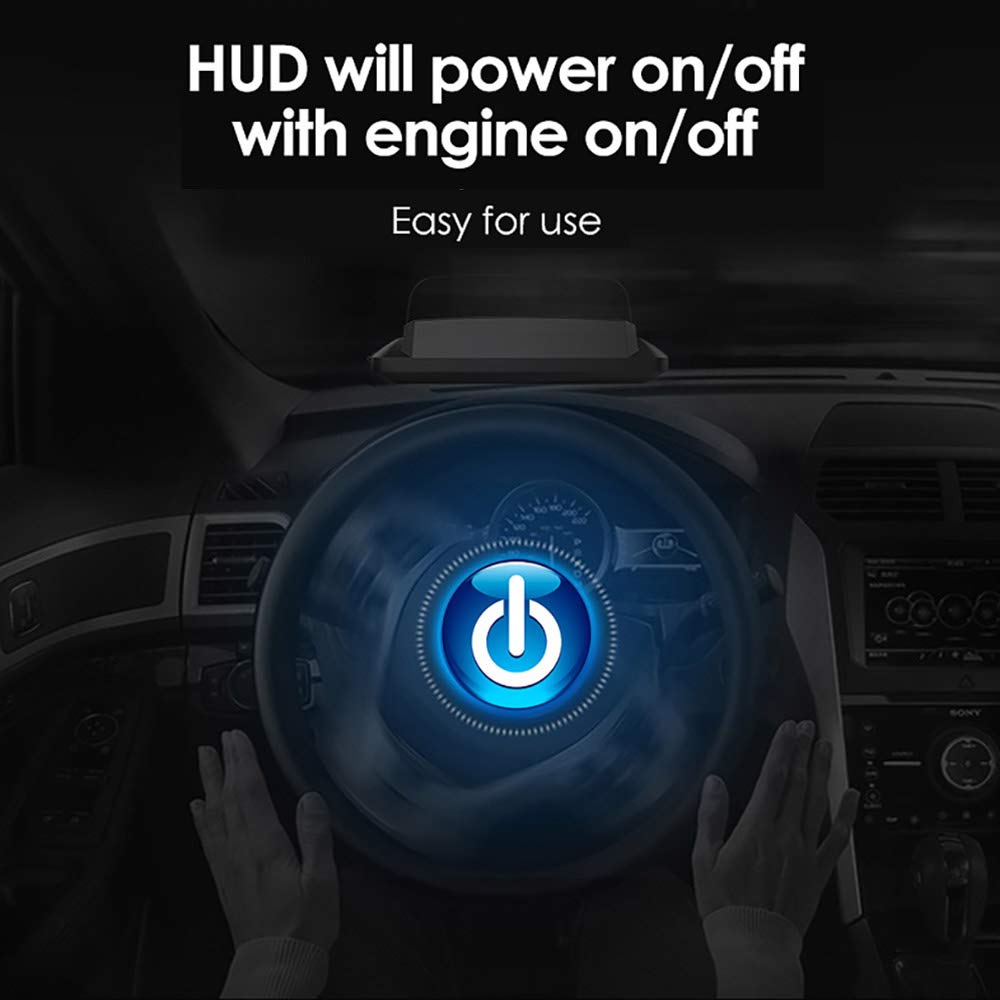
Image 3.4: The HUD automatically synchronizes power with the vehicle's engine.
4. Operating Instructions
4.1 Display Modes
The VJOYCAR R1 offers six different display interfaces, which can be switched to show various combinations of driving data. The default speed unit is MPH, but this can be changed to KM/H in the settings.
- Speed only
- Speed + Real-time Clock
- Speed + Single Driving Distance
- Speed + Altitude
- Speed + Satellite Number
- Speed + Single Driving Time

Image 4.1: Various multi-function display interfaces available on the HUD.
4.2 Alarm Functions
The HUD includes two primary alarm functions to enhance driving safety:
- Overspeed Alarm: This alarm can be configured for a single speed threshold or multiple levels (e.g., 60-100-120-180 MPH/KM/H). Each value can be individually enabled or disabled.
- Fatigue Driving Alarm: This alarm activates after a set duration of continuous driving (e.g., every 4 hours) to remind the driver to take a break.

Image 4.2: Visual representation of the speed alarm and fatigue driving alarm indicators.
4.3 Display Visibility
The 3D reflection display ensures clear visibility in various lighting conditions, including bright daylight and nighttime driving, without requiring additional reflective film on the windshield.

Image 4.3: The HUD display showing clear visibility during both daytime and nighttime driving conditions.
5. Maintenance
To ensure the longevity and optimal performance of your VJOYCAR R1 HUD, follow these simple maintenance guidelines:
- Cleaning: Use a soft, dry, or slightly damp cloth to clean the exterior of the unit. Avoid using harsh chemicals, abrasive cleaners, or solvents, as these can damage the display or casing.
- Storage: When not in use for extended periods, store the device in a cool, dry place away from direct sunlight and extreme temperatures.
- Cable Care: Handle the USB power cable gently. Avoid bending or crimping it excessively to prevent internal damage.
6. Troubleshooting
If you encounter issues with your VJOYCAR R1 HUD, refer to the following common problems and solutions:
| Problem | Possible Cause | Solution |
|---|---|---|
| No display/Unit does not power on | No power supply or faulty connection. | Ensure the USB cable is securely connected to both the HUD and a functional 5V USB power source in the vehicle. Check if the vehicle's USB port or adapter is working. |
| Inaccurate speed reading | Initial GPS signal acquisition delay or calibration needed. | Allow a few moments for the device to acquire a stable GPS signal after powering on. If the inaccuracy persists, contact VJOYCAR customer support for assistance with calibration. |
| No GPS signal / Speedometer useless | Obstruction of GPS signals (e.g., tunnels, parking garages, dense urban areas with tall buildings). | This is a limitation of GPS-based devices. The signal will return once the device has a clear view of the sky. Consider this characteristic when driving in areas prone to signal loss. |
| Display is dim or difficult to read | Brightness settings or extreme ambient light. | The device typically adjusts brightness automatically. Ensure no objects are blocking the light sensor (if present). In very bright direct sunlight, some dimming may occur, but the 3D reflection display is designed to minimize this. |
| Unit does not turn off with engine | Constant power supply from the vehicle's USB port. | Some vehicle USB ports remain powered even when the engine is off. If this occurs, manually unplug the device or use a USB port that powers down with the ignition. |
7. Specifications
| Feature | Detail |
|---|---|
| Model Number | R1 |
| Product Dimensions (L x W x H) | 13.5 x 6.7 x 5.4 cm |
| Item Weight | 0.1 Kilograms (100 g) |
| Material | Acrylonitrile Butadiene Styrene (ABS) |
| Power Supply | USB 5V |
| Data Source | GPS Satellites |
| Display Type | 3D LCD TFT Reflection Display |
| Speed Units | MPH / KM/H (Switchable) |
| UPC | 610521672466 |
8. Support
For further assistance, technical support, or warranty inquiries, please contact VJOYCAR customer service through the retailer where the product was purchased or refer to the official VJOYCAR website for contact information.


