
1. Introduction
This manual provides essential information for the proper setup, operation, and maintenance of your Taylor 814ce Acoustic Guitar. The 814ce model is renowned for its Grand Auditorium body shape, combining exquisite craftsmanship with a rich, balanced sound. It features East Indian rosewood back and sides, a Sitka spruce top, and Taylor's innovative V-Class bracing, designed to enhance volume, sustain, and intonation. The integrated Expression System 2 (ES2) pickup ensures high-fidelity amplified sound.
2. Setup
2.1 Unboxing and Initial Inspection
Carefully remove the guitar from its deluxe hardshell case. Inspect the instrument for any signs of damage that may have occurred during shipping. Ensure all components are present.
2.2 Tuning
Before playing, tune your guitar using a reliable electronic tuner. Standard tuning for a 6-string guitar is E-A-D-G-B-e (from lowest to highest string). New strings may require frequent tuning adjustments as they stretch.

Figure 1: Front view of the Taylor 814ce Acoustic Guitar. This image displays the front of the Taylor 814ce acoustic guitar, highlighting its Sitka spruce top, rosewood pickguard, and V-Class bracing visible through the soundhole.
2.3 Stringing
When replacing strings, use light gauge acoustic guitar strings (e.g., .012-.053). Thread each string through its corresponding bridge pin hole, ensuring the ball end is seated correctly. Wind the string around the tuning machine post, leaving enough slack for 2-3 wraps, then tighten. Ensure the strings are properly seated in the nut and saddle slots.
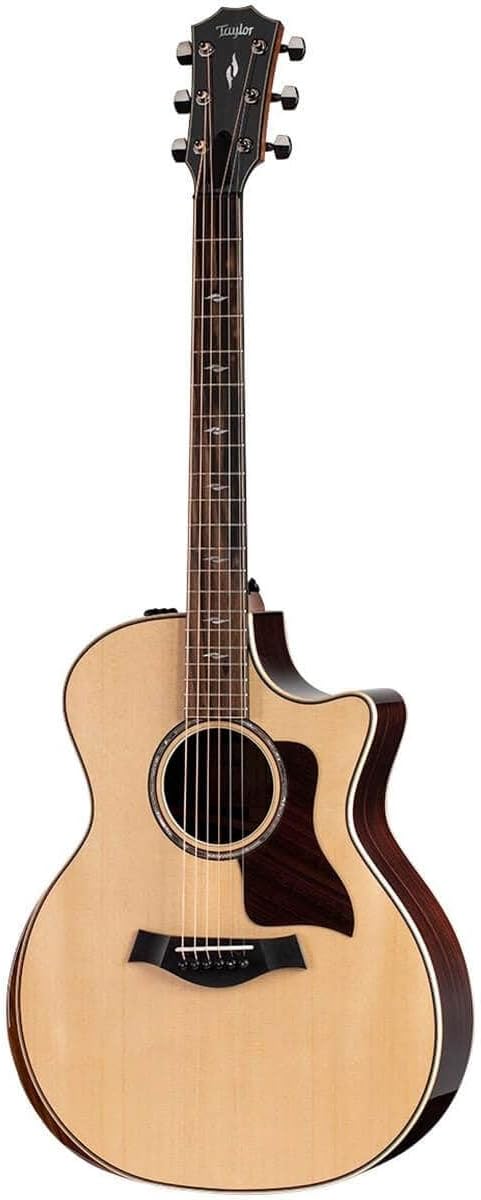
Figure 2: Close-up of the Taylor 814ce guitar's headstock. This image shows a close-up of the Taylor 814ce guitar's headstock, featuring the Taylor logo, tuning machines, and nut.
3. Operation
3.1 Playing Techniques
The Taylor 814ce is versatile and suitable for various playing styles, including flatpicking, strumming, and fingerpicking. Experiment with different attack angles and dynamics to explore its full tonal range.
3.2 Expression System 2 (ES2) Pickup
The ES2 system features three individually calibrated pickup sensors located behind the saddle. These sensors capture the guitar's dynamic range. Connect a standard 1/4" TRS cable from the guitar's endpin jack to an acoustic amplifier or direct box. The ES2 system includes onboard controls for Volume, Bass, and Treble, allowing you to shape your amplified tone.
- Volume Knob: Controls the overall output level.
- Bass Knob: Adjusts the low-frequency response.
- Treble Knob: Adjusts the high-frequency response.
4. Maintenance
4.1 Cleaning
Regularly wipe down your guitar with a soft, lint-free cloth to remove dust and fingerprints. For a deeper clean, use guitar-specific cleaning products. Avoid abrasive cleaners or solvents that can damage the finish.
4.2 Humidity Control
Acoustic guitars are sensitive to changes in humidity. Maintain a relative humidity level between 45% and 55% to prevent wood warping, cracking, or other damage. Use a guitar humidifier in dry environments and store the guitar in its hardshell case when not in use.
4.3 String Replacement
Change strings regularly, typically every 1-3 months depending on playing frequency, to maintain optimal tone and playability. Refer to section 2.3 for stringing instructions.

Figure 3: Back view of the Taylor 814ce Acoustic Guitar. The back of the Taylor 814ce acoustic guitar, showcasing the East Indian rosewood back and sides with a central seam.
5. Troubleshooting
- Poor Tuning Stability: Ensure strings are properly stretched and wound on tuning posts. Check for worn nut slots or bridge saddle. Extreme temperature or humidity changes can also affect tuning.
- Buzzing Strings: This can be caused by low action, uneven frets, or a warped neck. Consult a qualified guitar technician for adjustments.
- No Sound from ES2 Pickup: Check the cable connection, ensure the amplifier is on, and verify the guitar's volume knob is turned up. If issues persist, the battery (if applicable, though ES2 is passive with active preamp) or internal wiring may need inspection by a technician.
- Dull Tone: Old or corroded strings are a common cause. Replace strings regularly. Ensure proper humidity levels, as a dry guitar can sound less resonant.
6. Specifications
| Item Weight | 24 pounds |
| Product Dimensions | 47 x 20.5 x 8.5 inches |
| Model Number | A80400211100007A000 |
| Back Material | Rosewood |
| Body Material | Rock Maple |
| Fretboard Material | West African Crelicam Ebony |
| Guitar Pickup Configuration | Piezoelectric with additional electronics (Expression System 2) |
| Scale Length | 25.5 Inches |
| String Material | Nickel |
| Top Material | Spruce Wood |
| Neck Material Type | Tropical Mahogany |
| Number of Strings | 6 |
| Guitar Bridge System | Fixed |
| Hand Orientation | Right |
| Included Case | Taylor Deluxe Hardshell (Brown) |
7. Warranty and Support
Your Taylor 814ce Acoustic Guitar is covered by a manufacturer's warranty. Please refer to the warranty card included with your purchase or visit the official Taylor Guitars website for detailed warranty terms and conditions. For technical support, service, or parts inquiries, contact Taylor Guitars customer service directly. Always provide your model number (A80400211100007A000) and serial number when seeking support.


