
Introduction
This manual provides essential instructions for the safe installation, operation, and maintenance of your Everbilt HDEFR50W 1/2 HP Cast Iron Effluent Pump with Tethered Switch. Please read this manual thoroughly before installation and operation to ensure proper function and to prevent injury or damage. Keep this manual for future reference.
The Everbilt HDEFR50W is designed for efficient removal of effluent water, capable of handling 1/2 inch solids. Its robust cast iron construction and PSC motor ensure durability and energy efficiency.
Important Safety Information
WARNING: Failure to follow these safety instructions could result in electric shock, fire, serious injury, or death.
- Always disconnect power to the pump before performing any maintenance or service.
- Ensure the pump is properly grounded according to local electrical codes.
- Do not operate the pump with a damaged cord or plug.
- Do not use this pump for flammable or corrosive liquids.
- Keep hands and feet clear of the pump inlet and outlet during operation.
- This pump is equipped with thermal overload protection. If the pump overheats, it will automatically shut off and restart once it cools down. Investigate the cause of overheating if this occurs frequently.
- Installation should be performed by a qualified professional if you are unsure of any steps.
Product Overview
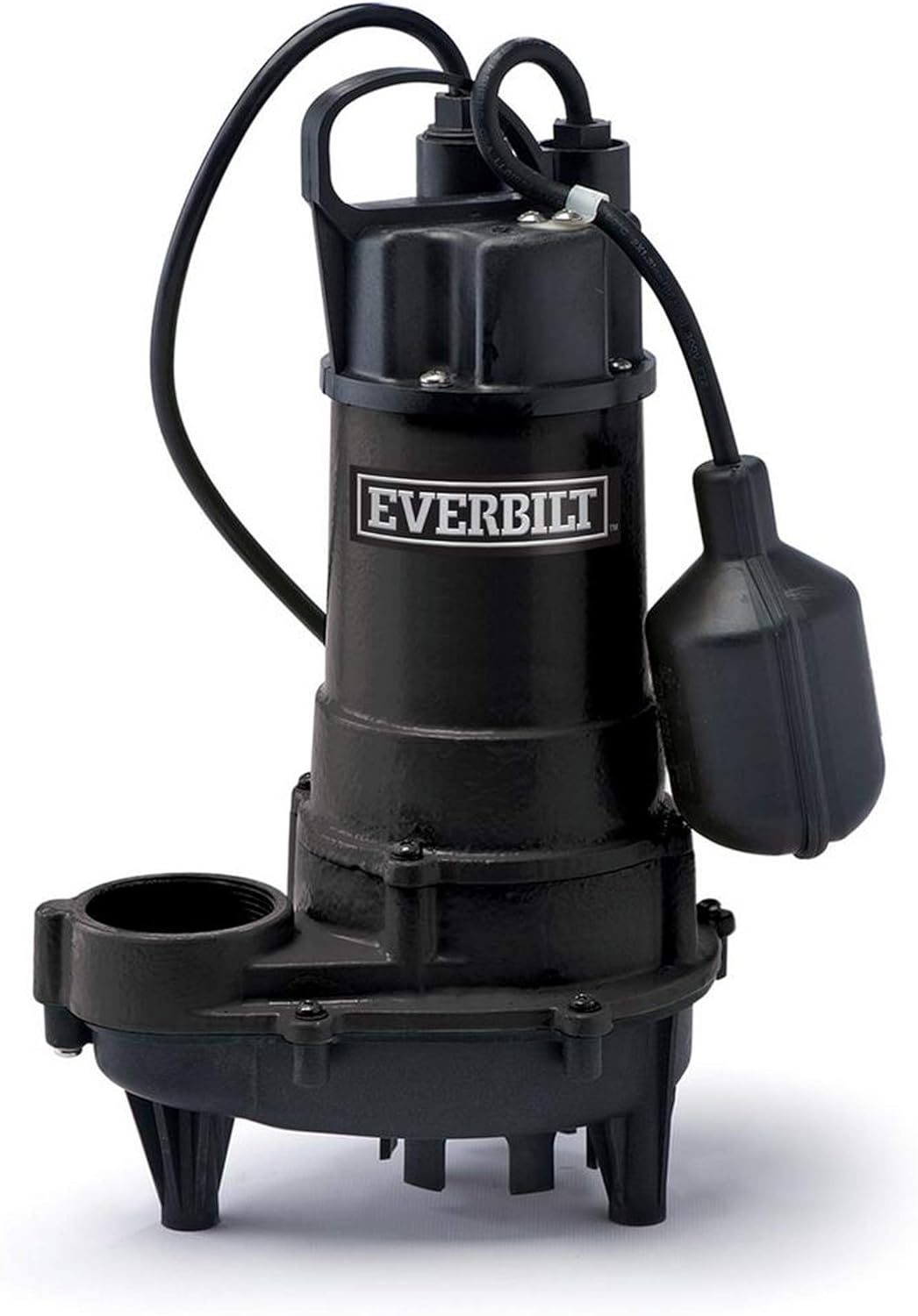
Image: Everbilt HDEFR50W 1/2 HP Effluent Pump. This image displays the black cast iron pump unit with its integrated tethered float switch and power cord. The Everbilt logo is visible on the pump body.
Key Features:
- Heavy-duty cast iron construction: Ensures durability and long service life.
- Piggyback tethered float switch: Allows for automatic or manual operation, providing flexibility in control.
- High pumping capacity: Pumps up to 3180 Gallons Per Hour (GPH) at a 10 ft. lift.
- Thermal overload protection: Safeguards the motor from overheating, extending pump life.
- Effluent handling: Engineered to pass solids up to 1/2 inch in diameter.
Specifications
| Feature | Detail |
|---|---|
| Brand | Everbilt |
| Model Number | HDEFR50W |
| Part Number | HDEFR50W |
| Material | Cast Iron |
| Power Source | Corded Electric |
| Item Weight | 19.1 Pounds |
| Pumping Capacity | Up to 3180 GPH at 10 ft. |
| Solids Handling | 1/2 inch |
| UPC | 858001008774 |
| Package Dimensions | 16.2 x 10.7 x 10 inches |
Setup and Installation
Proper installation is crucial for the efficient and safe operation of your pump. Consult a qualified electrician or plumber if you are uncertain about any steps.
Installation Steps:
- Placement: Position the pump on a solid, level surface in the lowest part of the basin or pit. Ensure it is not resting directly on dirt or gravel, which could clog the intake.
- Discharge Piping: Connect a discharge pipe (typically 1-1/2 inch or 2 inch NPT) to the pump's outlet. Use appropriate fittings and ensure all connections are watertight. A check valve should be installed in the discharge line to prevent backflow.
- Electrical Connection: Connect the pump to a dedicated, properly grounded electrical outlet. Ensure the voltage matches the pump's requirements (typically 120V AC). Do not use extension cords.
- Float Switch Adjustment: The tethered float switch controls the pump's automatic operation. Adjust the tether length to set the desired ON and OFF levels. Ensure the float can move freely without obstruction within the basin. The float should not touch the sides of the pit or other pipes.
- Testing: After installation, fill the basin with water to test the pump's operation. Observe that the pump turns on when the water level rises to the ON point and turns off when the water level drops to the OFF point.
Operating Instructions
The Everbilt HDEFR50W pump is designed for automatic operation via its tethered float switch. It can also be operated manually.
Automatic Operation:
When the pump is plugged into a properly grounded outlet and the float switch is set for automatic mode (piggyback plug connected), the pump will activate when the water level rises, lifting the float switch. It will continue to pump until the water level drops, causing the float switch to fall and deactivate the pump.
Manual Operation:
To operate the pump manually, disconnect the piggyback plug from the wall outlet, then plug the pump's main power cord directly into the wall outlet. The pump will run continuously. Always monitor the pump during manual operation to prevent dry running, which can damage the motor. To stop manual operation, unplug the pump.
Maintenance
Regular maintenance ensures optimal performance and extends the life of your pump. Always disconnect power before performing any maintenance.
- Inspect Float Switch: Periodically check that the float switch moves freely and is not obstructed by debris or the basin walls.
- Clean Intake Screen: Remove any debris (leaves, sediment, etc.) from the pump's intake screen to prevent clogging and ensure efficient water flow.
- Check for Blockages: If the pump's performance decreases, check the impeller area for blockages. Disconnect power, remove the pump, and carefully inspect the impeller.
- Inspect Power Cord: Examine the power cord for any signs of damage, fraying, or cuts. Replace if damaged.
- Winterization (if applicable): If the pump is in an area subject to freezing temperatures and will not be used, remove it from the basin, clean it, and store it in a warm, dry place to prevent freezing damage.
Troubleshooting
Before attempting any repairs, ensure the pump is disconnected from the power source.
| Problem | Possible Cause | Solution |
|---|---|---|
| Pump does not run. | No power; tripped circuit breaker; float switch stuck; motor overheated. | Check power supply and circuit breaker. Ensure float switch moves freely. Allow motor to cool if thermal overload activated. |
| Pump runs continuously. | Float switch stuck in ON position; check valve faulty; discharge pipe leak. | Check float switch for obstructions. Inspect check valve and discharge piping. |
| Low or no water discharge. | Clogged intake screen or impeller; air lock; discharge pipe obstruction. | Clean intake screen and impeller. Clear any air lock by tilting the pump. Check discharge pipe for blockages. |
| Pump cycles too frequently. | Float switch set too low; backflow from discharge pipe. | Adjust float switch to allow for a larger ON/OFF cycle. Ensure check valve is functioning correctly. |
Warranty and Support
For warranty information or technical support, please refer to the documentation included with your purchase or contact Everbilt customer service directly. Keep your purchase receipt as proof of purchase.
For further assistance, visit the Everbilt official website or contact their support line.


