
TTY Store Heavy Duty Steel Frame Garden Wagon (B08GC2RYK7)
TTY Store Garden Cart Instruction Manual
Model: Heavy Duty Steel Frame Garden Wagon (B08GC2RYK7)
For optimal use and longevity of your garden cart.
1. Product Overview
The TTY Store Heavy Duty Steel Frame Garden Wagon is designed for efficient and easy transport of various materials in outdoor environments such as gardens, lawns, and farms. Its robust steel mesh construction and powder-coated finish ensure durability and resistance to rust, making it suitable for demanding tasks.
Key features include:
- High Load Capacity: Capable of transporting up to 300 lbs (or 400 lbs as per some specifications) of supplies, equipment, and materials.
- Versatile Design: Features folding, removable side panels that allow transformation from a traditional cart to a flatbed wagon for oversized loads.
- Durable Construction: Steel mesh crate with a powder-coated finish for enhanced durability and corrosion resistance. Open wire mesh design allows dirt and debris to fall through.
- Ergonomic Handle: Equipped with a D-style handle and a large, straight padded pull handle for easy grip and maneuverability. The handle's angle is adjustable.
- Pneumatic Tires: Four 10-inch pneumatic rubber tires provide easy rolling across various terrains, including sand, grass, and uneven ground.

Image: The TTY Store Garden Cart in use, demonstrating its utility in a garden environment.
2. Safety Information
Please read and understand all safety instructions before assembling or operating the garden cart. Failure to follow these instructions may result in injury or damage to the product.
- Load Capacity: Do not exceed the maximum load capacity of 300 lbs (or 400 lbs if specified on product labeling). Overloading can cause instability, damage to the cart, or personal injury.
- Weight Distribution: Distribute the load evenly across the cart bed. Unevenly distributed loads can cause the cart to tip over, especially on inclines or uneven surfaces.
- Terrain: Use the cart on relatively level and stable ground. While designed for various terrains, extreme inclines or very rough surfaces can compromise stability.
- Children and Pets: Keep children and pets away from the cart during operation and assembly. This cart is not a toy and should not be used for transporting people.
- Handle Use: Always maintain a firm grip on the handle. Be aware of your surroundings and potential obstacles.
- Assembly: Ensure all bolts, nuts, and connections are securely tightened before use. Periodically check for loose fasteners.
- Storage: Store the cart in a dry, protected area to prevent rust and prolong its lifespan.
3. Package Contents
Before beginning assembly, ensure all parts are present and undamaged. If any parts are missing or damaged, please contact customer support.
- Main Cart Frame (Base)
- Side Panels (4)
- Pneumatic Wheels (4)
- Handle Assembly
- Axles and Wheel Hardware (Washers, Cotter Pins, etc.)
- Assembly Hardware (Bolts, Nuts, Wrenches if included)
4. Setup and Assembly
Assembly typically requires basic hand tools (e.g., wrenches, pliers). Follow these general steps for assembly. Refer to any included diagrams for specific hardware placement.
- Attach Axles to Frame: Securely fasten the front and rear axles to the main cart frame using the provided bolts and nuts. Ensure they are tightly secured for stability.
- Install Wheels: Slide each pneumatic wheel onto its respective axle. Secure each wheel with the appropriate washers and cotter pins or nuts, ensuring the wheel spins freely but has minimal wobble.
- Assemble Side Panels: Attach the four side panels to the main cart frame. These panels are designed to fold down or be removed. Ensure the locking mechanisms (if any) are correctly engaged.
- Attach Handle Assembly: Connect the handle assembly to the front axle or designated attachment points on the frame. Ensure the pivot points are secure and allow for smooth movement and angle adjustment.
- Final Check: Before first use, double-check all connections, bolts, and nuts to ensure they are tight and secure. Verify that the wheels rotate freely and the handle operates correctly.

Image: An overhead view of the garden cart, illustrating the assembled frame and side panels.
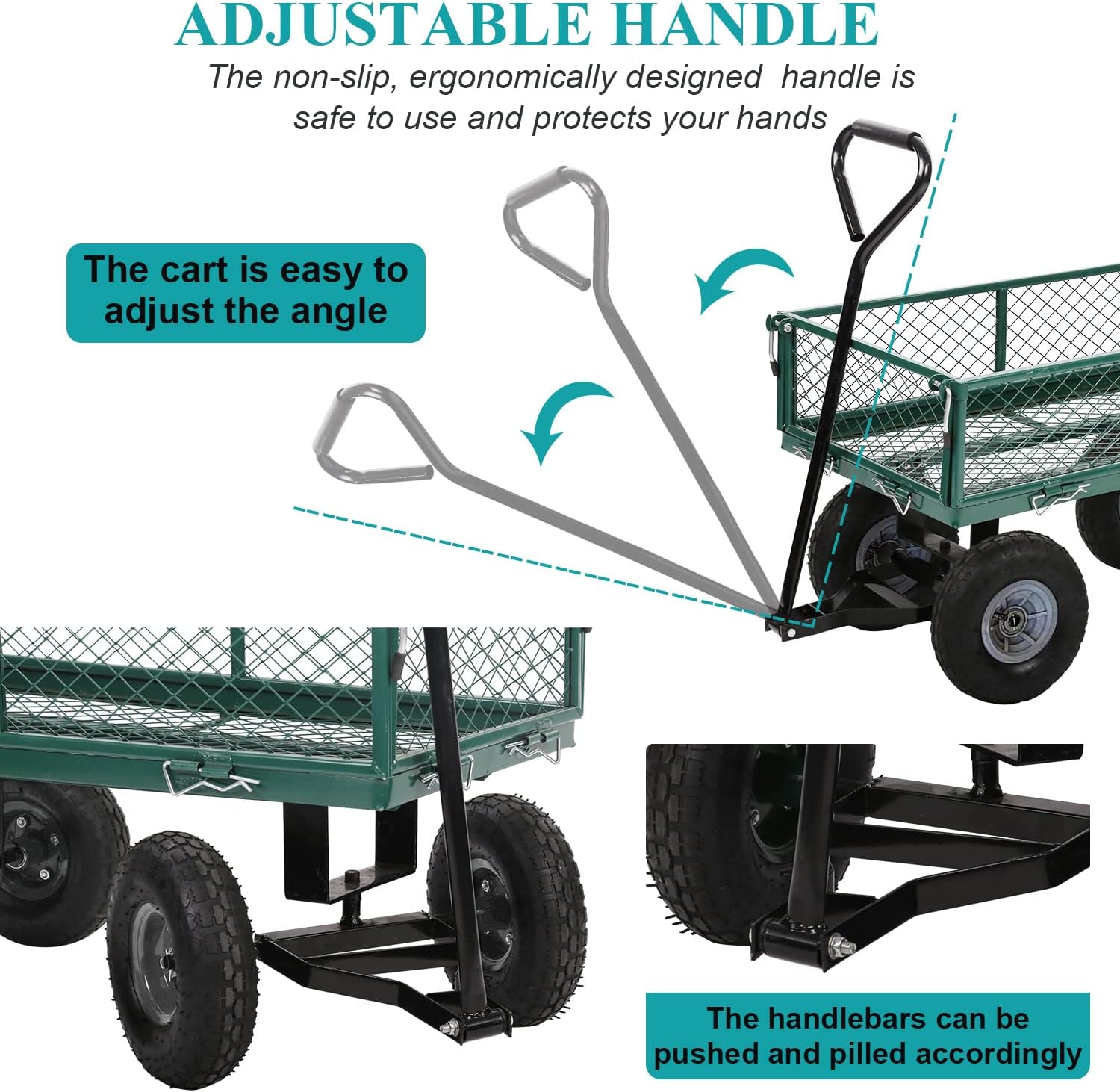
Image: Illustration of the adjustable handle mechanism, allowing for various pulling angles.
5. Operating Instructions
The TTY Store Garden Cart is designed for ease of use and versatility.
5.1. Using as a Cart
- Ensure all four side panels are securely in their upright position.
- Load materials evenly within the cart bed, keeping the weight within the specified capacity.
- Grasp the handle firmly and pull the cart. Adjust the handle angle for comfortable pulling.
- Navigate carefully, especially on uneven terrain or inclines.
5.2. Using as a Flatbed Wagon
For transporting oversized or irregularly shaped items, the cart can be converted into a flatbed.
- Folding Sides: Locate the release pins or latches on each side panel. Disengage them to allow the panels to fold down.
- Removing Sides: For complete flatbed use, the side panels can be entirely removed by lifting them off their hinges once folded down.
- Place oversized items directly onto the main cart bed. Ensure the load is stable and balanced before moving.

Image: Demonstrates the two primary uses of the cart: as a full cart for contained items and as a flatbed for larger, bulkier loads.

Image: Examples of different materials and items that can be transported using the garden cart, including produce, packages, and garden supplies.
6. Maintenance
Regular maintenance will ensure the longevity and optimal performance of your garden cart.
- Cleaning: After each use, especially when transporting dirt or wet materials, clean the cart with water and a mild detergent. Rinse thoroughly and dry to prevent rust.
- Tire Pressure: Periodically check the air pressure in the pneumatic tires. Maintain the recommended PSI (usually indicated on the tire sidewall) for optimal rolling and load support.
- Lubrication: Apply a light lubricant to the wheel axles and handle pivot points annually or as needed to ensure smooth operation.
- Fastener Check: Regularly inspect all bolts, nuts, and connections for tightness. Tighten any loose fasteners to maintain structural integrity.
- Storage: Store the cart in a dry, covered area when not in use to protect it from the elements, which can cause rust and material degradation.
7. Troubleshooting
Here are some common issues and their potential solutions:
| Problem | Possible Cause | Solution |
|---|---|---|
| Cart is difficult to pull or steer. | Low tire pressure; uneven load; seized wheel bearing. | Check and inflate tires to recommended PSI; redistribute load evenly; lubricate or replace wheel bearings if necessary. |
| Cart tips easily. | Overloaded; uneven load distribution; unstable terrain. | Reduce load to within capacity; ensure load is centered and balanced; operate on level ground. |
| Side panels do not stay up/down. | Latches/pins not engaged; damaged hinges. | Ensure latches/pins are fully engaged; inspect hinges for damage and repair/replace if needed. |
| Squeaking noises during operation. | Lack of lubrication on moving parts; loose fasteners. | Lubricate axles and pivot points; tighten all bolts and nuts. |
8. Specifications
- Product Dimensions (LxWxH): 33.8" x 18.5" x 20.8"
- Load Capacity: Up to 300 lbs (or 400 lbs as per some product descriptions)
- Material: Steel (Frame), Rubber (Tires)
- Color: Green
- Tire Type: Pneumatic, 10-inch diameter
- Item Weight: Approximately 36.3 Pounds
- Handle Material: Alloy Steel
- Assembly Required: Yes

Image: Visual representation of the garden cart's dimensions and maximum load capacity.

Image: Detail of the 10-inch pneumatic rubber tires, highlighting their design for various terrains.
9. Warranty and Support
For information regarding warranty coverage, returns, or technical support, please refer to your purchase documentation or contact the retailer/manufacturer directly. Keep your proof of purchase for any warranty claims.
Manufacturer: TTY Store
ASIN: B08GC2RYK7
UPC: 840137925759
Ask a question about this manual
Ask about setup, troubleshooting, compatibility, parts, safety, or missing instructions. Manuals+ will review the question and use this page’s manual context to help answer it.