
1. Introduction
This manual provides instructions for the KONNWEI KW600 Battery Tester and the KONNWEI KW310 OBD2 Scanner. The KW600 is designed for comprehensive 12V battery testing, including health, cranking, and charging system analysis. The KW310 is an OBD2/EOBD scanner for diagnosing engine fault codes and monitoring vehicle performance data.
2. KONNWEI KW600 Battery Tester
2.1. Features and Functions
The KW600 features a color screen and provides accurate data for 12V automotive batteries. Key functions include:
- Battery Health Test: Analyzes the battery's State of Health (SOH), internal resistance, and Cold Cranking Amps (CCA) capability.
- Cranking Test: Evaluates the starting system, including cranking voltage and time.
- Charging Test: Checks the vehicle's charging system, including generator output and rectifier diode status.
- Voltage Graphing: Displays real-time voltage changes graphically to identify potential issues.
- Multi-Vehicle Compatibility: Suitable for 12V batteries in cars, SUVs, light trucks, motorcycles, and boats.
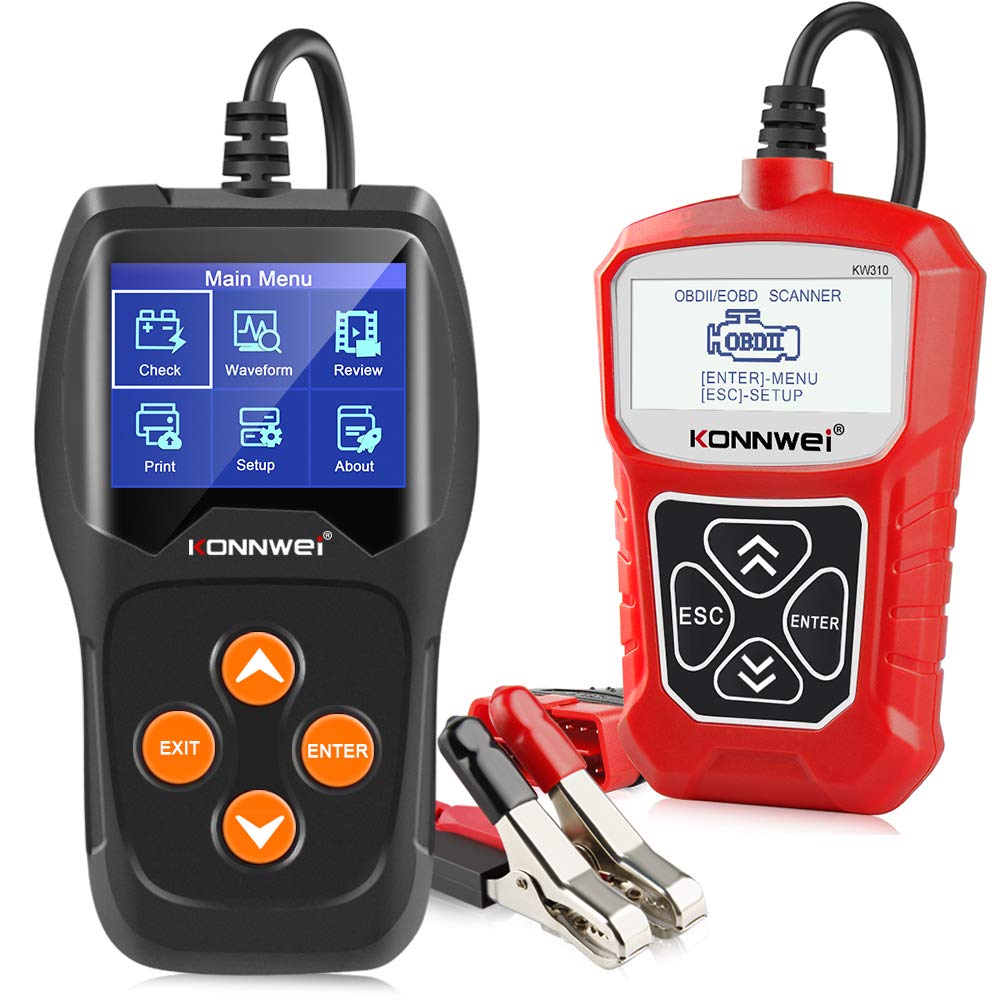
Figure 1: KONNWEI KW600 Battery Tester main menu and function overview.

Figure 2: KW600 displaying detailed battery analysis results and additional functions.
2.2. Setup and Connection (KW600)
- Ensure the vehicle's ignition is off.
- Connect the red clamp of the KW600 to the positive (+) terminal of the 12V battery.
- Connect the black clamp of the KW600 to the negative (-) terminal of the 12V battery.
- The device will power on automatically.
2.3. Operating the KW600
Navigate the menu using the 'UP', 'DOWN', 'ENTER', and 'EXIT' buttons.
- Check: Initiates a battery test. Select 'In-Vehicle' or 'Out-of-Vehicle' based on the battery's location. Input battery specifications (e.g., CCA, AH) as prompted.
- Waveform: Displays real-time voltage readings in a graphical format. This helps in observing voltage stability during cranking or charging.
- Review: Accesses previously saved test results.
- Print: Allows printing of test data (requires connection to a computer with KONNWEI software).
- Setup: Configures device settings such as language, unit of measurement, and sound.

Figure 3: KW600 displaying voltage waveform for diagnostic analysis.

Figure 4: KW600 compatibility with various 12V vehicle types.
3. KONNWEI KW310 OBD2 Scanner
3.1. Features and Functions
The KW310 is a professional car computer fault code reader that supports all OBD2 modes. Its features include:
- Read/Clear Codes: Retrieves generic and manufacturer-specific Diagnostic Trouble Codes (DTCs) and clears them, turning off the Check Engine Light.
- Live Data: Displays real-time sensor data from the vehicle's engine control unit (ECU).
- Freeze Frame Data: Captures a snapshot of operating conditions at the moment a fault code is set.
- I/M Readiness: Checks the status of emission-related monitors to ensure the vehicle is ready for an emissions test.
- O2 Sensor Test: Retrieves O2 sensor monitor test results.
- On-board Monitoring Test: Retrieves test results for emission-related powertrain components and systems.
- EVAP System Test: Initiates a leak test for the vehicle's evaporative emission system.
- Vehicle Information: Retrieves Vehicle Identification Number (VIN), Calibration ID (CALID), and Calibration Verification Number (CVN).
- Wide Vehicle Compatibility: Works on most 1996 and newer USA-based, European, and Asian gasoline or diesel vehicles (OBDII & CAN compliant).

Figure 5: KONNWEI KW310 OBD2 Scanner main display.

Figure 6: KW310 OBD2 functions overview.
3.2. Setup and Connection (KW310)
- Locate the vehicle's 16-pin Data Link Connector (DLC), usually under the dashboard on the driver's side.
- Ensure the vehicle's ignition is in the 'ON' position (engine can be off or running).
- Plug the KW310's OBD2 cable into the vehicle's DLC.
- The device will power on automatically.
3.3. Operating the KW310
Navigate the menu using the 'UP', 'DOWN', 'ESC', and 'ENTER' buttons.
- Diagnostics: Accesses the main diagnostic functions like Read Codes, Erase Codes, Live Data, Freeze Frame, I/M Readiness, O2 Monitor Test, On-Board Monitor Test, EVAP System Test, and Vehicle Information.
- DTC Lookup: Allows you to manually enter a DTC to view its description.
- Review Data: Views previously recorded diagnostic data.
- System Setup: Configures device settings such as language and unit of measurement.
- Tool Information: Displays device details like software version.

Figure 7: KW310 compatibility with various OBD2 protocol vehicles.
4. Maintenance
- Cleaning: Use a soft, damp cloth to clean the device. Do not use abrasive cleaners or solvents.
- Storage: Store the device in a dry, cool environment away from direct sunlight and extreme temperatures.
- Software Updates: Periodically check the KONNWEI official website for software updates to ensure optimal performance and compatibility. The KW600 supports updates as indicated in its menu.
5. Troubleshooting
- Device does not power on:
- For KW600: Ensure battery clamps are securely connected to the correct terminals of a 12V battery.
- For KW310: Ensure the OBD2 connector is fully plugged into the vehicle's DLC and the vehicle's ignition is 'ON'.
- Link Error / Communication Error:
- Verify the vehicle is OBD2 compliant (most 1996 and newer vehicles).
- Check for loose connections at the OBD2 port or battery terminals.
- Ensure the vehicle's ignition is 'ON'.
- Try testing on a different vehicle to rule out a vehicle-specific issue.
- Inaccurate Readings (KW600):
- Ensure battery terminals are clean and free of corrosion.
- Verify the correct battery type and CCA/AH values are entered into the device.
6. Specifications
6.1. KONNWEI KW600 Battery Tester
- Application: 12V lead-acid batteries (Flooded, AGM, GEL, EFB)
- Test Range: 100-2000 CCA, 30-220 AH
- Voltage Range: 8V-16V
- Display: Color LCD
6.2. KONNWEI KW310 OBD2 Scanner
- Protocols: OBDII, EOBD, CAN
- Compatibility: Most 1996 and newer vehicles (USA, European, Asian)
- Display: Backlit LCD
- Power: Directly from vehicle's OBD2 port
7. Warranty and Support
For warranty information, technical support, or service inquiries, please refer to the official KONNWEI website or contact KONNWEI customer service directly. Keep your purchase receipt for warranty claims.


