
1. Introduction
This manual provides detailed instructions for the setup, operation, and maintenance of your TOPPING D10s USB Digital to Analog Converter. The D10s is designed to enhance your audio experience by converting digital audio signals from your computer or phone into high-fidelity analog sound. It features an XU208 XMOS chip, ES9038Q2M DAC, and supports DSD256 and 32Bit/384kHz audio playback.
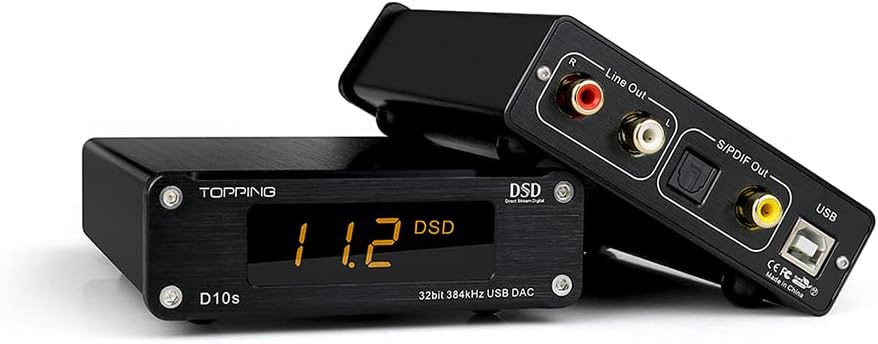
Image 1.1: Front and rear view of the TOPPING D10s USB DAC, showcasing its compact design and various input/output ports.
2. Safety Information
- Do not expose the device to water, moisture, or extreme temperatures.
- Avoid placing the device near heat sources or in direct sunlight.
- Use only the provided USB cable for power and data connection.
- Do not attempt to disassemble or modify the device. Refer all servicing to qualified personnel.
- Ensure proper ventilation around the device during operation.
3. Package Contents
Please check the package for the following items:
- 1 x TOPPING D10s Unit
- 1 x USB Cable
- 1 x User Manual
- 1 x TOPPING Repair Card (Warranty Card)
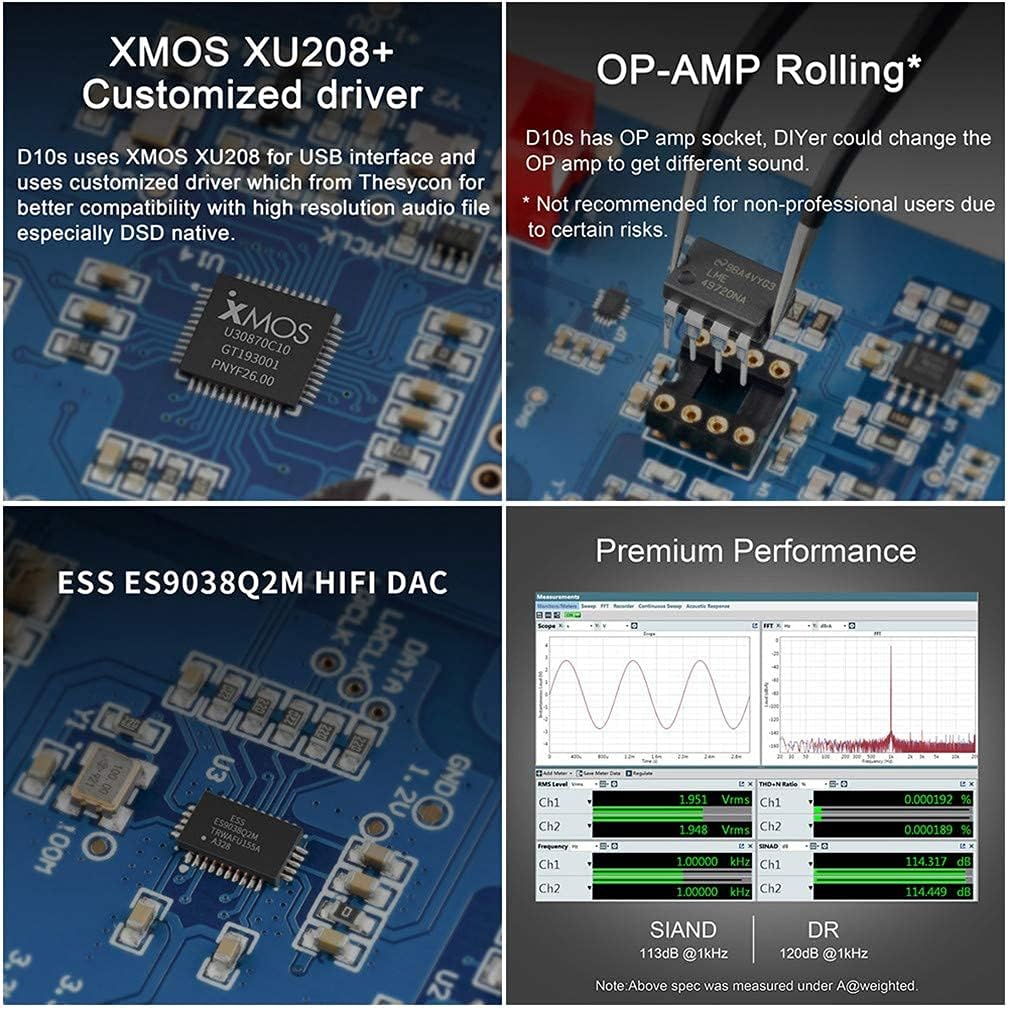
Image 3.1: Visual representation of the items included in the TOPPING D10s package.
4. Product Overview
The TOPPING D10s is a compact USB DAC designed for high-resolution audio playback. It features a clear display and multiple output options.
4.1 Front Panel

Image 4.1: Front panel of the D10s, displaying the current sampling rate (e.g., 384 kHz) and audio format (PCM).
- Display: Shows the current audio format (PCM or DSD) and sampling rate. The orange LED is designed to be soft and non-dazzling.
4.2 Rear Panel

Image 4.2: Rear panel of the D10s, illustrating the various input and output connections.
- USB Input: Connects to your computer or phone for power and digital audio input.
- RCA Output (Line Out): Analog audio output for connecting to active speakers or an amplifier.
- Optical Output (S/PDIF Out): Digital audio output.
- Coaxial Output (S/PDIF Out): Digital audio output.
5. Setup
5.1 Connecting to Active Speakers
Connect the RCA Line Out ports of the D10s to the analog input of your active speakers. This configuration allows the D10s to act as a high-quality DAC, bypassing your computer's internal sound card.

Image 5.1: Example setup connecting the D10s to active speakers and a computer.
5.2 Connecting to a Power/Headphone Amplifier
To integrate the D10s into an existing HiFi system, connect the RCA Line Out of the D10s to the input of your power amplifier or headphone amplifier. This setup utilizes the D10s for digital-to-analog conversion, improving the sound quality of high-resolution audio files.
5.3 Using as a USB Interface (Digital Output)
If you possess a separate, higher-end DAC, the D10s can function as a USB interface. Connect the USB input of the D10s to your computer, and then connect the Coaxial or Optical output of the D10s to the digital input of your other DAC. The D10s will convert the USB audio stream into a Coaxial or Optical signal. Note that Coaxial and Optical outputs support up to 24bit/192kHz and DSD64 (DoP).
5.4 PC Connection and Driver Installation
For basic plug-and-play functionality, connect the D10s directly to your PC via the included USB cable. For optimal performance and DSD playback, especially on Windows systems, driver installation may be required.
- Connect the D10s to your computer using the supplied USB cable. The D10s will power on automatically with your PC.
- For Windows systems, it is recommended to install the customized Thesycon driver. This driver package and setup tutorial can typically be found on the manufacturer's support website.
- For macOS, the D10s is generally plug-and-play and does not require additional drivers.
- After driver installation (if applicable), select the D10s as your audio output device in your operating system's sound settings.
- For advanced playback of high-resolution files, especially DSD, consider using dedicated audio playback software (e.g., Audirvana Plus for Mac, or other compatible players for Windows) that can output the original bit rate to the D10s.

Image 5.2: Illustrates PC audio settings and software for configuring the D10s.
6. Operation
6.1 Power On/Off
The D10s is USB-powered and will automatically power on when connected to an active USB port on your computer. It will also synchronously power off when your PC shuts down, even if the USB port continues to supply power.
6.2 Audio Format and Sampling Rate Indicator
The front display of the D10s accurately indicates the audio format (PCM or DSD) and the sampling rate of the music currently playing. This allows for immediate verification of the audio stream's characteristics.

Image 6.1: D10s display showing DSD playback at 11.2 MHz.
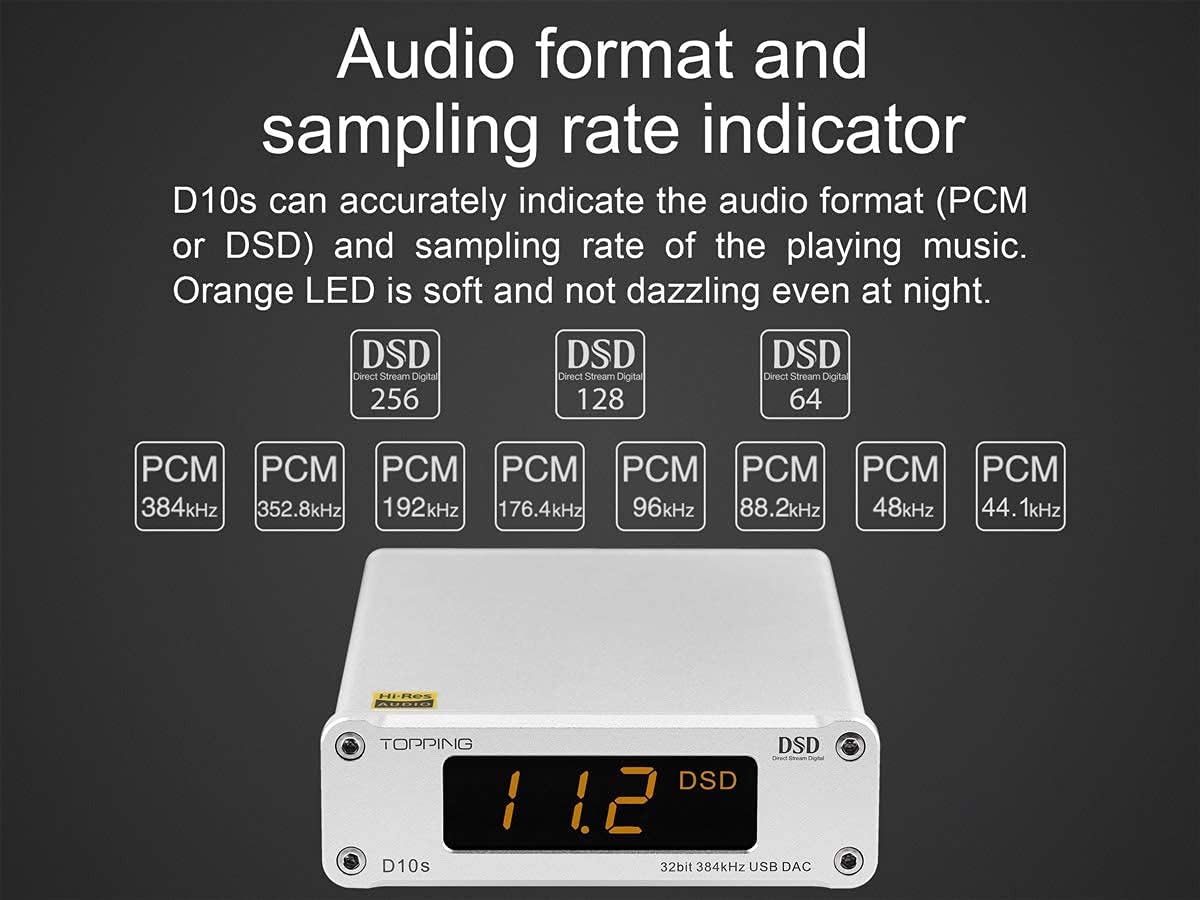
Image 6.2: Internal components of the D10s, highlighting the XMOS XU208 chip, ESS ES9038Q2M DAC, and the replaceable OP-AMP socket.
6.3 Replaceable OP-AMP Rolling
The TOPPING D10s features an OP-AMP socket, allowing experienced users to replace the operational amplifier to achieve different sound characteristics. This feature is intended for advanced users with knowledge of audio electronics.
Warning: Replacing the OP-AMP is not recommended for non-professional users due to potential risks of damaging the device or voiding the warranty. Proceed with caution and at your own risk.
7. Maintenance
- Cleaning: Use a soft, dry cloth to clean the exterior of the device. Do not use liquid cleaners or abrasive materials.
- Storage: When not in use for extended periods, store the D10s in a cool, dry place away from direct sunlight and dust.
- Ventilation: Ensure that the device has adequate airflow around it to prevent overheating.
8. Troubleshooting
| Problem | Possible Cause | Solution |
|---|---|---|
| No sound output. |
|
|
| Display shows incorrect sampling rate or format. |
|
|
| Device not recognized by PC. |
|
|
9. Specifications
| Feature | Detail |
|---|---|
| Model | D10s |
| Dimensions | 10.3 x 14.6 x 3.7 cm (4.06"W x 5.75"L x 1.46"H) |
| Weight | 323g (10.6 ounces) |
| Color | Black |
| Power Input | DC5V/0.5A (USB powered) |
| Input | USB |
| Digital Output | Optical (OPT), Coaxial (COAX), RCA (Line Out) |
| Display | Customized Digital Tube |
| USB IN (PCM) | 44.1kHz-384kHz / 16Bit-32Bit |
| USB IN (DSD) | DSD64-DSD256 (Native); DSD128 (DoP) |
| OPT/COAX OUT | 44.1kHz-192kHz / 16Bit-24Bit, DSD64 (DoP) |
| THD+N @1kHz A-wt (Line Out/USB In@96kHz) | <0.0002% |
| SNR @1kHz A-wt | 120dB |
| Dynamic Range @1kHz A-wt | 120dB |
| Frequency Response @1kHz A-wt | 20Hz-20kHz (±0.1dB), 20Hz-40kHz (±0.4dB) |
| Output Level | 2Vrms @0dBFS |
| Noise @1kHz A-wt | <2.5uVrms |
| Channel Crosstalk@1kHz | -135dB |
| Channel Balance | <0.02dB |
| Output Impedance | 20Ω |
| Material | Aluminum |
10. Warranty and Support
The TOPPING D10s comes with a TOPPING repair card, which serves as your warranty document. Please refer to the terms and conditions specified on the repair card for details regarding warranty coverage and service procedures.
For technical support, troubleshooting assistance beyond this manual, or warranty claims, please contact your authorized dealer or the manufacturer's customer service. Contact information can typically be found on the TOPPING official website or the repair card.
Keep your purchase receipt and the repair card in a safe place as proof of purchase for warranty purposes.


