
1. Introduction
The TOA AT-10K-AM is a remote volume control designed for use in commercial and residential audio systems. This single-gang attenuator provides precise 10k Ohm resistance control over audio levels, allowing for convenient adjustment of sound output from a wall-mounted location. This manual provides essential information for the safe and correct installation, operation, and maintenance of your AT-10K-AM unit.
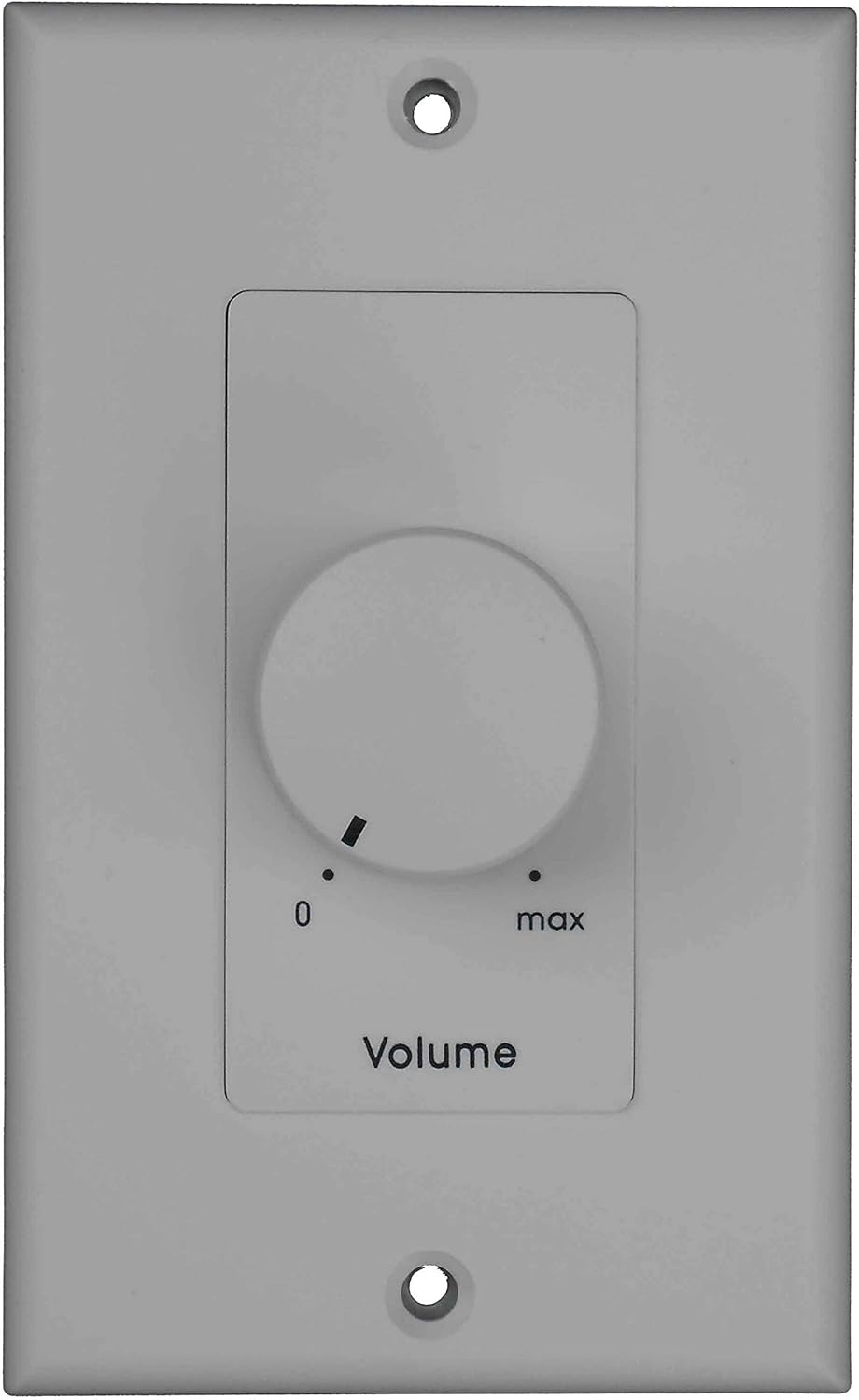
Figure 1: Front view of the TOA AT-10K-AM Remote Volume Control. This image displays the front view of the TOA AT-10K-AM Remote Volume Control. It features a light gray single-gang wall plate with a central circular knob for volume adjustment. Markings '0' and 'max' indicate the minimum and maximum volume settings, respectively. The word 'Volume' is printed below the knob. Two screw holes are visible at the top and bottom for mounting.
2. Safety Information
To ensure safe operation and prevent damage to the unit or injury to personnel, please observe the following safety precautions:
- Qualified Personnel: Installation and wiring should only be performed by qualified and experienced personnel.
- Power Disconnection: Always disconnect power to the audio system before installing, wiring, or servicing the volume control.
- Correct Wiring: Ensure all wiring connections are correct and secure according to the wiring diagrams provided with your audio system and this device. Incorrect wiring can cause damage or fire.
- Environmental Conditions: Do not install the unit in locations exposed to direct sunlight, high temperatures, high humidity, dust, or vibrations.
- Avoid Moisture: Do not expose the unit to rain or moisture.
- Proper Use: Use the unit only for its intended purpose as a remote volume control for audio systems.
3. Package Contents
Verify that all items listed below are included in the package:
- TOA AT-10K-AM Remote Volume Control Unit (1)
- Mounting Screws (2)
- Instruction Manual (This document)
4. Setup & Installation
Follow these steps for proper installation of the AT-10K-AM volume control:
4.1 Mounting
- Prepare Wall Box: Ensure a standard single-gang electrical wall box is installed at the desired location.
- Route Wiring: Route the audio signal wires from your amplifier or audio source to the wall box.
- Secure Unit: Carefully align the AT-10K-AM unit with the wall box and secure it using the provided mounting screws. Do not overtighten.
- Install Faceplate: If a separate decorative faceplate is used (not included), install it over the unit.
4.2 Wiring Connections
The AT-10K-AM functions as a 10k Ohm potentiometer. Refer to your amplifier or audio system's manual for specific wiring requirements for remote volume controls. A typical wiring configuration involves connecting the audio signal through the attenuator.
- Input Connection: Connect the audio input signal wires to the designated input terminals on the AT-10K-AM.
- Output Connection: Connect the audio output signal wires from the AT-10K-AM to the amplifier or next component in the audio chain.
- Grounding: Ensure proper grounding as specified by your audio system's manufacturer to prevent hum or noise.
Note: Always double-check wiring before restoring power to the system. Incorrect wiring can lead to equipment damage.
5. Operating Instructions
Operating the TOA AT-10K-AM is straightforward:
- Power On: Ensure your audio system is powered on and functioning.
- Adjust Volume: Rotate the central knob clockwise to increase the audio volume and counter-clockwise to decrease it.
- Minimum Volume: Turning the knob fully counter-clockwise will set the volume to its minimum level, indicated by '0'.
- Maximum Volume: Turning the knob fully clockwise will set the volume to its maximum level, indicated by 'max'.
The AT-10K-AM provides smooth and continuous volume adjustment within its operational range.
6. Maintenance
The TOA AT-10K-AM is designed for long-term, reliable operation with minimal maintenance. Follow these guidelines:
- Cleaning: Periodically wipe the surface of the unit with a soft, dry cloth. Do not use abrasive cleaners, solvents, or harsh chemicals.
- Inspection: Occasionally inspect the unit for any visible damage or loose connections. If any issues are found, consult qualified service personnel.
- No User Serviceable Parts: The unit contains no user-serviceable parts. Do not attempt to open or repair the unit yourself.
7. Troubleshooting
If you encounter issues with your AT-10K-AM, refer to the following table for common problems and solutions:
| Problem | Possible Cause | Solution |
|---|---|---|
| No sound or very low sound output. |
|
|
| Distorted or noisy sound. |
|
|
| Volume control feels loose or unresponsive. |
|
|
If the problem persists after attempting these solutions, contact TOA customer support or a qualified service technician.
8. Specifications
Key specifications for the TOA AT-10K-AM Remote Volume Control:
- Model: AT-10K-AM
- Resistance: 10k Ohm
- Control Type: Remote Volume Control / Attenuator
- Mounting: Single-gang wall plate
- Signal Format: Analog
- Dimensions: Standard single-gang wall plate size (exact dimensions may vary slightly by region/manufacturer)
- Weight: Approximately 2 pounds (0.9 kg)
Specifications are subject to change without notice for product improvement.
9. Warranty & Support
For warranty information and technical support regarding your TOA AT-10K-AM Remote Volume Control, please refer to the warranty card included with your purchase or visit the official TOA website. You may also contact TOA customer service directly for assistance with product inquiries, troubleshooting, or service requests.
TOA Corporation: www.toa-corp.com


