
1. Introduction
Thank you for choosing the EnginStar R300 Portable Power Station. This device is a versatile and reliable power solution designed to provide electricity for various applications, including outdoor camping, emergency backup, and mobile work. Featuring a 296Wh capacity and 110V Pure Sine Wave AC output, the R300 ensures stable and safe power for your electronic devices. Please read this manual carefully before using the product to ensure proper operation and maximize its lifespan.
2. Safety Instructions
- Do not disassemble, repair, or modify the unit.
- Keep the unit away from fire or high temperatures.
- Avoid exposure to water or moisture.
- Do not use or store the unit in direct sunlight or in hot environments.
- Ensure proper ventilation during use to prevent overheating.
- Keep out of reach of children and pets.
- Dispose of the product according to local regulations.
3. Package Contents
Please check that all items are included in your package:
- EnginStar R300 Portable Power Station
- AC Power Adapter
- Car Charger Cable
- User Manual
4. Product Overview
Familiarize yourself with the various ports and features of your EnginStar R300 Portable Power Station.
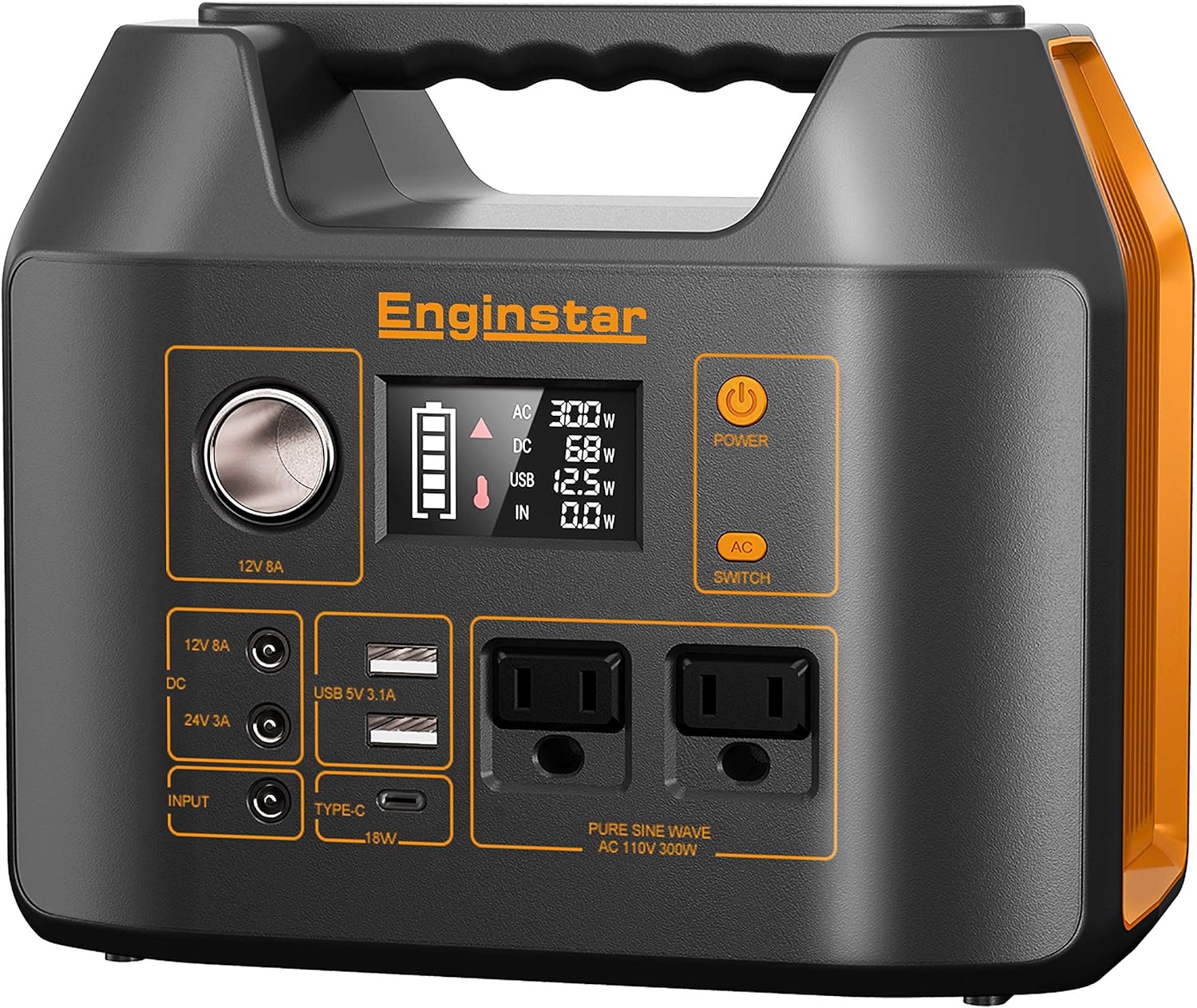
Figure 4.1: Front panel of the EnginStar R300 Portable Power Station, showing the main display, AC outlets, DC ports, USB ports, and power buttons.
- Power Button: Turns the unit on/off.
- LCD Display: Shows battery level, input/output wattage, and status indicators.
- AC Output Sockets: Two 110V Pure Sine Wave AC outlets.
- DC Output Ports: 12V 8A car port and 24V 3A DC ports.
- USB Output Ports: USB 5V 3.1A and Type-C 18W ports.
- DC Input Port: For charging the power station via AC adapter or solar panel.
5. Setup
5.1 Initial Charging
Before first use, fully charge your EnginStar R300. Connect the provided AC power adapter to the DC Input Port on the power station and plug the adapter into a wall outlet. The LCD display will show the charging status. Charging time varies depending on the power source.
5.2 Solar Charging
To charge using solar power, connect a compatible solar panel (not included) to the DC Input Port. Ensure the solar panel is placed in direct sunlight for optimal charging efficiency. The LCD display will indicate solar input wattage.
6. Operating Instructions
6.1 Powering On/Off
Press and hold the main Power Button for 3 seconds to turn the unit on or off. The LCD display will illuminate when the unit is on.
6.2 Using AC Output
Press the 'AC Switch' button to activate the AC outlets. The AC indicator on the display will light up. Plug your 110V devices into the AC sockets. Press the 'AC Switch' again to turn off AC output when not in use.
6.3 Using DC Output
The DC output ports (12V car port and 24V DC ports) are typically active when the unit is powered on. Plug your 12V or 24V DC devices into the appropriate ports. Ensure your device's voltage matches the port's output.
6.4 Using USB Output
The USB-A and Type-C ports are active when the unit is powered on. Connect your USB-powered devices for charging. The Type-C port supports 18W fast charging.
6.5 Understanding the Display
The LCD display provides real-time information:
- Battery Level Indicator: Shows the remaining battery capacity.
- Input Wattage: Displays the power being drawn into the unit (e.g., from AC adapter or solar panel).
- Output Wattage: Shows the power being consumed by connected devices from AC, DC, and USB outputs.
- Status Icons: Indicators for AC, DC, USB active, and warning symbols.
7. Maintenance
7.1 Cleaning
Wipe the unit with a dry, soft cloth. Do not use abrasive cleaners or solvents. Ensure all ports are free from dust and debris.
7.2 Storage
Store the power station in a cool, dry place, away from direct sunlight and extreme temperatures. For long-term storage, charge the unit to 50-80% every 3-6 months to maintain battery health.
7.3 Battery Care
To prolong battery life, avoid fully discharging the unit frequently. It is recommended to recharge the unit when the battery level drops below 20%.
8. Troubleshooting
- Unit not turning on: Ensure the battery is charged. If not, connect to a power source.
- No output from ports: Check if the specific output (AC, DC) is activated. Ensure the device connected is within the power station's wattage limits.
- Overload warning: Disconnect some devices to reduce the load. The unit will automatically shut down if overloaded to prevent damage.
- Charging slowly: Verify the charging adapter or solar panel is functioning correctly and providing sufficient power. Ensure solar panels are in direct sunlight.
9. Specifications
| Feature | Detail |
|---|---|
| Brand | EnginStar |
| Model | R300 |
| Wattage | 300 watts (Starting) |
| Fuel Type | Solar |
| Power Source | Solar Powered |
| Product Dimensions | 9.5"L x 7.5"W x 9.5"H |
| Item Weight | 12.8 ounces |
| UPC | 703063608458 |
| AC Output | 110V Pure Sine Wave |
| Battery Capacity | 296Wh / 80000mAh |
10. Warranty & Support
The EnginStar R300 Portable Power Station comes with a 10-day warranty from the date of purchase. This warranty covers manufacturing defects under normal use. It does not cover damage caused by misuse, accidents, or unauthorized modifications.
For technical support, warranty claims, or any questions regarding your product, please refer to the contact information provided on the EnginStar official website or your purchase platform. Please have your model number and purchase details ready when contacting support.
