
Introduction
This manual provides detailed instructions for the assembly, operation, and maintenance of your Goplus Hitch Cargo Carrier, model SU-5545-TA. Please read this manual thoroughly before use to ensure safe and efficient operation. This aluminum cargo carrier is designed to transport various items, including wheelchairs, scooters, and other equipment, utilizing your vehicle's 2-inch hitch receiver.
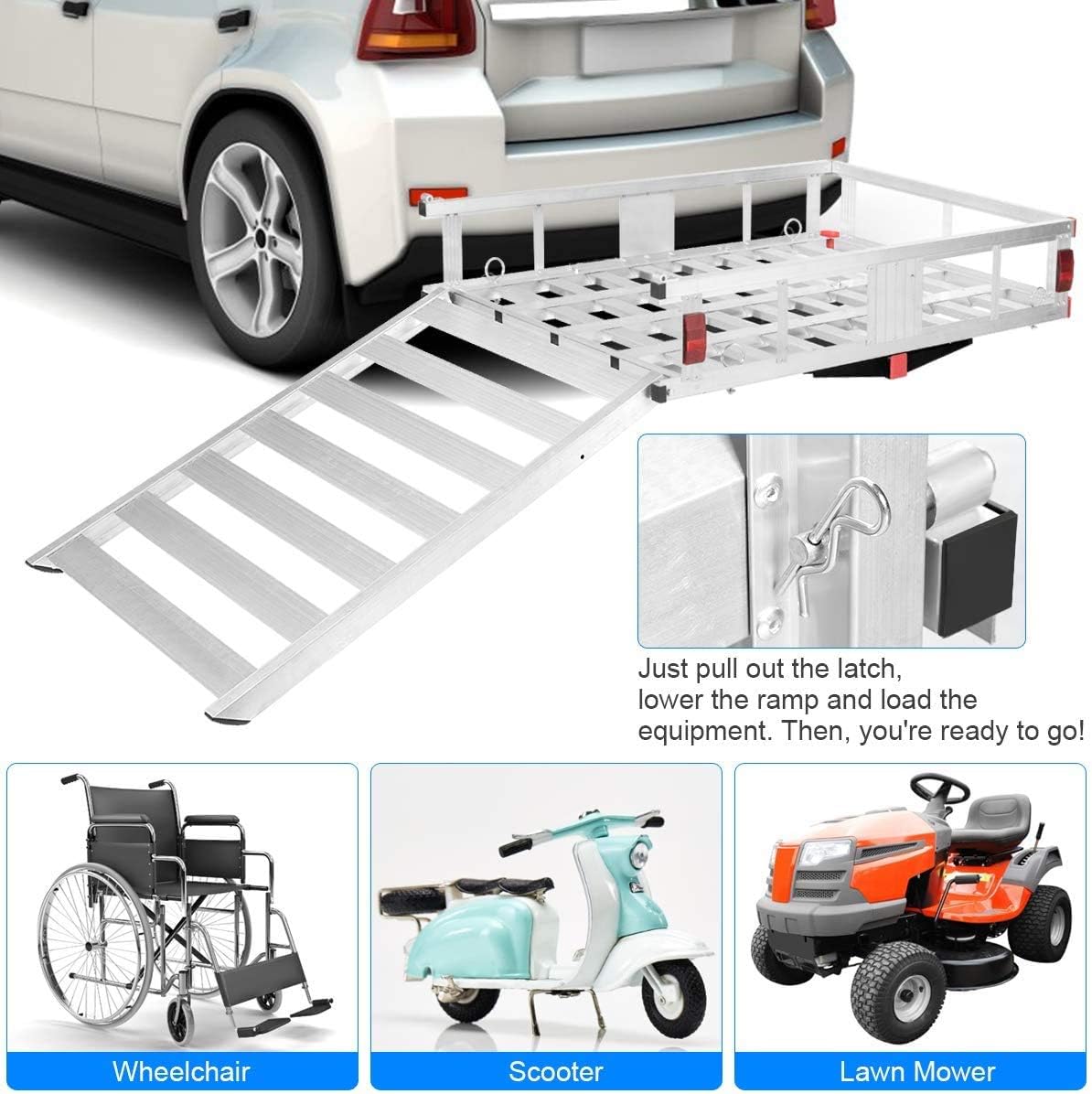
Image: The Goplus Hitch Cargo Carrier, model SU-5545-TA, shown attached to a vehicle.
Safety Information
Adhering to these safety guidelines is crucial for preventing injury and damage to the carrier or your vehicle.
- Maximum Load Capacity: Do not exceed the maximum load capacity of 500 lbs (226.8 kg). Overloading can lead to structural failure and accidents.
- Speed Limitation: A recommended maximum speed of 60 mph (96.5 km/h) is suggested. Always adjust your speed according to the weight of your cargo, road conditions, and local speed limits.
- Hitch Compatibility: Ensure the carrier is securely attached to a Class III or IV 2-inch hitch receiver. Verify your vehicle's hitch capacity meets or exceeds the carrier's requirements.
- Secure Cargo: Always use appropriate tie-down straps or ropes to firmly secure all cargo to the designated tie-down points. Prevent any movement of cargo during transit.
- Pre-Trip Inspection: Before each use, inspect all bolts, nuts, and connections for tightness. Ensure the ramp locking mechanism is fully engaged when the ramp is stowed.
- Vehicle Dimensions: Be aware that the cargo carrier increases your vehicle's overall length and potentially width. Exercise caution when backing up, turning, and parking.
- Visibility: Ensure the carrier's reflectors are clean, visible, and not obstructed by cargo.
- Weight Distribution: Distribute cargo weight evenly across the carrier platform to maintain vehicle stability.
Package Contents
Before beginning assembly, verify that all components are present and undamaged. If any parts are missing or damaged, do not proceed with assembly and contact customer support.
- Cargo Basket Frame (main aluminum platform with integrated side rails)
- Loading Ramp
- Hitch Receiver Bar
- Mounting Hardware (various bolts, nuts, washers, and pins)
- Reflectors
Assembly Instructions
Assembly of the Goplus Hitch Cargo Carrier is required. It involves numerous bolts and nuts. For efficient assembly, a power screwdriver and a good socket wrench are highly recommended. Please study the provided diagrams carefully during assembly.
- Unpack and Identify Parts: Carefully unpack all components and lay them out. Refer to the parts list (if included with your product) to identify each piece.
- Attach Hitch Receiver Bar: Connect the hitch receiver bar to the main cargo basket frame. Align the holes and insert the appropriate bolts, washers, and nuts. Tighten these fasteners securely.
- Secure Side Rails: If the side rails are not integrated, attach them to the cargo basket frame using the provided hardware. Ensure they are firmly in place to prevent cargo from falling off.
- Install Loading Ramp: Attach the loading ramp to the cargo basket frame using the hinge pins and any other specified hardware. Ensure the ramp can pivot smoothly and that the locking mechanism (latch pins) functions correctly to secure the ramp in both the deployed and stowed positions.
- Attach Reflectors: Install the red reflectors to the designated areas on the carrier, typically on the rear and sides, to enhance visibility.
- Final Tightening: Double-check all bolts, nuts, and pins to ensure they are fully tightened. Some nuts may have Loctite applied, requiring additional force to engage properly. Do not overtighten aluminum components to avoid damage.

Image: The fully assembled cargo carrier with its ramp extended, ready for use.
Operating Instructions
1. Attaching to Vehicle
- Insert the hitch receiver bar of the cargo carrier into your vehicle's 2-inch hitch receiver.
- Align the pinholes and insert the hitch pin. Secure it with the cotter pin or clip.
- Ensure the carrier is firmly seated and does not wobble excessively.
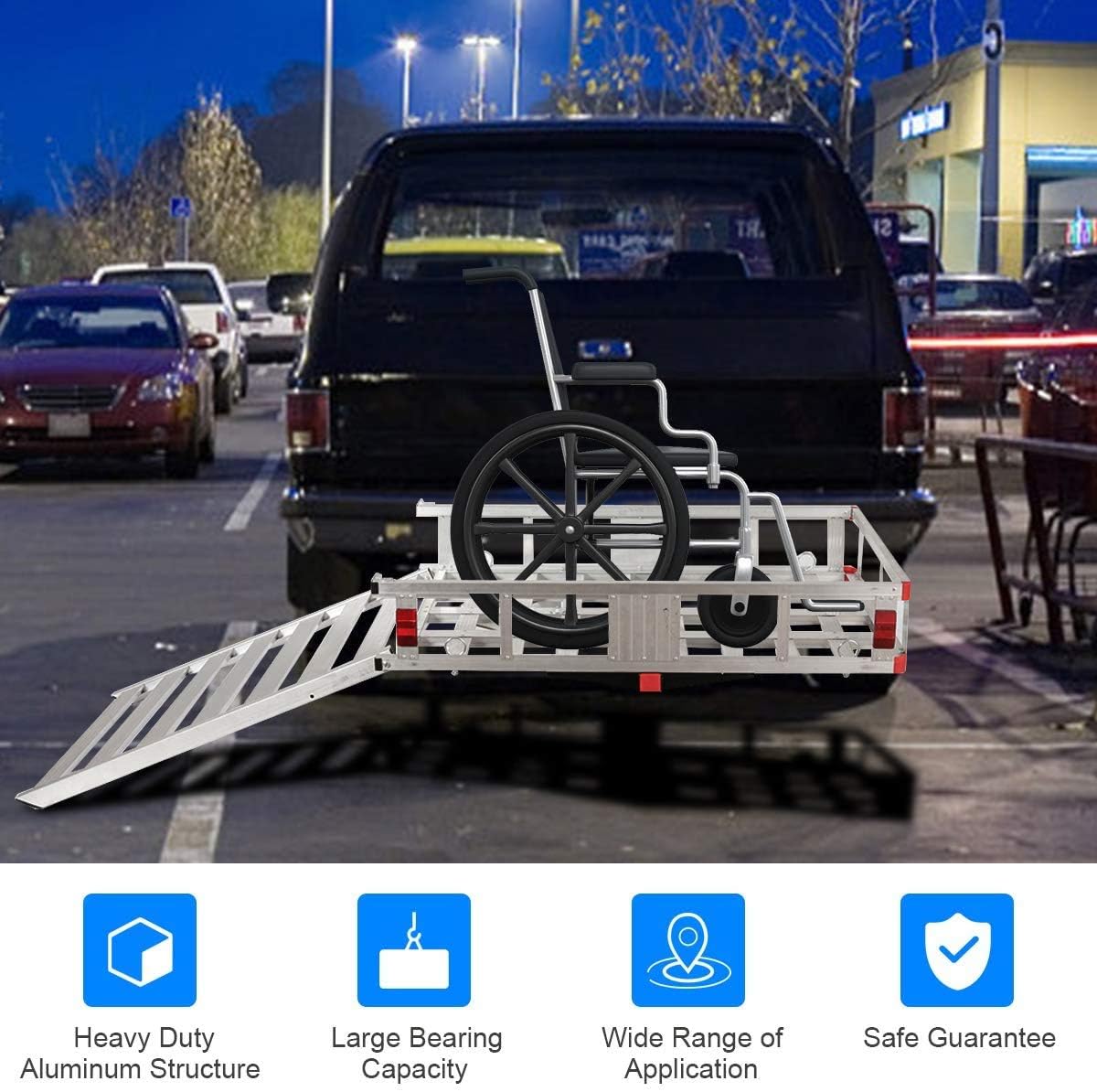
Image: The cargo carrier properly installed into a vehicle's hitch receiver.
2. Ramp Deployment
- Locate the latch pins that secure the ramp in its upright position.
- Pull out the latch pins to release the ramp.
- Carefully lower the ramp to the ground until it rests securely.

Image: Detail of the latch pin mechanism for deploying the ramp.
3. Loading Cargo
- For heavy items such as mobility scooters or wheelchairs, it is recommended to manually push the item up the ramp. The ramp angle may be steep for some powered devices to drive up independently.
- Distribute the weight of your cargo evenly across the carrier platform.
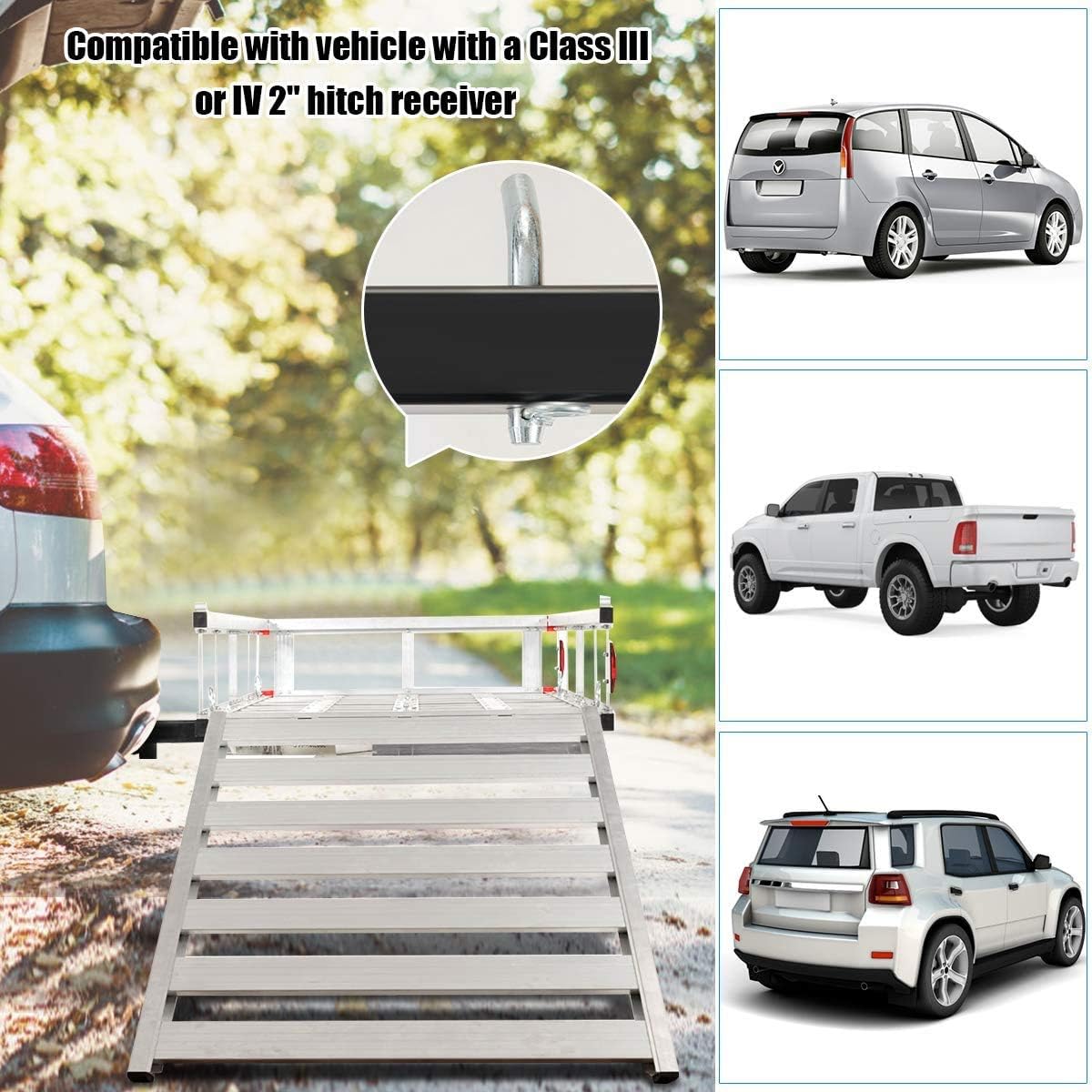
Image: Examples of cargo, including a wheelchair, scooter, and lawnmower, being loaded onto the carrier.
4. Securing Cargo
- Utilize the integrated tie-down points on the carrier frame.
- Use appropriate straps or ropes to firmly secure all cargo, preventing any movement during transit.
- Ensure cargo does not obstruct your vehicle's taillights, license plate, or turn signals.
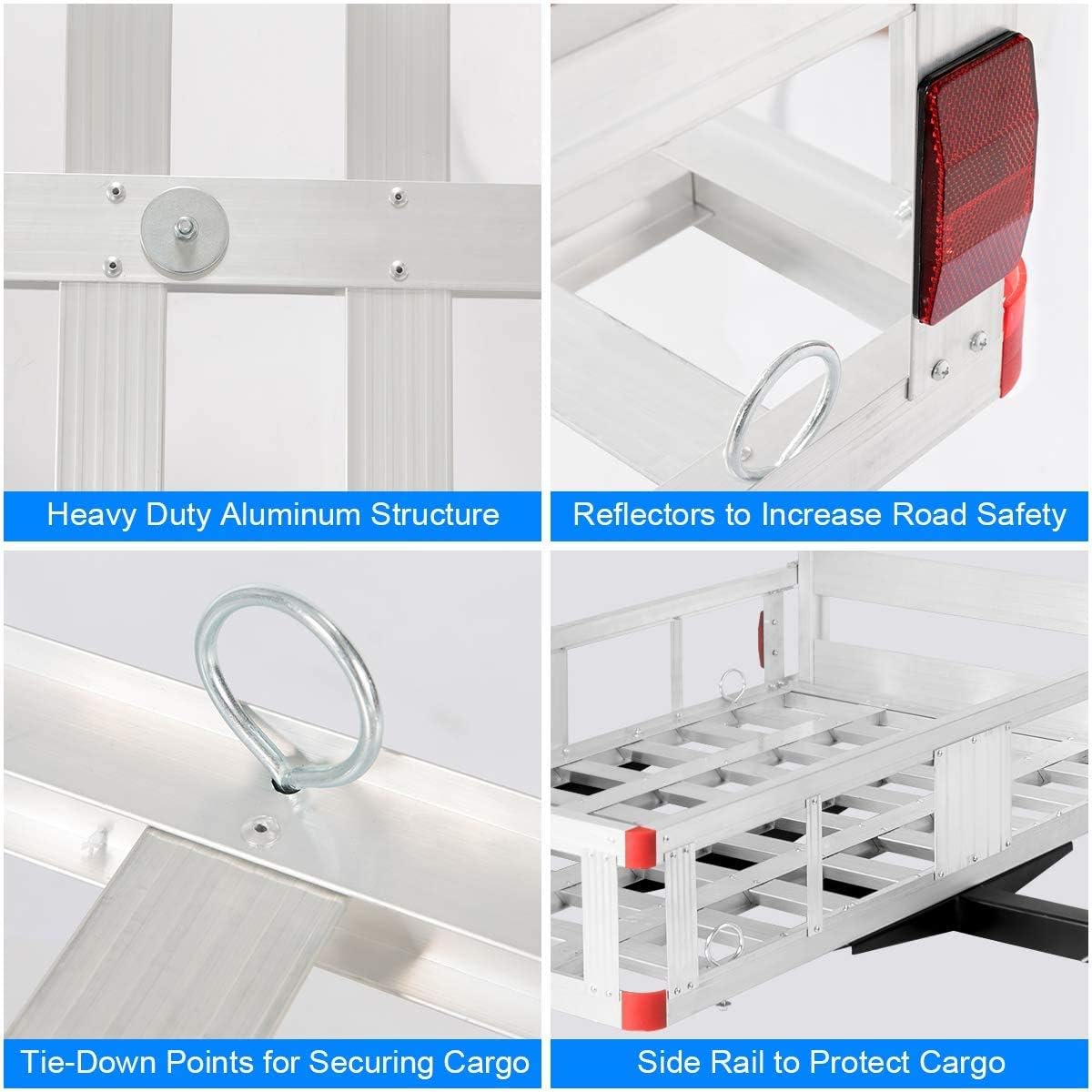
Image: Detail of the tie-down points and side rails for securing cargo.
5. Ramp Stowage
- Once cargo is loaded and secured, or if the carrier is empty, lift the ramp back into its upright position.
- Secure the ramp using the latch pins, ensuring they are fully engaged.
6. Driving with Carrier
- Maintain a safe driving speed, especially when carrying heavy loads. Adjust speed based on cargo weight, road conditions, and local regulations.
- Be mindful of speed bumps, steep driveways, and uneven terrain to prevent the carrier from scraping the ground.
Maintenance
Regular maintenance will prolong the life of your cargo carrier and ensure safe operation.
- Fastener Inspection: Periodically inspect all bolts, nuts, and pins for tightness. Tighten any loose fasteners as needed.
- Cleaning: Clean the aluminum frame with mild soap and water. Avoid using abrasive cleaners or harsh chemicals that could damage the finish.
- Reflector Check: Ensure all reflectors are clean, intact, and clearly visible. Replace any damaged reflectors.
- Storage: When not in use, store the cargo carrier in a dry place to prevent potential corrosion or wear.
Troubleshooting
Here are solutions to common issues you might encounter:
- Carrier Wobbles in Hitch Receiver:
- Ensure the hitch pin is fully inserted and secured.
- Consider using an anti-rattle hitch tightener (not included) to reduce movement.
- Verify your vehicle's hitch receiver is a standard 2-inch size and in good condition.
- Difficulty Loading Items up Ramp:
- The ramp angle may be steep for some powered mobility devices. It is often easier to manually push items up the ramp or seek assistance.
- Ensure the ramp is fully extended and stable on a flat, level surface before attempting to load.
- Cargo Not Secure:
- Always use multiple tie-down straps for stability.
- Ensure straps are routed through designated tie-down points and tightened firmly.
- Check strap tension periodically during travel, especially on longer trips.
Specifications
| Feature | Specification |
|---|---|
| Material | Aluminum |
| Basket Dimensions (L x W) | 50 inches x 29.5 inches |
| Ramp Dimensions (L x W) | 41.5 inches x 27.5 inches |
| Side Rail Height | 9 inches |
| Net Weight | 40 lbs (18.1 kg) |
| Maximum Weight Capacity | 500 lbs (226.8 kg) |
| Compatible Hitch Receiver | Class III or IV 2-inch receiver |
| Recommended Max Speed | 60 mph (96.5 km/h) - adjust based on load/conditions |
| Model Number | SU-5545-TA |
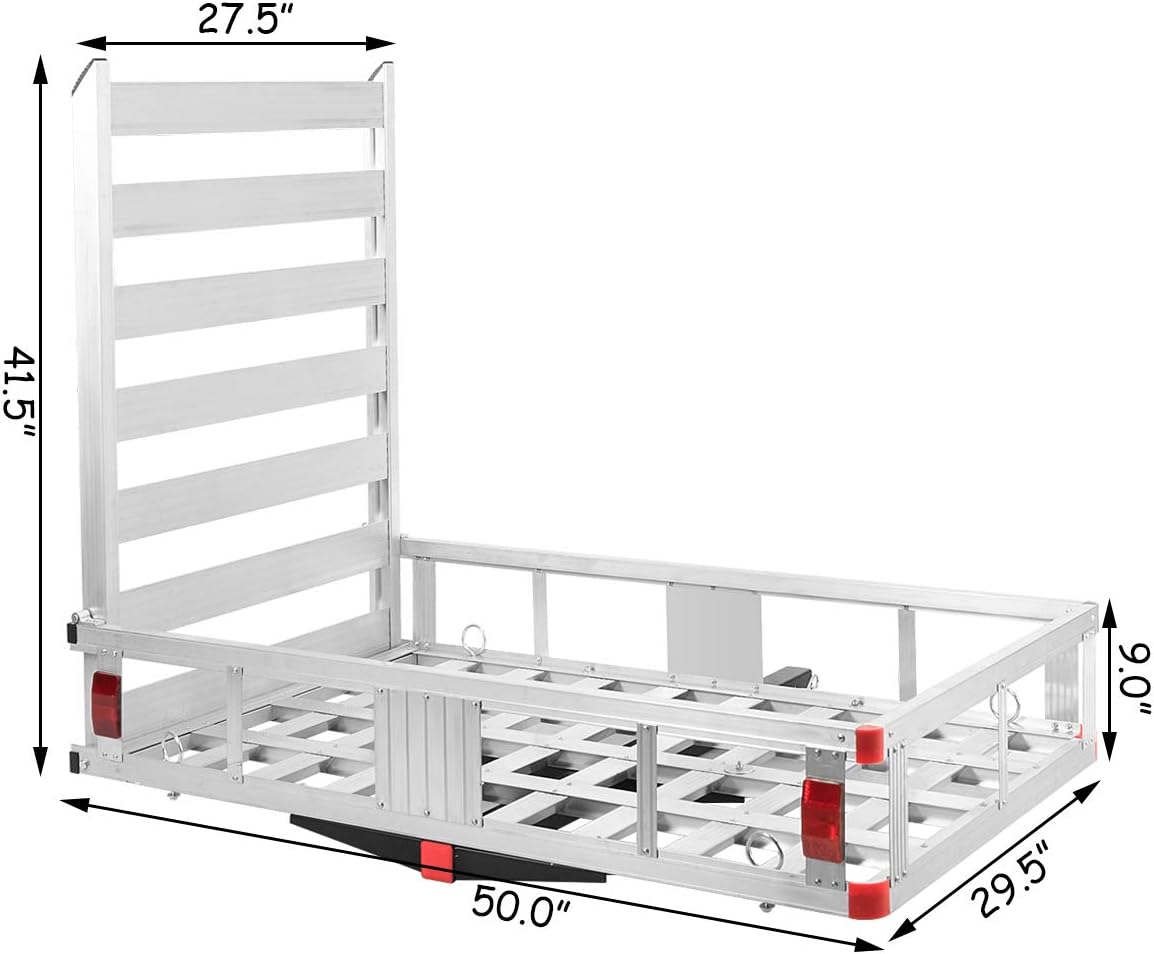
Image: Detailed dimensions of the cargo carrier.
Contact Information
For further assistance, technical support, or inquiries regarding your Goplus Hitch Cargo Carrier, please contact Goplus customer support through their official channels or the retailer from whom the product was purchased.