
1. Introduction
This manual provides essential information for the proper installation, operation, and maintenance of your Cloudray Nema 23 CNC Stepper Motor, model 23CS22C-400Z. Please read these instructions carefully before using the product to ensure optimal performance and longevity.
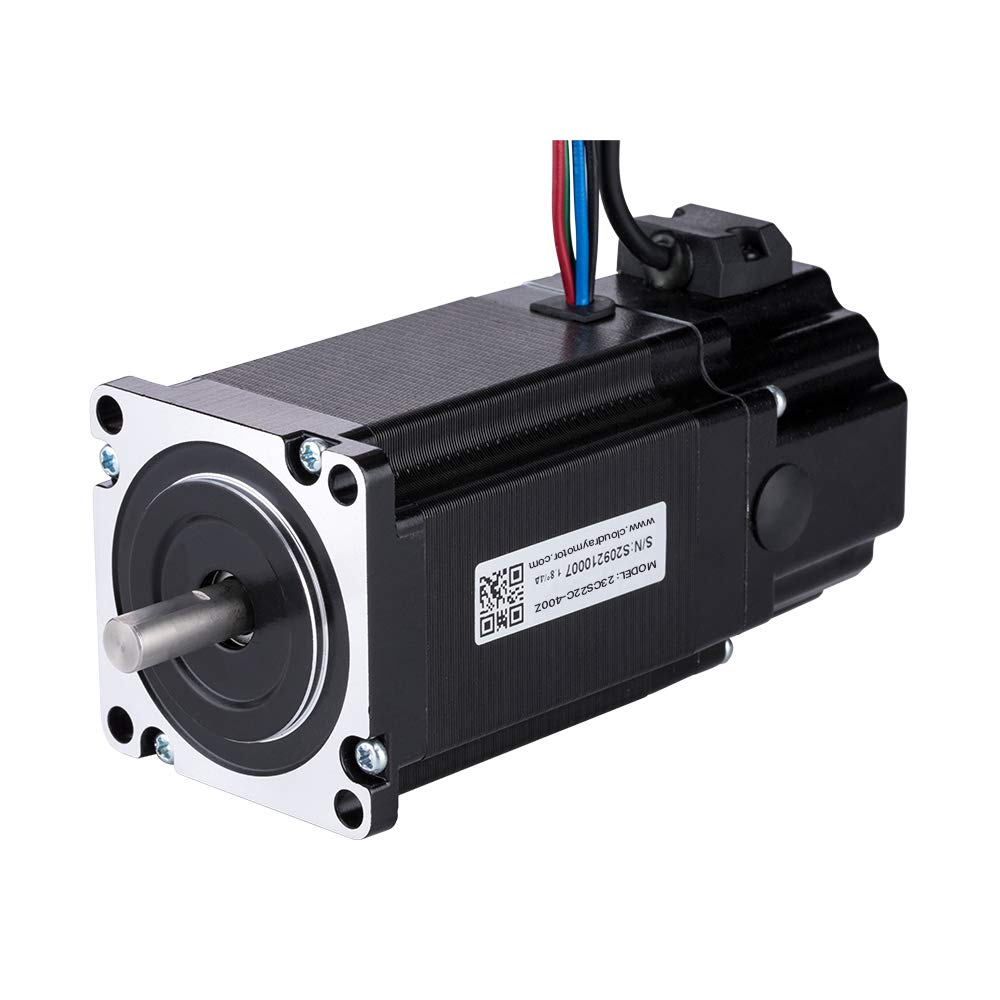
Figure 1: Cloudray Nema 23 CNC Stepper Motor 23CS22C-400Z. This image shows the overall appearance of the stepper motor, highlighting its compact design and the Cloudray branding.
2. Product Features
The Cloudray Nema 23 Stepper Motor 23CS22C-400Z is engineered for precision and reliability in various applications, including DIY CNC machines. Key features include:
- High Torque and Precision: Delivers 2.2 N.m holding torque for accurate positioning.
- Low Vibration and Heating: Designed for smooth operation and reduced heat generation.
- Fast Response: Ensures better acceleration performance for dynamic applications.
- Durable Construction: Features a sturdy structure and high-quality materials, including Japanese-made bearings and shaft, for extended lifespan.
- Quality Certified: CE certified with international quality assurance, ensuring a reliable product.

Figure 2: Overview of the 2-phase stepper motor features. This image visually summarizes the main characteristics of the 23CS22C-400Z motor, emphasizing its performance and build quality.
3. Specifications
Detailed technical specifications for the 23CS22C-400Z stepper motor are provided below:

Figure 3: Technical specifications table for the 23CS22C-400Z stepper motor. This table lists all critical electrical and mechanical parameters.
| Parameter | Value |
|---|---|
| Model | 23CS22C-400Z |
| Phase Number | 2 |
| Step Angle (°) | 1.8° ±5% |
| Holding Torque (N.m) | 2.2 N.m |
| Rated Current (A) | 4.0 A |
| Phase Inductance (mH) | 2.0 mH ±20% |
| Phase Resistance (ohm) | 0.41 ohm ±10% |
| Number of Leads | 4 |
| Rotor Inertia (g.cm²) | 460 g.cm² |
| Shaft Diameter (mm) | 8 mm |
| Motor Weight (kg) | 1.6 kg |
| Motor Body Length L (mm) | 119 mm |
4. Dimensions and Drawings
Refer to the following diagrams for the physical dimensions and detailed technical drawings of the 23CS22C-400Z stepper motor. These drawings are crucial for mounting and integration into your system.

Figure 4: Dimensional drawing of the 23CS22C-400Z stepper motor. This illustration provides key measurements such as body length (119mm) and mounting hole patterns, essential for mechanical integration.
5. Connection Diagram
Proper wiring is critical for the correct operation of the stepper motor. Use the following diagram to connect the motor to your stepper motor driver. This motor is a 4-lead type.

Figure 5: Wiring connection diagram for the 23CS22C-400Z stepper motor. Connect the RED wire to A+, BLUE to A-, GREEN to B+, and BLACK to B- on your stepper motor driver.
6. Speed-Torque Curves
The speed-torque curve illustrates the motor's performance characteristics under various operating conditions. This graph helps in selecting the appropriate motor for your application based on required speed and torque.

Figure 6: Speed-torque curves for various Nema 23 stepper motors, including the 23CS22C-400Z. The graph shows torque output (Y-axis) versus speed (X-axis) at rated current, 36VDC, and 1600 micro-stepping.
7. Model Numbering Guide
Understanding the model number helps in identifying the specific characteristics of your stepper motor. The 23CS22C-400Z model number can be broken down as follows:

Figure 7: Explanation of Cloudray stepper motor model numbering convention. This diagram details how each segment of the model number (e.g., 23, CS, 22, C, 400, Z) corresponds to specific motor dimensions, series, holding torque, shaft diameter, rated current, and other parameters.
8. Setup and Installation
- Mounting: Securely fasten the stepper motor to a rigid, flat surface using appropriate screws and mounting holes. Ensure there is no excessive vibration or misalignment.
- Shaft Connection: Connect the motor shaft to the driven mechanism (e.g., lead screw, pulley) using a flexible coupling to compensate for minor misalignments and reduce stress on the motor bearings.
- Wiring: Refer to the Connection Diagram (Section 5) for correct wiring to your stepper motor driver. Ensure all connections are secure and insulated to prevent short circuits.
- Driver Selection: Use a compatible stepper motor driver that can supply the rated current (4.0A) and voltage for the 23CS22C-400Z motor.
- Power Supply: Connect a stable DC power supply with sufficient voltage and current capacity to the stepper motor driver. Ensure the voltage is within the driver's operating range and the current can meet the motor's demands.
9. Operating Instructions
- Control Signals: The stepper motor is controlled by step and direction signals from your CNC controller or microcontroller. A step pulse advances the motor by one step angle (1.8°), and the direction signal determines the rotation direction.
- Microstepping: Most stepper drivers support microstepping, which divides each full step into smaller increments. This results in smoother motion and reduced resonance. Configure your driver for the desired microstepping resolution (e.g., 1600 micro-steps per revolution as shown in the speed-torque curve example).
- Current Setting: Set the current limit on your stepper motor driver to match the motor's rated current (4.0A). Setting it too high can cause overheating, while too low can result in reduced torque and skipped steps.
- Acceleration/Deceleration: Implement appropriate acceleration and deceleration ramps in your control software to prevent loss of steps during start-up and stopping, especially at high speeds.
10. Maintenance
Stepper motors are generally low-maintenance devices. Follow these guidelines to ensure long-term performance:
- Keep Clean: Regularly clean the motor's exterior to prevent dust and debris buildup, which can hinder heat dissipation.
- Check Connections: Periodically inspect all electrical connections for tightness and signs of wear or corrosion. Loose connections can lead to intermittent operation or damage.
- Environmental Conditions: Operate the motor within its specified temperature and humidity ranges. Avoid exposure to excessive moisture or corrosive environments.
- Bearing Inspection: While the motor uses high-quality, sealed bearings, listen for unusual noises that might indicate bearing wear.
11. Troubleshooting
If you encounter issues with your stepper motor, consider the following common problems and solutions:
| Problem | Possible Cause | Solution |
|---|---|---|
| Motor does not move or vibrates erratically. | Incorrect wiring, insufficient current, faulty driver, mechanical binding. | Verify wiring against Connection Diagram. Check driver current settings. Inspect mechanical load for obstructions. Test driver with another motor if possible. |
| Motor loses steps or stalls. | Excessive load, insufficient current, high acceleration/deceleration, motor overheating. | Reduce mechanical load. Increase driver current (within motor limits). Lower acceleration/deceleration rates. Ensure adequate cooling. |
| Motor overheats. | Driver current set too high, poor heat dissipation, continuous high load. | Adjust driver current to rated value (4.0A). Ensure motor is mounted to a heat-dissipating surface. Consider adding a heatsink or fan if operating under heavy load. |
| Motor makes unusual noises. | Resonance, worn bearings, mechanical interference. | Adjust microstepping settings on the driver. Check for mechanical interference with moving parts. If bearings are suspected, contact support. |
12. Warranty and Support
Cloudray is committed to providing high-quality products. The 23CS22C-400Z stepper motor is CE certified and has undergone rigorous quality control. For any technical assistance, warranty claims, or further inquiries, please contact Cloudray customer support. We are dedicated to assisting you.
