
1. Introduction
The HUAWEI MateDock 3 is a compact and versatile docking station designed to expand the connectivity options of your compatible devices. It provides multiple ports including HDMI, VGA, USB-A, USB-C, an integrated microSD card reader, and a LAN (RJ45) connection. This manual provides instructions for setting up, operating, and maintaining your MateDock 3.

Image 1.1: Top view of the HUAWEI MateDock 3, showcasing its compact design and integrated USB-C cable.
2. Package Contents
Ensure all items are present in the package:
- HUAWEI MateDock 3 Multi-Port Docking Station
- User Manual (this document)
3. Product Overview
The MateDock 3 features a range of ports to enhance your device's connectivity. Familiarize yourself with the port layout:

Image 3.1: Detailed diagram of the HUAWEI MateDock 3 ports, including LAN, USB-A, HDMI, VGA, microSD, and USB-C.
- USB-C Input Cable: Connects to your host device (laptop, tablet, smartphone).
- HDMI Port: Connects to an external display for video and audio output.
- VGA Port: Connects to an external display for video output.
- USB-A Port: Connects to USB peripherals such as keyboards, mice, or external storage.
- USB-C Port: For power delivery to the host device or connecting other USB-C peripherals.
- LAN (RJ45) Port: Provides wired Ethernet network connectivity.
- microSD Card Reader: For reading and writing data to microSD cards.
4. Setup and Installation
The HUAWEI MateDock 3 is designed for plug-and-play functionality, requiring no driver installation for most operating systems.
- Connect to Host Device: Plug the integrated USB-C cable of the MateDock 3 into an available USB-C port on your laptop, tablet, or smartphone.
- Power Connection (Optional): If your host device requires charging or if you are connecting power-intensive peripherals, connect a USB-C power adapter to the USB-C port on the MateDock 3.
- Connect Peripherals: Connect your desired external devices (monitor, keyboard, mouse, Ethernet cable, microSD card) to the corresponding ports on the MateDock 3.
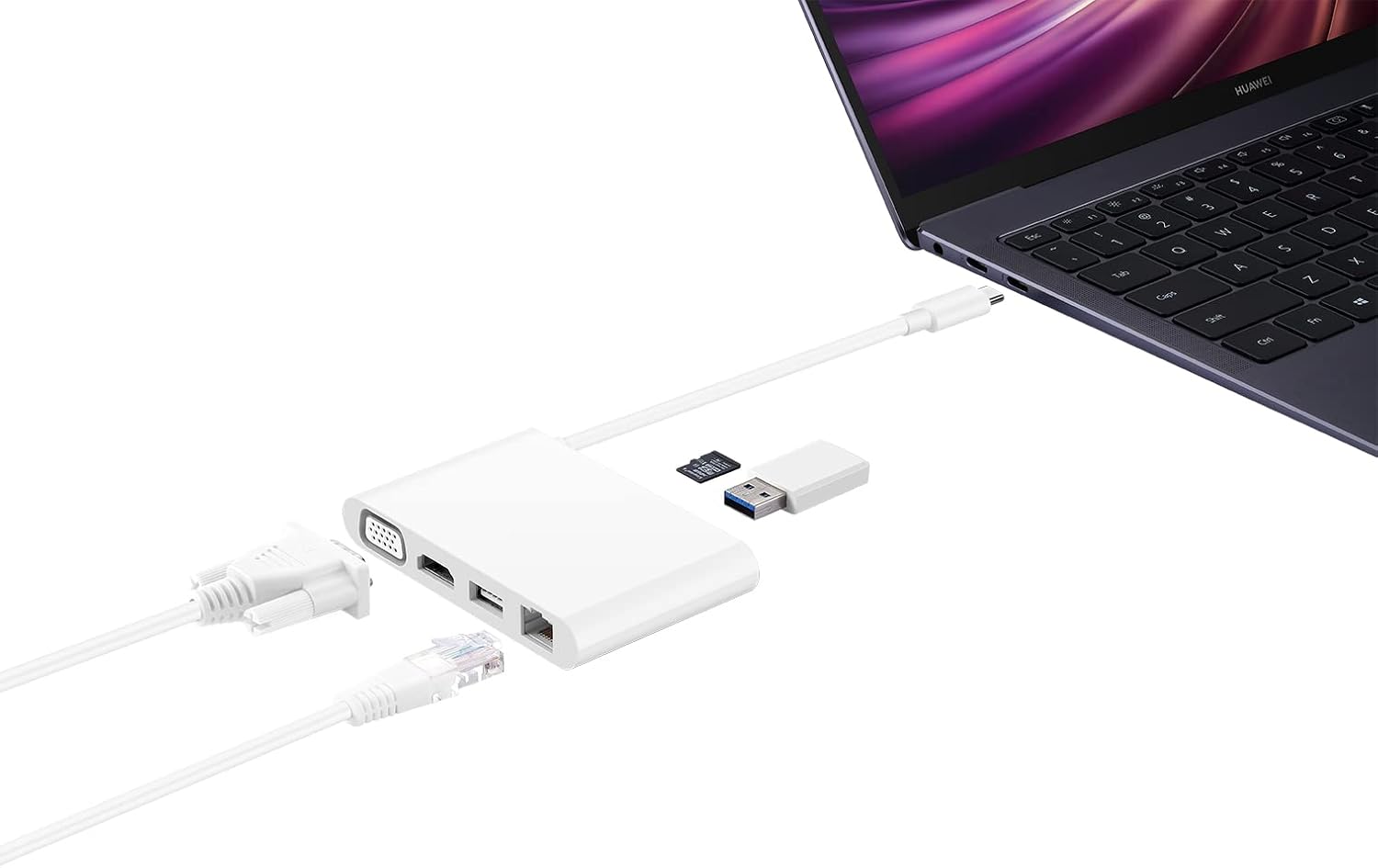
Image 4.1: The MateDock 3 in use, connected to a laptop, demonstrating connections for a monitor, Ethernet, and USB devices.
5. Operating Instructions
5.1. Video Output (HDMI / VGA)
- Connect an HDMI cable from your monitor/TV to the HDMI port on the MateDock 3.
- Alternatively, connect a VGA cable from your monitor/projector to the VGA port on the MateDock 3.
- Your host device should automatically detect the external display. You may need to adjust display settings (e.g., mirror, extend) in your operating system.
- Note: Only one video output (HDMI or VGA) can be used at a time.
5.2. USB Peripherals (USB-A / USB-C)
- Plug your USB-A devices (e.g., mouse, keyboard, USB flash drive) into the USB-A port.
- The USB-C port on the dock can be used for power delivery to your host device or for connecting other USB-C peripherals.
5.3. Network Connection (LAN)
- Connect an Ethernet cable from your router or network switch to the LAN (RJ45) port on the MateDock 3.
- Your host device will establish a wired network connection.
5.4. microSD Card Reader
- Insert a microSD card into the designated slot on the MateDock 3.
- The card will appear as a removable drive on your host device, allowing you to access its contents.
6. Maintenance and Care
- Keep the MateDock 3 clean and dry. Avoid exposure to liquids or excessive humidity.
- Do not expose the device to extreme temperatures.
- Clean the exterior with a soft, dry cloth. Avoid abrasive cleaners.
- Handle the integrated USB-C cable with care to prevent damage.
7. Troubleshooting
- No Display Output:
- Ensure the MateDock 3's USB-C cable is securely connected to your host device.
- Verify that the HDMI or VGA cable is firmly connected to both the dock and the display.
- Check your host device's display settings to ensure the external monitor is detected and configured correctly.
- Try connecting only one video output (HDMI or VGA) at a time.
- USB Devices Not Working:
- Ensure the USB device is properly inserted into the USB-A or USB-C port.
- If the device requires external power, ensure the MateDock 3 is connected to a power source via its USB-C port.
- Test the USB device directly with your host device to rule out device-specific issues.
- No Network Connection:
- Verify that the Ethernet cable is securely connected to both the MateDock 3 and your router/switch.
- Check your host device's network settings.
- Ensure your router/switch is functioning correctly.
- microSD Card Not Detected:
- Ensure the microSD card is fully inserted into the slot.
- Check if the card is formatted correctly and readable by your host device.
8. Specifications
| Feature | Detail |
|---|---|
| Model Number | 55031424 |
| Dimensions (L x W x H) | 9.4 x 5.9 x 1.4 cm |
| Weight | 86 g |
| Hardware Interface | HDMI, VGA, USB-A, USB-C, LAN (RJ45), microSD |
| Number of Ports | 5 (excluding input USB-C cable and microSD slot) |
| Compatible Devices | Devices with USB-C ports supporting video output and power delivery |
| Color | White |
9. Warranty Information
For detailed warranty information, please refer to the warranty card included with your product packaging or visit the official Huawei website. Keep your purchase receipt as proof of purchase for warranty claims.
10. Customer Support
If you encounter any issues or have questions not covered in this manual, please contact Huawei customer support through their official website or the contact information provided in your product documentation.


