
1. Introduction
This manual provides essential information for the safe and efficient operation, maintenance, and troubleshooting of your Bezzera Magica PID E61 Espresso Machine. Please read this manual thoroughly before using the machine for the first time and keep it for future reference.
The Bezzera Magica PID E61 is a semi-automatic espresso machine designed for home use, featuring a heat exchanger boiler system, an E61 group head, and a PID temperature control system for precise temperature stability.
2. Safety Information
- Always connect the machine to a grounded electrical outlet.
- Do not immerse the machine, cord, or plug in water or other liquids.
- Keep hands and fingers away from hot surfaces, steam wands, and hot water spouts during operation.
- Unplug the machine from the outlet when not in use and before cleaning.
- Do not operate the machine with a damaged cord or plug.
- Ensure the water reservoir is adequately filled before turning on the machine.
3. Components Overview
Familiarize yourself with the main components of your espresso machine:
- E61 Group Head: The brewing component where the portafilter locks in.
- Steam Wand: Used for steaming milk.
- Hot Water Spout: Dispenses hot water for americanos or tea.
- Pressure Gauges: Displays boiler pressure and pump pressure.
- PID Display: Shows and allows adjustment of boiler temperature.
- Water Reservoir: Located under the cup warmer, holds water for the machine.
- Drip Tray: Collects excess water and coffee.
- Cup Warmer: Top surface of the machine, uses residual heat to warm cups.
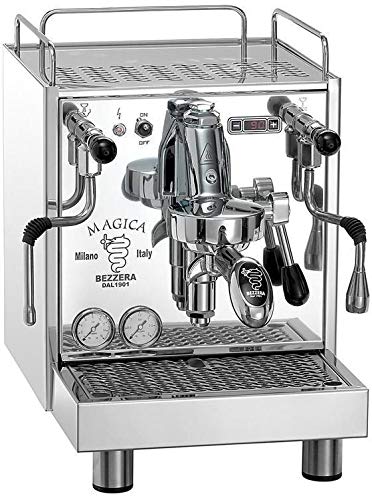
Figure 1: Front view of the Bezzera Magica PID E61 Espresso Machine, showcasing its polished stainless steel exterior, E61 group head, steam and hot water wands, and pressure gauges.
4. Setup
4.1 Unpacking
- Carefully remove the machine and all accessories from the packaging.
- Place the machine on a stable, level, and heat-resistant surface.
- Remove any protective films or packaging materials.
4.2 Water Tank Installation and Filling
- Lift the cup warmer tray to access the water reservoir.
- Remove the water reservoir and rinse it with fresh water.
- Fill the reservoir with fresh, filtered water up to the maximum fill line. Do not use distilled water.
- Carefully place the filled reservoir back into its compartment, ensuring it is seated correctly.
4.3 Initial Power On and Priming
- Plug the machine into a grounded electrical outlet.
- Turn on the main power switch, usually located on the front or side of the machine.
- The pump will activate to fill the boiler. This process may take a few minutes.
- Once the boiler is filled, the heating element will engage, and the machine will begin to heat up to the set temperature (indicated on the PID display).
- To prime the group head, lift the E61 brew lever until water flows steadily from the group head, then lower it.
- To prime the hot water wand, open the hot water valve until water flows steadily, then close it.
- Allow the machine to fully heat up for at least 20-30 minutes for optimal temperature stability.
5. Operating Instructions
5.1 Brewing Espresso
- Ensure the machine is fully heated and the pressure gauges indicate optimal pressure.
- Grind fresh coffee beans to an espresso-fine consistency.
- Dose the portafilter with the desired amount of ground coffee (typically 14-18g for a double shot).
- Distribute the coffee evenly and tamp firmly with consistent pressure.
- Wipe any loose grounds from the portafilter rim.
- Insert the portafilter into the E61 group head and lock it securely.
- Place your espresso cup(s) under the portafilter spouts.
- Lift the E61 brew lever to start the extraction.
- Monitor the extraction. A typical double shot takes 25-30 seconds to yield 1.5-2 oz (45-60 ml) of espresso.
- Lower the brew lever to stop the extraction.
- Remove the portafilter, discard the spent coffee puck, and rinse the portafilter.
5.2 Steaming Milk
- Fill a stainless steel milk pitcher with cold milk, typically to just below the spout.
- Purge the steam wand by briefly opening the steam valve to release any condensed water. Close the valve.
- Submerge the tip of the steam wand just below the surface of the milk.
- Open the steam valve fully.
- Angle the pitcher to create a whirlpool effect, incorporating air for texture (stretching) and then submerging the wand deeper to heat the milk (texturing).
- Continue steaming until the milk reaches the desired temperature (around 140-150°F / 60-65°C) and has a glossy, velvety texture.
- Close the steam valve and immediately wipe the steam wand with a damp cloth.
- Purge the steam wand again to clear any milk residue from the tip.
5.3 Hot Water Dispensing
- Place a cup under the hot water spout.
- Open the hot water valve to dispense hot water.
- Close the valve when the desired amount of water is dispensed.
5.4 PID Temperature Adjustment
- The PID display shows the current boiler temperature.
- Refer to your machine's specific PID controller instructions for details on how to enter programming mode and adjust the set temperature. This typically involves pressing and holding certain buttons.
- Adjusting the temperature can influence the flavor profile of your espresso. Higher temperatures generally extract more bitterness, while lower temperatures can result in more acidity.
6. Maintenance
6.1 Daily Cleaning
- Portafilter and Baskets: After each use, remove the portafilter, discard the coffee puck, and rinse the portafilter and basket under hot water.
- Drip Tray: Empty and rinse the drip tray daily to prevent mold and odors.
- Steam Wand: Always wipe and purge the steam wand immediately after steaming milk.
- Exterior: Wipe down the stainless steel exterior with a soft, damp cloth to remove coffee splashes and fingerprints.
6.2 Group Head Cleaning (Backflushing)
Perform backflushing regularly (e.g., weekly for home use, daily for commercial use) to clean the group head and solenoid valve.
- Insert a blind filter (a portafilter basket with no holes) into your portafilter.
- Add a small amount of espresso machine cleaning detergent (e.g., Cafiza) to the blind filter.
- Lock the portafilter into the group head.
- Lift the brew lever for 10-15 seconds, then lower it. The pressure will build and then release, cleaning the group.
- Repeat this process 3-5 times.
- Remove the portafilter, rinse it, and repeat the backflushing process 3-5 more times with just water (no detergent) to rinse thoroughly.
6.3 Descaling
Descaling is crucial to remove mineral buildup in the boiler and pipes. The frequency depends on your water hardness. Use a commercial descaling solution designed for espresso machines and follow the manufacturer's instructions carefully.
- Always use a descaling solution specifically formulated for espresso machines.
- Never use vinegar, as it can damage internal components.
- Follow the descaler's instructions for dilution and application.
- Thoroughly rinse the machine with several tanks of fresh water after descaling to remove all descaling solution residue.
7. Troubleshooting
| Problem | Possible Cause | Solution |
|---|---|---|
| No water from group head | Empty water reservoir, pump not primed, clogged group head. | Fill reservoir, prime pump (see Setup), backflush group head. |
| No steam from wand | Steam boiler not heated, wand clogged. | Allow machine to heat up, clean steam wand tip. |
| Espresso extracts too fast | Coffee ground too coarse, insufficient dose, tamping too light. | Grind finer, increase coffee dose, tamp firmer. |
| Espresso extracts too slow or not at all | Coffee ground too fine, overdose, tamping too hard. | Grind coarser, reduce coffee dose, tamp lighter. |
| Machine not heating up | Power issue, boiler empty, heating element failure. | Check power connection, fill reservoir, contact support if issue persists. |
8. Specifications
- Model: Bezzera Magica PID E61
- Boiler Type: Heat Exchanger
- Boiler Material: Copper
- Boiler Capacity: 2 Liters
- Group Head: E61
- Temperature Control: PID System
- Water Source: Internal Water Reservoir
- Special Features: Built-in Cup Warmer, Extraction Pressure Gauge, Joystick Style Hot Water and Steam Wands.
- UPC: 685349756933
- ASIN: B085XMRVTG
9. Warranty and Support
Your Bezzera Magica PID E61 Espresso Machine comes with a manufacturer's warranty. Please refer to the warranty card included with your purchase for specific terms and conditions, including coverage duration and what is covered.
For technical assistance, spare parts, or warranty claims, please contact your authorized Bezzera dealer or the official Bezzera customer support. Keep your proof of purchase handy when contacting support.
Manufacturer: Bezzera


