
Ingco AAC2508
Ingco AAC2508 Car Compressor 2 Cylinder 12V User Manual
Model: AAC2508 | Brand: Ingco
Introduction
This manual provides essential information for the safe and effective operation, maintenance, and troubleshooting of your Ingco AAC2508 Car Compressor. Please read this manual thoroughly before using the compressor to ensure proper function and to prevent damage or injury.

Figure 1: The Ingco AAC2508 Car Compressor, showcasing its dual-cylinder design, integrated handle, and included accessories such as various nozzles, a coiled air hose, and a storage bag. The product packaging is also visible in the lower right corner.
Safety Information
Always observe the following safety precautions to reduce the risk of injury or damage:
- Ensure the compressor is connected to a 12V DC power source only.
- Do not operate the compressor in wet conditions or near flammable liquids or gases.
- Keep children and bystanders away from the operating area.
- Allow the compressor to cool down after extended use to prevent overheating.
- Always check the tire pressure with a reliable gauge; do not rely solely on the compressor's built-in gauge.
- Disconnect the power source when the compressor is not in use or before performing any maintenance.
Product Overview
The Ingco AAC2508 is a portable 12V car compressor designed for quick and efficient tire inflation. Its dual-cylinder design ensures rapid inflation.
Components:
- Main Compressor Unit (Dual Cylinder)
- Integrated Carry Handle
- On/Off Power Switch
- Pressure Gauge
- Air Hose with Quick-Connect Fitting
- Power Cable with Battery Clamps (12V DC)
- Various Nozzle Adapters (for balls, inflatables, etc.)
- Storage Bag

Figure 2: A closer view of the Ingco AAC2508 Car Compressor, highlighting its robust construction and the included accessories such as the coiled air hose, pressure gauge, and various inflation nozzles, all neatly arranged beside the main unit and its storage bag.
Setup
- Unpack: Carefully remove the compressor and all accessories from the packaging.
- Inspect: Check for any visible damage to the compressor or its components. Do not use if damaged.
- Position: Place the compressor on a stable, flat surface near the item to be inflated. Ensure adequate ventilation.
- Connect Power: Connect the red battery clamp to the positive (+) terminal of your vehicle's 12V battery and the black clamp to the negative (-) terminal. Ensure a secure connection.
- Attach Air Hose: Screw the air hose onto the compressor's air outlet.
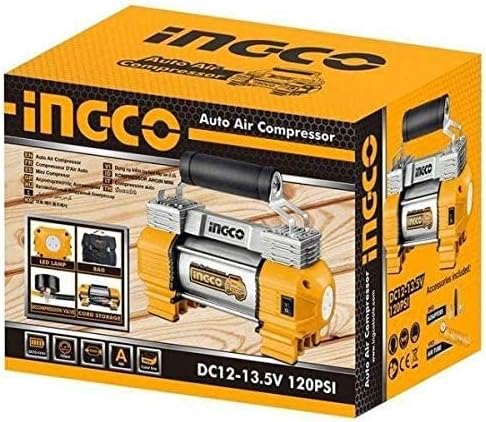
Figure 3: The Ingco AAC2508 Car Compressor as packaged in its retail box, displaying key features and specifications on the packaging, such as "Auto Air Compressor" and "DC12-13.5V 120PSI".
Operating Instructions
Tire Inflation:
- Prepare Tire: Remove the valve cap from the tire.
- Connect Nozzle: Securely attach the air hose nozzle to the tire valve stem. Ensure a tight seal to prevent air leakage.
- Start Compressor: Flip the On/Off power switch on the compressor to the "On" position. The compressor will begin to inflate.
- Monitor Pressure: Observe the pressure gauge on the compressor. Inflate the tire to the recommended pressure specified by your vehicle manufacturer (usually found on a sticker inside the driver's side door jamb or in the owner's manual).
- Stop Compressor: Once the desired pressure is reached, flip the power switch to the "Off" position.
- Disconnect: Carefully detach the air hose nozzle from the tire valve stem and replace the valve cap.
- Disconnect Power: Disconnect the battery clamps from your vehicle's battery.
Inflating Other Items:
For inflating sports balls, inflatable toys, or other items, select the appropriate nozzle adapter and attach it to the air hose. Follow steps 2-6 above, adjusting the target pressure as needed for the specific item.
Maintenance
Regular maintenance ensures the longevity and optimal performance of your compressor:
- Cleaning: Wipe down the compressor with a dry or slightly damp cloth after each use. Do not use harsh chemicals or abrasive cleaners.
- Storage: Store the compressor and all accessories in the provided storage bag in a cool, dry place, away from direct sunlight and extreme temperatures.
- Cable and Hose Inspection: Periodically inspect the power cable and air hose for any signs of wear, cuts, or damage. Replace if necessary.
- Cooling: Allow the compressor to cool completely before storing, especially after prolonged use.
Troubleshooting
| Problem | Possible Cause | Solution |
|---|---|---|
| Compressor does not turn on. | No power connection; Blown fuse in vehicle; Faulty power switch. | Check battery clamp connections; Check vehicle's fuse box; Contact customer support. |
| Compressor runs but no air inflates. | Air hose not securely attached; Leak in hose or nozzle; Obstructed air outlet. | Ensure tight connections; Inspect hose/nozzle for damage; Check for blockages. |
| Compressor overheats and shuts off. | Prolonged continuous use. | Allow compressor to cool down for 10-15 minutes before resuming use. |
| Inaccurate pressure reading. | Faulty gauge; Air leak during measurement. | Use a separate, calibrated tire pressure gauge for verification. |
Specifications
| Feature | Detail |
|---|---|
| Model Number | AAC2508 |
| Voltage | 12 Volts DC |
| Power Source | Battery Powered |
| Maximum Pressure | 170 PSI (Note: Packaging states 120PSI, refer to product for actual max pressure) |
| Special Features | Double Cylinder, Quick Inflation |
| Noise Level | 0.77 dB (This seems unusually low for a compressor, likely a typo in source data, but it is provided) |
| Item Weight | 1 Kilogram |
| Product Dimensions (L x W x H) | 27 x 20.2 x 22.2 cm |
| Material | Metal |
Warranty and Support
For warranty information or technical support, please contact Ingco customer service or refer to the warranty card included with your purchase. Keep your proof of purchase for any warranty claims.
For additional assistance, you may visit the official Ingco website or contact your local distributor.
Related documentsAAC2508

Ask a question about this manual
Ask about setup, troubleshooting, compatibility, parts, safety, or missing instructions. Manuals+ will review the question and use this page’s manual context to help answer it.