
Introduction
This manual provides essential information for the setup, operation, and maintenance of your Guild OM-120 Acoustic Guitar. Please read thoroughly to ensure proper use and longevity of your instrument.
The Guild OM-120 is a mid-sized orchestra shaped acoustic guitar, designed for both strumming and fingerpicking, producing a sweet, balanced tone. It features a solid African mahogany top, back, and sides.
Product Overview
The Guild OM-120 is part of the Westerly Collection, known for its craftsmanship and quality. Key features include a bone nut and saddle, mother-of-pearl rosette, 1¾” nut width on a vintage-shaped Guild neck, iconic Chesterfield headstock emblem, and a period-correct tortoiseshell pickguard.

Image: Front view of the Guild OM-120 Acoustic Guitar, showcasing its natural mahogany finish and orchestra body shape.

Image: Angled front view of the Guild OM-120, highlighting the soundhole, bridge, and pickguard details.
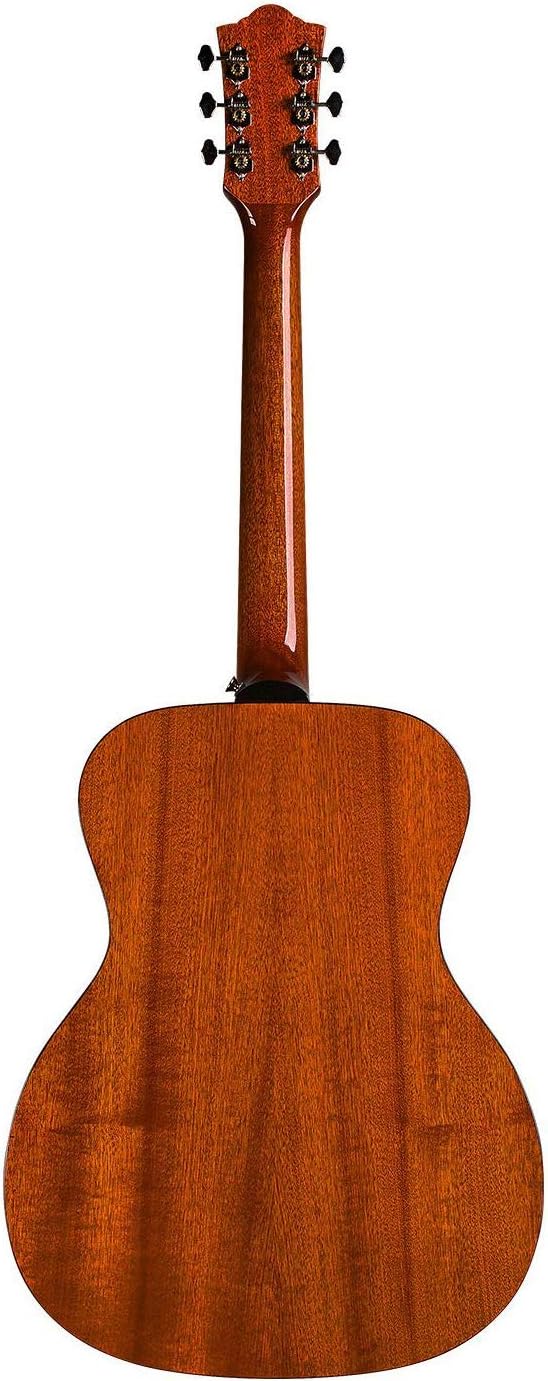
Image: Rear view of the Guild OM-120 Acoustic Guitar, displaying the solid African mahogany back and neck.

Image: Close-up of the soundhole and bridge area, showing the mother-of-pearl rosette and bone saddle.

Image: Detailed view of the guitar's body, emphasizing the natural wood grain of the mahogany.

Image: Close-up of the back of the guitar, showcasing the rich texture and pattern of the African mahogany wood.
Setup
Unpacking
Carefully remove the guitar from its lightweight polyfoam case. Inspect the instrument for any signs of damage during transit. Retain all packaging materials for future transport or storage.
Tuning
Before playing, ensure the guitar is properly tuned. Use a reliable electronic tuner for accuracy. The standard tuning for a 6-string acoustic guitar is E-A-D-G-B-e (from thickest to thinnest string).
String Installation (if needed)
The guitar comes with phosphor bronze strings. If replacing strings, loosen the old strings, remove the bridge pins and strings, then insert new strings, secure with bridge pins, and tune. Ensure strings are properly seated in the nut and bridge slots.
Operating Instructions
Playing Position
Hold the guitar comfortably, either seated or standing. Ensure your strumming/picking hand has free movement and your fretting hand can reach all frets without strain. A proper posture helps prevent fatigue and injury.
Basic Chords and Strumming
Begin by learning basic open chords and simple strumming patterns. Practice regularly to develop finger strength, coordination, and muscle memory. Utilize online resources or instructional books for guidance.
Fingerpicking Techniques
For fingerpicking, use individual fingers to pluck strings. Experiment with different patterns to achieve desired musical textures. This technique allows for more intricate melodies and harmonies.
Maintenance
Cleaning
Wipe down the guitar body, neck, and strings with a soft, lint-free cloth after each use to remove sweat and oils. For a deeper clean, use guitar-specific cleaning products designed for gloss finishes. Avoid abrasive materials.
Humidity Control
Maintain a stable humidity level (ideally 45-55%) to prevent wood warping or cracking. Use a guitar humidifier in dry environments and avoid extreme temperature changes.
String Replacement
Replace strings every 1-3 months, or sooner if they sound dull, show signs of wear, or break. This maintains optimal tone, intonation, and playability. Always replace all strings at once for consistent tone.
Neck Adjustment (Truss Rod)
The neck may require occasional adjustment via the truss rod to maintain proper relief. This should ideally be performed by a qualified guitar technician to prevent damage to the instrument.
Troubleshooting
Buzzing Strings
- Check string height at the nut and saddle.
- Ensure frets are level; uneven frets can cause buzzing.
- Adjust neck relief using the truss rod (professional assistance recommended).
Dull Tone
- Replace old, worn-out strings.
- Check for proper bridge saddle and nut seating; ensure they are not loose.
Tuning Instability
- Ensure strings are properly stretched after installation.
- Check tuning machine screws for tightness.
- Verify nut slots are not binding the strings; a small amount of graphite can help.
Specifications
| Feature | Detail |
|---|---|
| Model Number | 384-2200-721 |
| Body Material | Solid African Mahogany (Top, Back, Sides) |
| Neck Material | Mahogany |
| Fretboard Material | Rosewood |
| Nut & Saddle | Bone |
| Nut Width | 1¾ inches |
| Scale Length | 25.5 inches |
| Number of Strings | 6 |
| Finish | Natural Gloss |
| Item Weight | 4 pounds |
| Product Dimensions | 41 x 15.25 x 4 inches |
| Included Accessories | Lightweight Polyfoam Case |
Warranty Information
For detailed warranty information, please refer to the official Guild Guitars website or contact customer support. Keep your proof of purchase for any warranty claims.
Support
For further assistance, technical support, or to purchase accessories, please visit the GUILD Store or contact Guild customer service.
Related Videos
No official seller videos are available for this product at this time.


