
1. Introduction
The FAAC XF 433 is a 433 MHz receiver module designed for seamless integration with compatible FAAC control units. This module facilitates wireless communication for various access control applications, such as gate automation systems. It ensures reliable reception of signals from FAAC 433 MHz transmitters, enabling efficient and secure operation of your automated systems.
2. Product Overview
The FAAC XF 433 receiver module is a compact and essential component for expanding the wireless capabilities of your FAAC automation system. Key features include:
- Original FAAC XF 433 MHz Frequency Module: Ensures compatibility and optimal performance with FAAC systems.
- OmniDEC Universal Coding: Provides robust and secure signal processing.
- 3-Pin Molex Connector: Designed for quick and secure attachment to compatible FAAC control units.
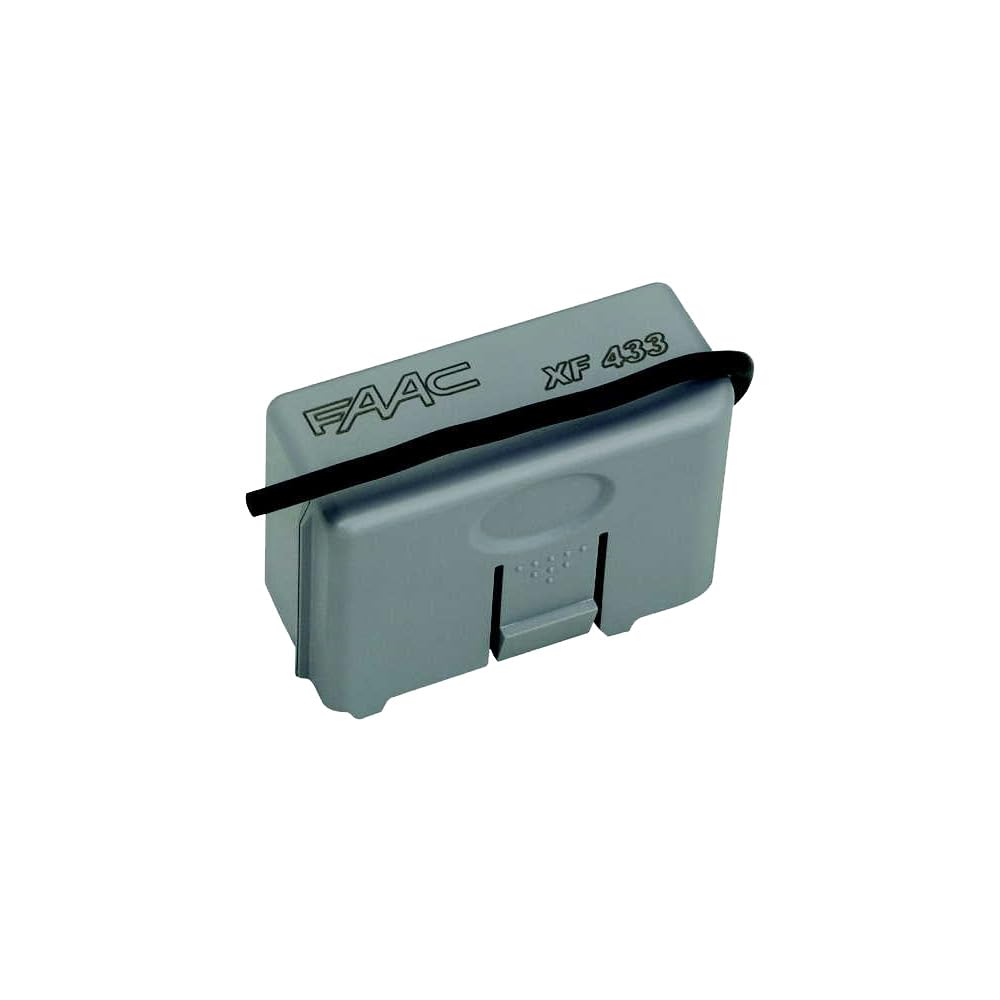
3. Setup and Installation
Proper installation is crucial for the reliable operation of your FAAC XF 433 receiver module. Always follow these steps carefully.
- Safety Precautions: Before beginning any installation, ensure that the main power supply to your FAAC control unit is completely disconnected. This prevents electrical shock and damage to the equipment.
- Locate Connector: Identify the dedicated 3-pin Molex connector slot on your compatible FAAC control unit. Refer to your control unit's manual for the exact location.
- Insert Module: Carefully align the FAAC XF 433 module with the 3-pin Molex connector. Gently push the module into place until it is securely seated. Do not force the connection.
- Restore Power: Once the module is firmly installed, restore the main power supply to the control unit.
- Initial Pairing/Programming: The receiver module will now be recognized by the control unit. Refer to your specific FAAC control unit's instruction manual for detailed steps on how to pair new transmitters or program the receiver module for your desired functionality.
Note: Incorrect installation can lead to malfunction or damage. If you are unsure, consult a qualified technician.
4. Operating Instructions
The FAAC XF 433 receiver module functions as the communication bridge between your FAAC 433 MHz transmitters and the main control unit. Its operation is largely automatic once properly installed and programmed.
- Signal Reception: The module continuously listens for radio signals from paired FAAC 433 MHz transmitters.
- Command Execution: Upon receiving a valid and recognized signal, the module relays the command to the connected FAAC control unit. The control unit then executes the pre-programmed action, such as opening, closing, or stopping a gate.
- Transmitter Pairing: To add new transmitters or replace existing ones, you must follow the specific programming procedure detailed in your FAAC control unit's instruction manual. This typically involves activating a programming mode on the control unit and then performing a sequence of actions with the transmitter.
Ensure that transmitters are within the operational range of the receiver module for reliable communication.
5. Maintenance
The FAAC XF 433 receiver module is designed for long-term, reliable operation with minimal maintenance. Adhering to these simple guidelines will help ensure its longevity:
- Keep Clean and Dry: Ensure the module and its surrounding area within the control unit remain free from dust, dirt, and moisture. Excessive dust can impede performance, and moisture can cause irreparable damage.
- Secure Connection: Periodically check that the module is securely seated in its 3-pin Molex connector. A loose connection can lead to intermittent operation.
- Avoid Physical Damage: Protect the module from physical impact or excessive vibration.
- No User Serviceable Parts: Do not attempt to open, modify, or repair the module yourself. Doing so will void any potential warranty and may cause further damage. For any issues requiring service, contact authorized FAAC service personnel.
6. Troubleshooting
If you experience issues with your FAAC XF 433 receiver module, consider the following troubleshooting steps:
| Problem | Possible Cause | Solution |
|---|---|---|
| No response from transmitter |
|
|
| Intermittent operation |
|
|
| Module not recognized by control unit |
|
|
If the problem persists after attempting these solutions, please contact FAAC technical support or a qualified service technician.
7. Specifications
Technical specifications for the FAAC XF 433 Receiver Module (Model 787831):
- Model Number: 787831
- Manufacturer: FAAC
- Frequency: 433 MHz
- Coding: OmniDEC Universal
- Connector Type: 3-pin Molex
- Approximate Dimensions (L x W x H): 0.01 x 0.01 x 0.01 cm (Note: These are package dimensions and indicate a very compact module.)
- Weight: 10 grams
- Batteries Required: No (Powered by control unit)