
ATIKA ASP 4 N-2
ATIKA ASP 4 N-2 Hydraulic Log Splitter Instruction Manual
1. Introduction
This manual provides essential information for the safe and efficient operation, assembly, and maintenance of your ATIKA ASP 4 N-2 Hydraulic Log Splitter. Please read these instructions thoroughly before initial use to ensure proper handling and to prevent injury or damage to the equipment. Keep this manual for future reference.
2. Safety Instructions
The ATIKA ASP 4 N-2 log splitter is designed to comply with the European safety standard EN 609:2017. Adherence to the following safety guidelines is crucial for preventing accidents:
- Read the Manual: Always read and understand the entire instruction manual before operating the log splitter.
- Personal Protective Equipment (PPE): Wear appropriate safety glasses, hearing protection, gloves, and sturdy footwear during operation.
- Two-Hand Operation: The log splitter features a two-hand control system for increased safety. Both hands must be engaged to operate the machine, ensuring they are away from the splitting wedge.
- Access Protection: The integrated access protection system is designed to prevent accidental contact with moving parts. Do not bypass or remove these safety features.
- Wood Tray: The wood tray is designed to contain split wood, preventing it from falling uncontrollably and reducing the risk of injury. Ensure it is correctly installed.
- Stable Surface: Operate the log splitter on a firm, level, and stable surface to prevent tipping.
- Clear Work Area: Keep the work area clear of bystanders, children, and pets. Maintain a safe distance from the machine during operation.
- Electrical Safety: Ensure the power supply matches the machine's requirements (230 V ~ 50 Hz). Use only approved extension cords in good condition.
- Log Placement: Only split logs that fit within the specified maximum length (370 mm) and diameter. Do not attempt to split logs with excessive knots or metal inclusions.
3. Product Overview
The ATIKA ASP 4 N-2 is a compact and robust hydraulic log splitter designed for efficient wood processing. Its construction facilitates ease of use and portability.

Figure 3.1: Side view of the ATIKA ASP 4 N-2 Hydraulic Log Splitter, showing the motor, wheels, and splitting mechanism with safety cage.
- Compact Design: The machine's compact form factor allows for convenient storage and maneuverability.
- Easy Handling: Designed for straightforward operation, contributing to effective splitting.
- Portability: Equipped with a handle and wheels for easy transport around the work area.
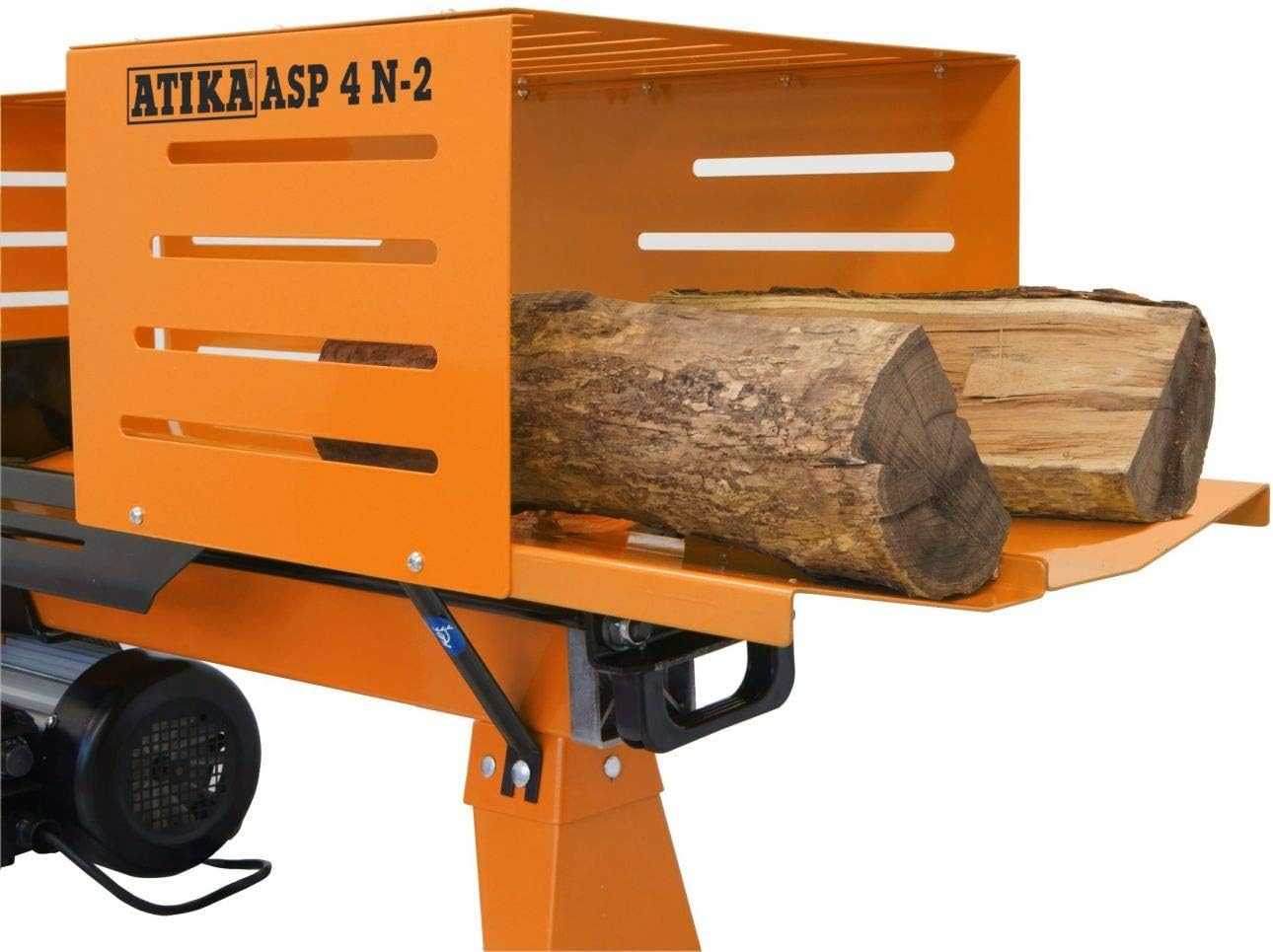
Figure 3.2: The ATIKA ASP 4 N-2 Hydraulic Log Splitter actively splitting a log, demonstrating the wood tray and safety cage in use.
4. Setup
Follow these steps for initial setup of your log splitter:
- Unpacking: Carefully remove all components from the packaging. Inspect for any shipping damage.
- Assembly: Attach the wheels, transport handle, and any safety guards as per the assembly diagrams in the separate assembly guide (if provided). Ensure all fasteners are securely tightened.
- Placement: Position the log splitter on a flat, stable, and non-slip surface. Ensure adequate space around the machine for safe operation and movement of logs.
- Electrical Connection: Connect the power cord to a grounded 230 V ~ 50 Hz electrical outlet. Verify that the circuit can handle the 1500 W power requirement.
- Hydraulic Oil Check: Before first use, verify the hydraulic oil level. The system has a capacity of 2.4 liters. Refer to the maintenance section for details on checking and refilling.
5. Operating Instructions
Operating the ATIKA ASP 4 N-2 log splitter requires careful attention to safety and proper technique:
- Prepare Logs: Ensure logs are cut to a maximum length of 370 mm. Avoid logs with excessive branches or knots that could jam the splitter.
- Position Log: Place the log firmly on the splitting table against the end plate. Ensure it is stable and will not roll during splitting.
- Engage Controls: To initiate the splitting process, simultaneously engage both control levers/buttons with both hands. This activates the hydraulic ram.
- Splitting: The splitting wedge will advance, applying up to 4 tons of force to split the log. Maintain pressure on both controls until the log is fully split or the wedge reaches its maximum stroke (290 mm).
- Retract Wedge: Release both control levers/buttons to retract the splitting wedge to its starting position.
- Clear Split Wood: Carefully remove the split wood from the splitting table. The wood tray helps contain the pieces.
- Repeat: Continue the process for remaining logs. If a log becomes jammed, retract the wedge and reposition the log or attempt to split it from a different angle. Do not attempt to free jammed logs by hand while the machine is running.
6. Maintenance
Regular maintenance ensures the longevity and safe operation of your log splitter:
- Cleaning: After each use, clean the machine, especially the splitting wedge and table, to remove wood chips, sap, and debris. Use a brush or compressed air.
- Hydraulic Oil: Regularly check the hydraulic oil level. The system capacity is 2.4 liters. Refer to the manufacturer's recommendations for oil type and replacement intervals. Low oil levels can impair performance and damage the hydraulic system.
- Inspections: Periodically inspect all bolts, nuts, and fasteners for tightness. Check the power cord for damage. Examine the splitting wedge for wear or damage.
- Lubrication: Lubricate moving parts as indicated in the assembly guide or by the manufacturer.
- Storage: Store the log splitter in a dry, protected area when not in use. Disconnect it from the power supply.
7. Troubleshooting
This section addresses common issues you might encounter:
- Motor Does Not Start:
- Check if the power cord is securely plugged into a functional outlet.
- Verify the circuit breaker or fuse.
- Ensure both control levers/buttons are engaged simultaneously.
- Splitting Wedge Does Not Move or Moves Slowly:
- Check hydraulic oil level; refill if necessary.
- Ensure both control levers/buttons are fully engaged.
- The log might be too hard or too large for the machine's capacity.
- Log Jams:
- Retract the wedge completely.
- Reposition the log or rotate it to split from a different angle.
- Do not attempt to force the log or free it by hand while the machine is powered on.
- Unusual Noise or Vibration:
- Turn off the machine immediately and disconnect power.
- Inspect for loose components, damaged parts, or obstructions.
- If the issue persists, contact customer support.
8. Specifications
| Feature | Specification |
|---|---|
| Model Number | 301727 (ASP 4 N-2) |
| Motor Type | AC Motor |
| Voltage | 230 V ~ 50 Hz |
| Power P1 | 1500 W (S1) |
| Splitting Force | 40 kN (4 tonnes) +/- 10 % |
| Max. Splitting Length | 370 mm |
| Max. Splitting Stroke | 290 mm |
| System Pressure | 16.5 MPa (165 bar) |
| Hydraulic System Oil Capacity | 2.4 l |
| Piston Rod Diameter | 30 mm |
| Dimensions (L x W x H) | 50 x 50 x 28 cm |
| Weight | 49 kg (approx. 108.03 lbs) |
| Sound Pressure Level (LPA) | 78.8 dB (A) |
| Sound Power Level (LWA) | 89.8 dB (A) |
9. Warranty and Support
Warranty information for the ATIKA ASP 4 N-2 Hydraulic Log Splitter is typically provided with the product at the time of purchase or can be found on the manufacturer's official website. For technical support, spare parts, or warranty claims, please contact ATIKA customer service directly. Ensure you have your model number (ASP 4 N-2 or 301727) and proof of purchase available when contacting support.
Related documentsASP 4 N-2


Ask a question about this manual
Ask about setup, troubleshooting, compatibility, parts, safety, or missing instructions. Manuals+ will review the question and use this page’s manual context to help answer it.