
Denso DCP21022
Denso Air Conditioning Compressor DCP21022 User Manual
Introduction
This manual provides essential information for the Denso Air Conditioning Compressor, model DCP21022. It covers product overview, compatibility, technical specifications, and general guidelines for installation, operation, maintenance, and troubleshooting. Please read this manual thoroughly before installation and use to ensure proper function and longevity of the component.
Vehicle Compatibility
The Denso DCP21022 Air Conditioning Compressor is compatible with various CITROËN and PEUGEOT vehicle models. It is crucial to verify compatibility with your specific vehicle using your vehicle's data and adhering to any existing restrictions or criteria.
Compatible Models Include:
- CITROËN BERLINGO Kasten/Großraumlimousine
- CITROËN BERLINGO MULTISPACE
- CITROËN BERLINGO Pritsche/Fahrgestell
- CITROËN C4 II
- CITROËN DS4
- CITROËN DS5
- CITROËN DS 4 / 4 CROSSBACK
- PEUGEOT 3008 Großraumlimousine
- PEUGEOT 5008
- PEUGEOT PARTNER Kasten/Großraumlimousine
- PEUGEOT PARTNER TEPEE
Product Overview
The Denso DCP21022 is an Original Equipment (OE) quality air conditioning compressor designed for automotive climate control systems. This component is responsible for circulating refrigerant throughout the AC system, enabling cooling and dehumidification of the vehicle's interior.

Figure 1: Front view of the Denso DCP21022 Air Conditioning Compressor. This image shows the main body and pulley assembly.

Figure 2: Side view of the Denso DCP21022 Air Conditioning Compressor, highlighting the connection ports.

Figure 3: Rear view of the Denso DCP21022 Air Conditioning Compressor, showing the mounting points.
Setup and Installation
Installation of the Denso DCP21022 Air Conditioning Compressor requires specialized tools and knowledge of automotive AC systems. It is strongly recommended that installation be performed by a qualified professional technician to ensure correct fitting, proper system evacuation and recharging, and to prevent damage to the component or vehicle.
General Installation Considerations:
- Ensure the vehicle's AC system is fully discharged by a certified technician before beginning work.
- Inspect all associated components (condenser, evaporator, dryer/accumulator, expansion valve/orifice tube) for wear or damage and replace as necessary.
- Flush the AC system to remove contaminants and old oil.
- Add the correct type and quantity of compressor oil (PAG 46 YF, 110 ml) as specified.
- Install the new compressor, ensuring all connections are secure and torqued to manufacturer specifications.
- Evacuate the AC system to remove air and moisture.
- Recharge the system with the correct type and quantity of refrigerant (R 134a or R 1234yf) as specified by the vehicle manufacturer.
- Perform a leak test and functional check of the AC system.
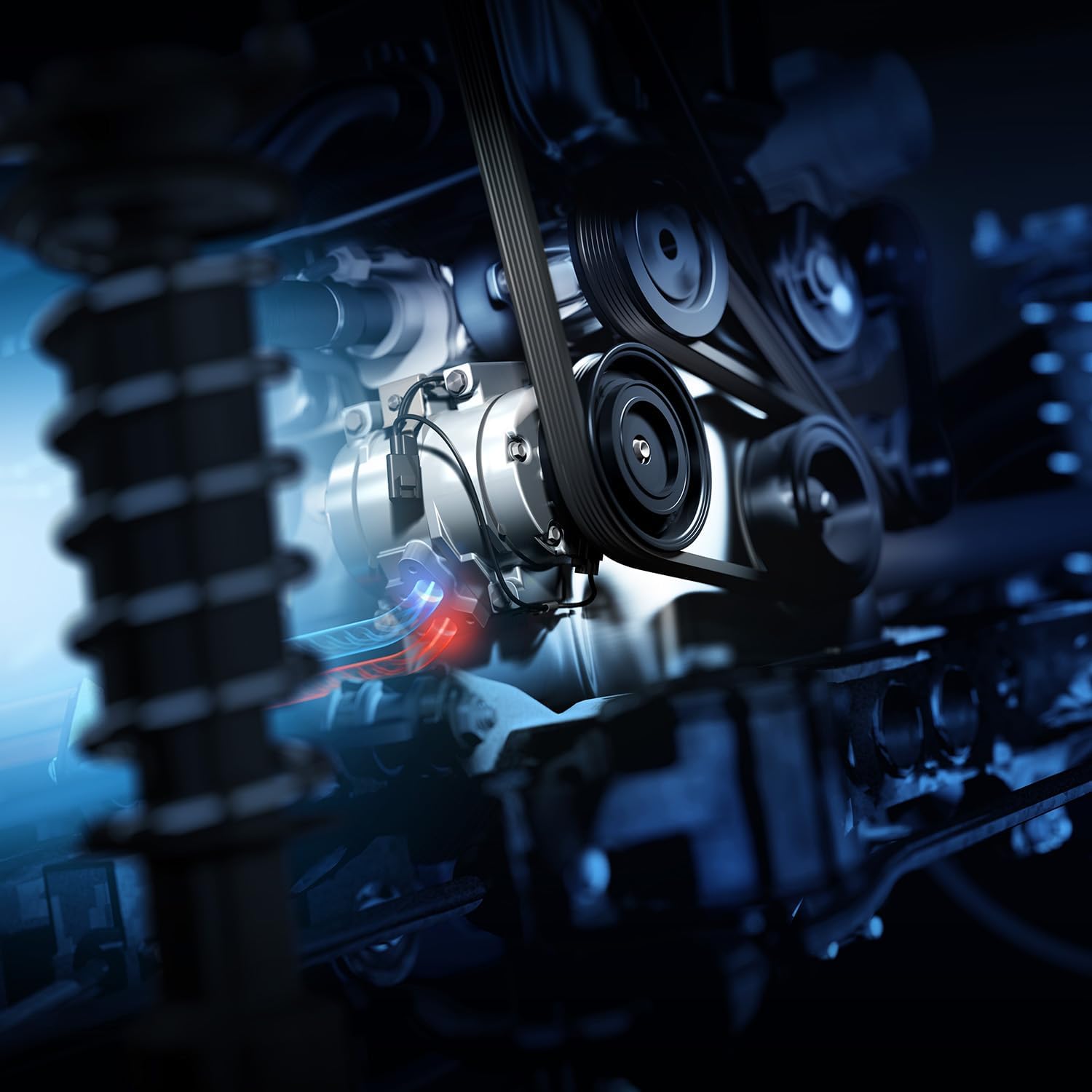
Figure 4: Illustrative view of an air conditioning compressor integrated into an engine system, connected by a drive belt.
Operation
The Denso DCP21022 compressor operates as a key component of your vehicle's air conditioning system. When the AC system is activated, the compressor circulates refrigerant, compressing it to increase its temperature and pressure. This high-pressure, high-temperature gas then moves to the condenser, where it releases heat and condenses into a liquid. The liquid refrigerant then passes through an expansion device, reducing its pressure and temperature, before entering the evaporator to absorb heat from the passenger cabin, thus providing cooling.
The compressor is driven by the engine's accessory belt system. Its engagement is controlled by the vehicle's climate control unit, typically through an electromagnetic clutch (if applicable to this model) or variable displacement mechanism, to regulate cooling output.
Maintenance
Proper maintenance of your vehicle's AC system, including the compressor, is essential for optimal performance and longevity. While the compressor itself generally requires little direct maintenance, regular checks of the overall AC system are recommended.
- Regular System Checks: Have your AC system inspected annually by a qualified technician. They can check refrigerant levels, system pressure, and overall component health.
- Refrigerant Leaks: Address any refrigerant leaks promptly. Low refrigerant levels can cause the compressor to overwork and fail prematurely.
- Drive Belt Inspection: Ensure the compressor's drive belt is in good condition, free from cracks or fraying, and properly tensioned.
- Cabin Air Filter: Replace the cabin air filter regularly to maintain good airflow and reduce strain on the AC system.
- Run AC Periodically: Even in cold weather, run your AC system for a few minutes once a month to keep seals lubricated and prevent component degradation.
Troubleshooting
If you experience issues with your vehicle's air conditioning system, consider the following general troubleshooting steps. For complex issues, professional diagnosis and repair are always recommended.
- No Cold Air: This could indicate low refrigerant, a faulty compressor clutch, an electrical issue, or a leak in the system. Check if the compressor clutch engages when the AC is turned on.
- Unusual Noises: Squealing, grinding, or rattling noises from the compressor area may suggest a failing compressor bearing, clutch issue, or internal compressor damage.
- AC System Cycles On/Off Frequently: This can be a symptom of low refrigerant, an overcharged system, or a faulty pressure switch.
- Foul Odor from Vents: Often related to mold or mildew in the evaporator core, not directly a compressor issue, but can indicate a need for system cleaning.
- Compressor Not Engaging: Check fuses, relays, and electrical connections. Low refrigerant pressure will also prevent the compressor from engaging as a protective measure.
Always consult a certified automotive technician for accurate diagnosis and repair of AC system problems.
Technical Specifications
| Feature | Specification |
|---|---|
| Brand | Denso |
| Model Number | DCP21022 |
| Manufacturer Quality | OE (Original Equipment) |
| Manufacturer Limitation | CITROEN-PEUGEOT, DENSO |
| Number of Ribs | 6 |
| Mounting Type | Bolted |
| Pulley Diameter | 108.6 mm |
| Weight | 4.36 kg (4356 g) |
| Oil Quantity | 110 ml |
| Compressor Oil Type | PAG 46 YF |
| Compressor ID | 5SEL12 |
| Refrigerant Type | R 134a, R 1234yf |
| Product Dimensions | 32 x 22 x 29 cm |
| Voltage | 120 Volt |
| First Available Date | February 14, 2020 |
What's in the Box
The product package typically includes:
- 1 x Denso DCP21022 Air Conditioning Compressor
Warranty and Support
For warranty information and technical support, please refer to the documentation provided with your purchase or contact Denso customer service directly. Keep your purchase receipt and product model number (DCP21022) handy for any inquiries.
Manufacturer: Denso
Model: DCP21022
Related documentsDCP21022


Ask a question about this manual
Ask about setup, troubleshooting, compatibility, parts, safety, or missing instructions. Manuals+ will review the question and use this page’s manual context to help answer it.