
Introduction
This manual provides essential information for the safe and effective operation, maintenance, and troubleshooting of your Makita DPB182Z 18V LXT Cordless Bandsaw. Please read and understand all instructions before using the tool.
The Makita DPB182Z is a portable bandsaw designed for metal cutting applications, offering cordless convenience with a high-torque motor and compact design. It is suitable for cutting conduit, Unistrut, all-thread, channel, corrugated materials, pipe, sheet metal, and square tubing.
General Safety Information
Always follow basic safety precautions to reduce the risk of fire, electric shock, and personal injury. Keep the work area clean and well-lit. Do not operate power tools in explosive atmospheres, such as in the presence of flammable liquids, gases, or dust. Keep children and bystanders away while operating a power tool.
Personal Safety
- Wear appropriate personal protective equipment (PPE) including eye protection, hearing protection, and gloves.
- Dress properly. Do not wear loose clothing or jewelry. Keep hair, clothing, and gloves away from moving parts.
- Stay alert, watch what you are doing, and use common sense when operating a power tool.
Tool Use and Care
- Do not force the power tool. Use the correct power tool for your application.
- Disconnect the battery pack from the power tool before making any adjustments, changing accessories, or storing power tools.
- Store idle power tools out of the reach of children and do not allow persons unfamiliar with the power tool or these instructions to operate the power tool.
- Maintain power tools. Check for misalignment or binding of moving parts, breakage of parts, and any other condition that may affect the power tool’s operation.
Setup
1. Battery Installation
The Makita DPB182Z is a tool-only model; battery and charger are sold separately. Ensure you use genuine Makita 18V LXT Lithium-Ion batteries for optimal performance and safety. Non-genuine batteries may void the warranty and pose safety risks.
Video: Demonstrates the installation of a compatible Makita battery pack into the bandsaw. Ensure the battery is securely latched into place.
2. Blade Installation and Adjustment
Proper blade installation and tension are crucial for safe and efficient cutting. The tool includes one Bi-Metal Band Saw Blade 18 TPI (B-40559).
- Remove the blade cover by unlatching it.
- Carefully bend the new saw blade and slowly insert it into the saw blade groove, ensuring it is properly seated on both wheels and within the blade guides.
- Close the blade cover and secure the latch.
- Adjust the blade tension using the tension lever. The easy blade tracking adjustment feature helps maintain optimal performance.
- Use the provided Hex Wrench 4 (783202-0) to adjust the guide plate position as needed for different material sizes.
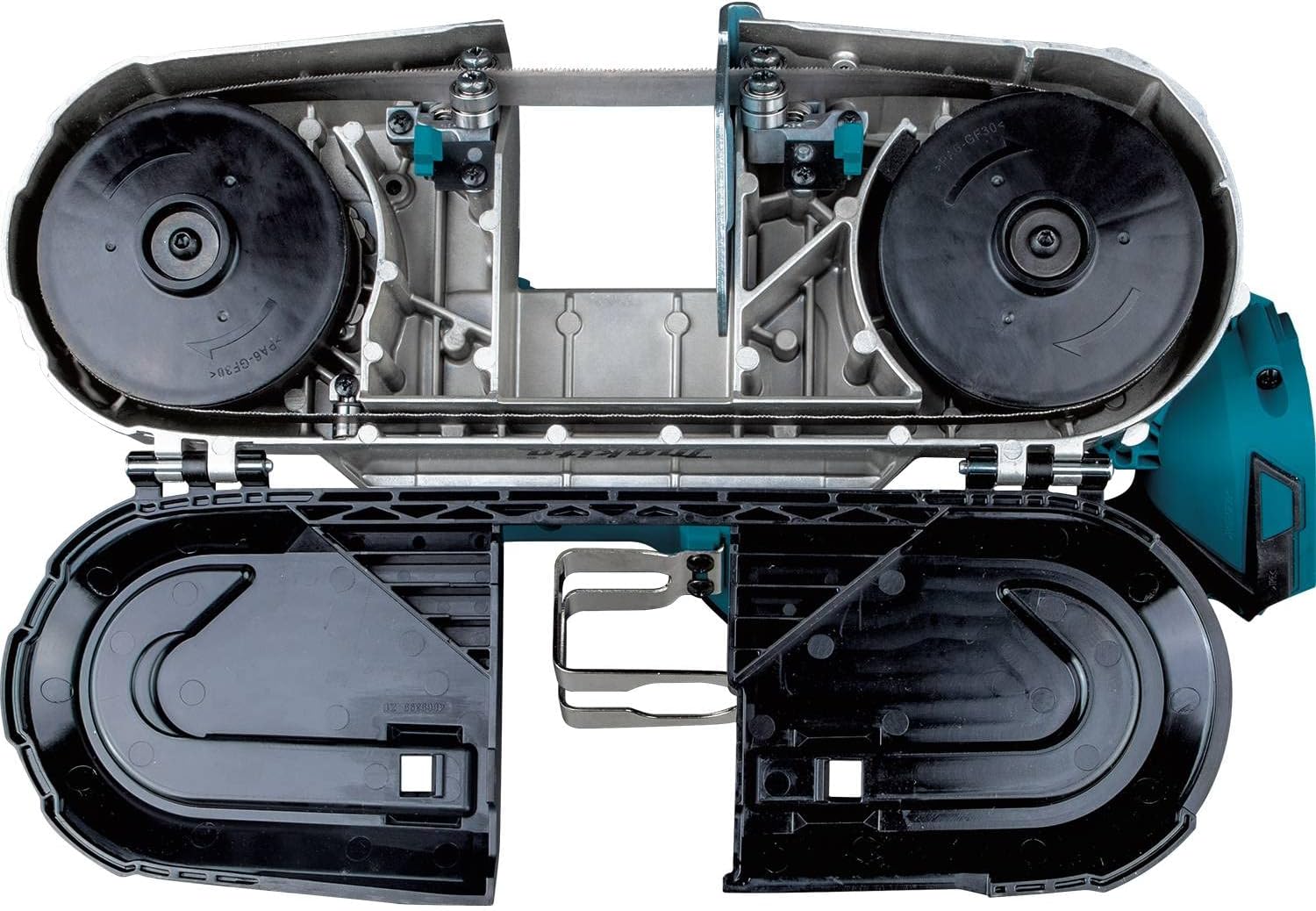
Figure 1: Internal view of the bandsaw with the blade cover open, illustrating the path of the saw blade around the wheels and through the guides.

Figure 2: A detailed view of the blade guides and rollers, highlighting the mechanism that supports and directs the saw blade during operation.
Video: Demonstrates the process of installing and adjusting the saw blade, including tensioning and ensuring proper alignment within the guides.
Video: Shows a detailed guide on how to install the saw blade correctly, emphasizing safety and proper seating.
Operating Instructions
1. Powering On and Off
- To start the bandsaw, first disengage the lock-off button to prevent accidental startup.
- Press the trigger switch to begin operation.
- Release the trigger switch to stop the bandsaw.

Figure 3: Overview of the Makita DPB182Z bandsaw, highlighting the lock-off button and other functional components.
2. Cutting Capacity and Applications
The DPB182Z offers a 2-1/2" (64 mm) cutting capacity, ideal for various metal materials. The adjustable foot protects the material and provides positive support for accurate cuts.
- Materials: Conduit, Unistrut, all-thread, channel, corrugated, pipe, sheet metal, square tubing.
- Overhead Cutting: The compact design and ergonomic shape make it suitable for overhead applications.

Figure 4: An operator demonstrating overhead cutting of a pipe using the portable bandsaw, showcasing its maneuverability.

Figure 5: The bandsaw in use, cutting a pipe while secured in a stand, providing stability for precise cuts.
3. LED Job Light
The built-in L.E.D. light illuminates the work area, providing better visibility for more efficient and accurate work, especially in dimly lit environments.

Figure 6: A close-up shot of the integrated LED light on the bandsaw, showing how it brightens the immediate cutting zone.
4. Usage Scenarios
Video: Demonstrates various ways to use the bandsaw for different cutting tasks and materials.
Video: Illustrates the use of a portable band saw with a base, showcasing variable speed and automatic cutting features for different materials.
Video: Provides an operational view of the bandsaw, demonstrating its functionality and ease of use in various cutting scenarios.
Video: Shows how to effectively use the cutting machine for various tasks, highlighting its precision and efficiency.
Maintenance
Regular maintenance ensures the longevity and optimal performance of your bandsaw.
- Blade Inspection: Regularly inspect the saw blade for wear, damage, or dullness. Replace worn blades promptly to maintain cutting efficiency and safety.
- Cleaning: Keep the tool clean, especially the blade area and ventilation openings, to prevent debris buildup. Use a soft cloth to wipe down surfaces.
- Lubrication: Refer to the detailed service manual for specific lubrication points and schedules, if applicable.
- Storage: Store the bandsaw in a dry, secure location away from moisture and extreme temperatures. Use the removable hook (345736-7) for convenient storage.

Figure 7: The removable hook attached to the bandsaw, designed for easy storage and portability.
Troubleshooting
This section addresses common issues you might encounter with your bandsaw.
| Problem | Possible Cause | Solution |
|---|---|---|
| Bandsaw does not start | Battery not charged or improperly installed; Lock-off button engaged. | Ensure battery is fully charged and correctly inserted. Disengage the lock-off button. |
| Poor cutting performance | Dull or damaged blade; Incorrect blade tension; Incorrect blade type for material. | Replace the blade. Adjust blade tension. Use the appropriate blade for the material being cut. |
| Blade tracking issues | Improper blade tension; Worn blade guides. | Adjust blade tension. Inspect and replace worn blade guides if necessary. |
Specifications
| Feature | Detail |
|---|---|
| Brand | Makita |
| Model Number | DPB182Z |
| Power Source | Battery Powered (18V LXT Lithium-Ion) |
| Blade Speed | 630 ft./min. |
| Cutting Capacity | 2-1/2" (64 mm) |
| Blade Length | 835 Millimeters |
| Blade Material | High Speed Steel (Bi-Metal 18 TPI included) |
| Item Weight | 7.55 Pounds (without battery) |
| Product Dimensions (L x W x H) | 49.4L x 23.8W x 27.6H Centimetres |
| Special Features | Lock-off button, LED Job Light, Adjustable Foot, Aluminum Frame and Blade Housing |
| Included Components | Tool Only, Bi-Metal Band Saw Blade 18 TPI (1 Ea. B-40559), Hex Wrench 4 (783202-0), Hook (345736-7) |
Warranty
The Makita DPB182Z 18V LXT Cordless Bandsaw comes with a 3-Year Limited Manufacturer Warranty. Please retain your proof of purchase for warranty claims. Using non-genuine Makita Lithium-Ion batteries may void the warranty and can result in fire, personal injuries, or property damage.
Support
For further assistance, technical support, or to locate authorized service centers, please visit the official Makita website or contact Makita Canada customer service. Contact information can typically be found on the manufacturer's website or in the packaging materials.
Manufacturer Contact Information: Whitby, ON L1N 7B7, CA
For more information, please visit makita.ca.