1. Introduction
The Fujifilm GFX 100 is a mirrorless medium format digital camera designed for professional photographers and filmmakers. It features a newly developed back-illuminated 102MP imaging sensor paired with the X-Processor 4 engine, capable of producing 16-bit images with exceptional color fidelity, rich shadow detail, and wide dynamic range. This camera is the first large format system to incorporate in-body stabilization and offers wide format 4K/30P motion capture capabilities. Its magnesium alloy body is weather-sealed at 95 points, ensuring durability in various environmental conditions.
Key features include:
- 102MP Back-Illuminated Medium Format CMOS Sensor
- X-Processor 4 Image Processing Engine
- 16-bit Image Output
- In-Body Image Stabilization (IBIS)
- 4K/30P Video Recording
- Weather-Sealed Magnesium Alloy Body
- Integrated Vertical Grip
2. What's in the Box
Upon unboxing your Fujifilm GFX 100, you should find the following components:
- Fujifilm GFX 100 Camera Body
- Removable Electronic Viewfinder
- Camera Strap
- Battery (NP-T125) x2
- Battery Charger
- Power Adapter Plugs
- USB Cable
- Body Cap
- Hot Shoe Cover
- Cable Protector
3. Setup Guide
3.1. Attaching the Viewfinder
The Fujifilm GFX 100 features a removable electronic viewfinder (EVF). To attach it, slide the EVF into the hot shoe mount on top of the camera body until it clicks securely into place. Ensure it is firmly seated to maintain proper electronic connection.
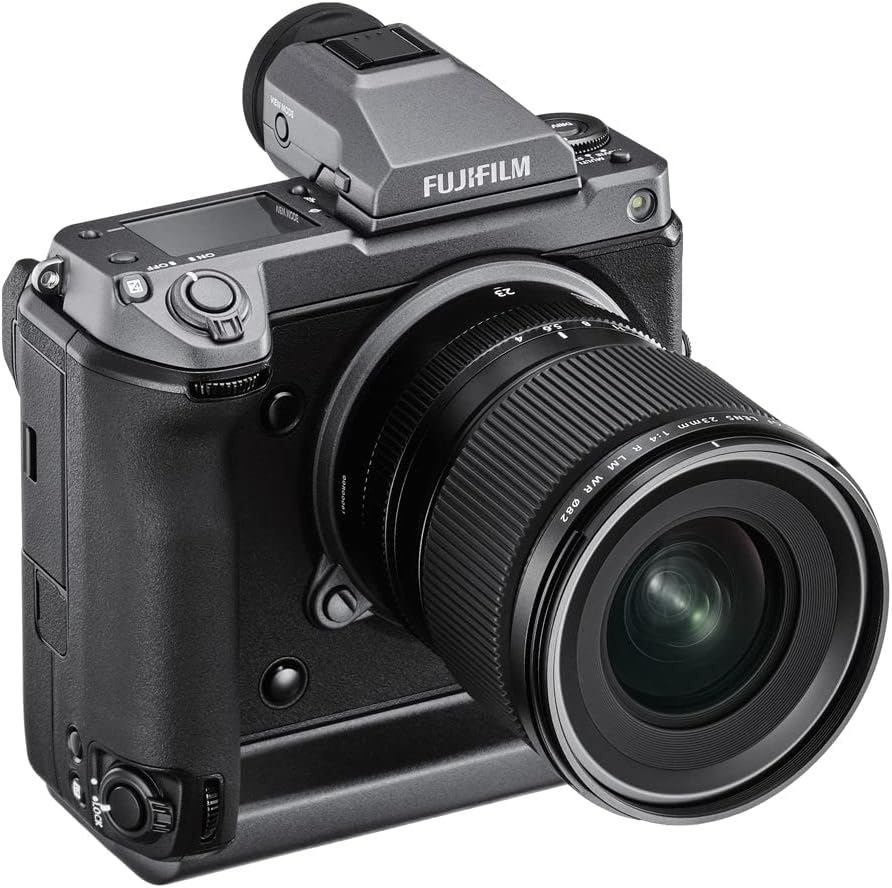
Figure 1: Top view of the GFX 100 camera body, showing the electronic viewfinder attached to the hot shoe.
3.2. Inserting Batteries
The GFX 100 uses two NP-T125 batteries for extended shooting. Locate the battery compartments on the bottom of the camera's integrated vertical grip. Insert both batteries, ensuring they are oriented correctly according to the indicators inside the compartment. Close the battery compartment doors securely.

Figure 2: Rear view of the GFX 100, highlighting the various control dials and the top LCD screen.
3.3. Attaching a Lens
Align the white dot on the lens with the white dot on the camera's lens mount. Gently insert the lens into the mount and rotate it clockwise until it clicks into place. To remove the lens, press the lens release button on the camera body and rotate the lens counter-clockwise.

Figure 3: Front view of the GFX 100 camera body, illustrating the lens mount without an attached lens.
4. Operating the Camera
4.1. Power On/Off
To power on the camera, rotate the power switch located around the shutter button to the 'ON' position. To power off, rotate it to 'OFF'.
4.2. Basic Controls
The GFX 100 features intuitive controls for quick adjustments:
- Shutter Speed Dial: Located on the top plate, allows direct control over shutter speed.
- Aperture Ring: On compatible GF lenses, allows direct control over aperture.
- ISO Dial: Can be assigned to a control dial or accessed via the menu.
- Rear Touchscreen: Use for menu navigation, focus point selection, and image review.
- Top Plate LCD: Displays key shooting information such as shutter speed, aperture, ISO, and battery level. This display is customizable.
Figure 4: Top view of the GFX 100, highlighting the various control dials and the top LCD screen.
4.3. Shooting Modes
The camera supports various shooting modes, including Program (P), Shutter Priority (S), Aperture Priority (A), and Manual (M). Select your desired mode using the dedicated dial or menu options.
4.4. Autofocus System
The GFX 100 features a sophisticated autofocus system with phase detection pixels across the sensor. This enables fast and accurate focusing, including subject tracking and face/eye detection. Use the joystick or touchscreen to select your focus point.
5. Maintenance
- Sensor Cleaning: Use a blower brush to remove dust from the sensor. For stubborn dust, consult a professional service.
- Lens Care: Keep lens elements clean using a microfiber cloth and lens cleaning solution. Avoid touching the glass directly.
- Body Cleaning: Wipe the camera body with a soft, dry cloth. For tougher grime, a slightly damp cloth can be used, ensuring no moisture enters ports or buttons.
- Storage: Store the camera in a dry, dust-free environment, ideally with desiccant packs to prevent mold and mildew.
6. Troubleshooting
- Camera Not Powering On: Ensure batteries are fully charged and correctly inserted. Check battery contacts for cleanliness.
- Autofocus Issues: Verify that the lens is securely attached. Check focus mode settings (AF-S, AF-C, MF). Ensure sufficient light for the autofocus system.
- Image Stabilization Not Working: Confirm IBIS is enabled in the camera settings. Note that some lenses may have their own OIS, which can work in conjunction with or independently of IBIS.
- USB-C Charging: The camera may not charge via USB-C while powered on or in certain modes. Use the dedicated battery charger for reliable charging.
7. Specifications
| Feature | Detail |
|---|---|
| Model Name | GFX 100 |
| Photo Sensor Resolution | 102 MP |
| Photo Sensor Size | Medium Format (>35mm) |
| Image Stabilization | Sensor-shift (5-axis, up to 5.5 stops) |
| Video Resolution | 4K DCI 2160p |
| Supported File Format | JPEG, Raw, TIFF |
| Connectivity Technology | USB Type-C, HDMI Type-A, 3.5mm jack, Bluetooth, Wi-Fi |
| Flash Memory Type | Dual Slot: SD/SDHC/SDXC (UHS-II) |
| Screen Size | 3.2 Inches (Tilting LCD, Capacitive Touch) |
| Viewfinder | Electronic (Removable) |
| Item Weight | 1400 Grams |
| Body Material | Magnesium Alloy (Weather-sealed) |
| Autofocus Technology | Phase Detection Autofocus |
| Continuous Shooting | 8 FPS |
| Bit Depth | 16 Bit |
8. Warranty and Support
The Fujifilm GFX 100 Medium Format Digital Camera comes with a 1-year manufacturer's warranty. For technical support, service, or warranty claims, please contact Fujifilm customer service or the authorized retailer from whom the product was purchased.
For purchases made through Amazon, the seller is CameraSpot. Please retain your proof of purchase for all warranty-related inquiries.


