
Product Overview
The Littelfuse BD280-1927-30/16-W is a resettable blade fuse designed for automotive and low-voltage DC applications. This 30 Amp, 14 Volt fuse provides circuit protection by automatically resetting after an overload condition, eliminating the need for manual fuse replacement. It is categorized as a panel accessory and is suitable for various electrical systems requiring reliable overcurrent protection.
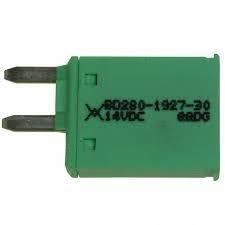
Figure 1: Littelfuse BD280-1927-30/16-W Resettable Blade Fuse. An image showing the green Littelfuse BD280-1927-30/16-W resettable blade fuse with two metal prongs extending from one end. The fuse body is rectangular and green, with model numbers and voltage ratings printed on its surface.
Setup and Installation
Proper installation is crucial for the safe and effective operation of the resettable blade fuse. Always ensure the power supply to the circuit is disconnected before installation.
- Safety First: Before handling any electrical components, disconnect the vehicle's battery or the main power source to prevent electrical shock or short circuits.
- Identify Fuse Slot: Locate the appropriate fuse slot in your vehicle's fuse box or electrical panel that matches the fuse type and rating (30A/14V). Refer to your vehicle's or equipment's service manual for specific fuse locations.
- Insert Fuse: Align the two metal prongs of the BD280-1927-30/16-W resettable blade fuse with the corresponding terminals in the fuse slot. Gently push the fuse firmly into place until it is seated securely. Do not force the fuse.
- Verify Connection: Ensure the fuse is fully inserted and makes good contact with the terminals. A loose connection can lead to intermittent operation or overheating.
- Restore Power: Once the fuse is securely installed, reconnect the power supply to the circuit.
Note: This fuse is designed for 14V DC systems and a maximum current of 30 Amps. Using it in circuits exceeding these specifications can lead to damage or failure.
Operating Instructions
The Littelfuse BD280-1927-30/16-W is a self-resetting fuse. Its operation is automatic and requires no manual intervention during an overload event.
- Normal Operation: Under normal operating conditions, the fuse allows current to flow through the circuit without interruption.
- Overload Protection: If the current in the circuit exceeds 30 Amps, the internal element of the resettable fuse will heat up and open the circuit, interrupting the current flow to protect the connected components.
- Automatic Reset: Once the overload condition is removed and the fuse cools down, the internal element will automatically reset, closing the circuit and restoring power. This process can take a few seconds to a few minutes depending on the severity and duration of the overload.
- Repeated Tripping: If the fuse repeatedly trips, it indicates a persistent issue in the circuit, such as a short circuit or an overloaded component. Do not ignore repeated tripping.
Maintenance
Resettable blade fuses generally require minimal maintenance. However, periodic inspection can help ensure continued reliable performance.
- Visual Inspection: Periodically inspect the fuse for any signs of physical damage, such as cracks in the plastic housing or corrosion on the metal prongs.
- Cleanliness: Ensure the fuse and its slot are free from dirt, dust, or moisture, which can affect electrical contact.
- Secure Fit: Verify that the fuse remains securely seated in its slot.
Do not attempt to open or repair the fuse. If the fuse appears damaged or is not functioning correctly, it should be replaced.
Troubleshooting
If the circuit protected by the resettable fuse is not functioning, consider the following troubleshooting steps:
- Fuse Not Resetting:
- Ensure the overload condition has been removed. The fuse needs time to cool down and reset.
- If the overload persists, the fuse will continue to trip. Identify and resolve the underlying issue in the circuit (e.g., short circuit, faulty component, excessive load).
- Verify the fuse is correctly rated for the circuit. An undersized fuse will trip frequently.
- No Power to Circuit After Reset:
- Check the fuse for physical damage. A severely damaged fuse may not reset.
- Ensure the fuse is making good contact in its slot. Remove and reinsert it firmly.
- Test the circuit with a known good fuse (of the same rating) to rule out other electrical issues.
- Repeated Tripping:
- This is a strong indication of an ongoing electrical problem. Do not simply replace the fuse with a higher-rated one, as this can cause damage to wiring or components.
- Consult a qualified electrician or automotive technician to diagnose and repair the underlying circuit fault.
Specifications
| Feature | Detail |
|---|---|
| Model Number | BD280-1927-30/16-W |
| Brand | Littelfuse |
| Current Rating | 30 Amps |
| Voltage Rating | 14 Volts |
| Material | Plastic |
| Mounting Type | Through-Hole Mount |
| Package Dimensions | 1 x 1 x 1 inches |
| Item Weight | 0.16 ounces |
| Manufacturer | LITTELFUSE |
Warranty Information
Specific warranty details for the Littelfuse BD280-1927-30/16-W Resettable Blade Fuse are not provided in this manual. For comprehensive warranty information, including terms, conditions, and duration, please refer to the official documentation provided by Littelfuse or contact their customer service directly. Keep your purchase receipt as proof of purchase.
Customer Support
If you encounter issues that cannot be resolved using the troubleshooting guide, or if you require further assistance, please contact Littelfuse customer support or the authorized reseller from whom you purchased the product. Provide them with the model number (BD280-1927-30/16-W) and a detailed description of the problem.
For general information about Littelfuse products, you may visit their official website: www.littelfuse.com