
Vikye Vikyey710szn9ed
Vikye Water Paddle Flow Control Switch User Manual
Model: Vikyey710szn9ed
1. Product Overview
The Vikye Water Paddle Flow Control Switch is an automatic element designed to protect and control flow within liquid pipe systems. It is widely used in water treatment systems, central air conditioning units, water cooling systems, and other similar applications. This device is suitable for use with gas or liquid that does not corrode brass components.

Figure 1: The Vikye Water Paddle Flow Control Switch, showing the main unit and the assortment of included paddles.
2. Key Features
- Adjustable Flow Value Controller: Ensures stable and precise performance for various flow requirements.
- Easy Installation: Designed for straightforward wiring and secure integration into existing systems.
- Durable Construction: Manufactured from high-quality brass material for long-lasting use and reliability.
- Versatile Application: Ideal for water treatment systems, central air conditioning, water cooling units, and other industrial fields.
- Broad Compatibility: Suitable for use with gas or liquid substances that are non-corrosive to brass.
3. Specifications
| Specification | Value |
|---|---|
| Material | Brass |
| Voltage | AC250V |
| Type (Channel Position) | Direct-acting type |
| Connection Method | NPT Thread |
| Shell Protection Grade | IP54 |
| Output | Micro switch SPDT output |
| Contact Life | 100,000 times |
| Using Substance Temperature Range | -10 to 105℃ |
| Working Substance | Air, Water, and Oil (non-corrosive to brass/copper) |
| Micro Switch Current | Max. 15A |
| Micro Switch Voltage | 250V AC/DC |
| Undertaking Pressure | Max. 15bar |
| Product Dimensions | 5.12 x 2.56 x 3.07 inches (13 x 6.5 x 8 cm) |
| Weight | 14.11 ounces (428g) |

Figure 2: Product dimensions of the flow control switch.
4. Setup and Installation
- Unpack Components: Carefully remove the flow switch and all included paddles from the packaging. Inspect for any damage.
- Select Appropriate Paddle: Choose one of the five included paddles based on your specific flow rate requirements and pipe diameter. The paddles vary in length to accommodate different flow sensitivities.
- Install Paddle: Securely attach the selected paddle to the brass shaft of the flow switch. Ensure it is firmly seated.
- Mounting Location: Install the flow switch in a section of the pipe where the flow is consistent and laminar. Ensure the NPT thread connection is properly sealed to prevent leaks.
- Observe Flow Direction: The switch must be installed with the paddle oriented correctly relative to the direction of fluid flow. Refer to the 'DIRECTION OF FLOW' label on the unit.
- Electrical Connection: Connect the flow switch to your control circuit. The device features a micro switch with SPDT (Single Pole Double Throw) output. Refer to the internal wiring diagram for correct connections (see Figure 4). Ensure all electrical connections comply with local codes and safety standards.
- Adjust Flow Value (if necessary): The flow value controller is adjustable. This adjustment fine-tunes the sensitivity of the switch to flow changes. Consult your system requirements for optimal setting.
- System Check: After installation, slowly introduce fluid into the system and check for leaks. Verify that the flow switch operates as expected by observing its interaction with the control circuit.
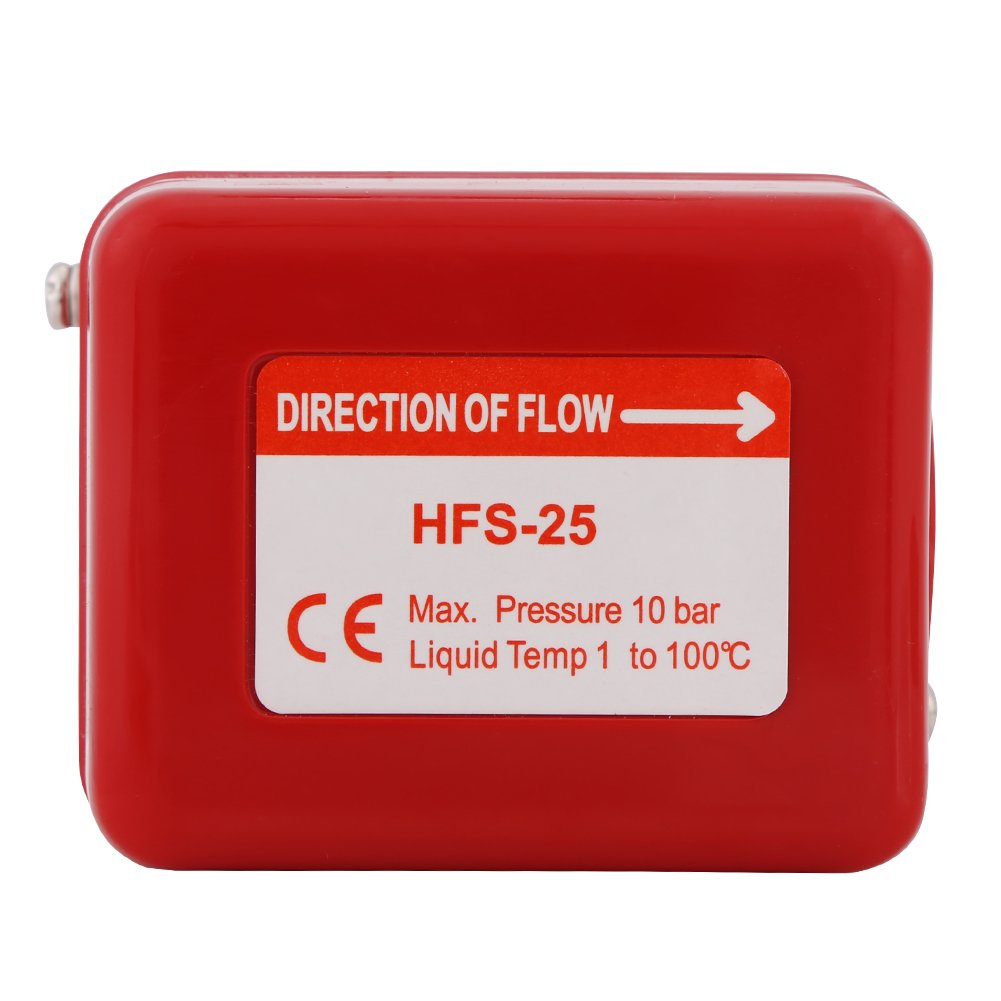
Figure 3: Rear view of the flow switch indicating the required direction of flow for proper operation.

Figure 4: Internal view showing electrical ratings and wiring terminals. Ensure proper connection to terminals 1, 2, and 3 as indicated for flow increase/contact.
Note: This device cannot be used in pipes where the temperature drops below freezing point, as this may damage the internal components or affect performance.
5. Operating Instructions
The Vikye Water Paddle Flow Control Switch operates automatically based on the presence or absence of flow in the pipe. When fluid flows past the paddle, it exerts pressure, causing the paddle to move and activate the internal micro switch. This switch then sends a signal to your connected control system.
- Normal Operation: Once installed and wired, the switch will automatically detect flow. When flow is established and exceeds the set threshold, the switch will change its contact state (e.g., from Normally Closed to Open, or vice versa, depending on wiring).
- Flow Cessation: If the flow stops or drops below the threshold, the paddle will return to its resting position, and the switch contacts will revert to their original state.
- Adjusting Sensitivity: If the switch is too sensitive or not sensitive enough, the flow value controller can be adjusted to fine-tune the activation point. This typically involves a screw adjustment on the unit.
6. Maintenance
Regular maintenance ensures the longevity and reliable operation of your flow control switch.
- Periodic Inspection: Annually inspect the switch for any signs of wear, corrosion, or damage, especially around the paddle and threaded connection.
- Check Electrical Connections: Ensure all wiring connections remain secure and free from corrosion.
- Paddle Condition: Verify that the paddle is free to move and not obstructed by debris or buildup within the pipe. If necessary, isolate the system, drain the pipe, and carefully clean the paddle.
- Temperature Monitoring: Ensure the operating temperature of the substance remains within the specified range (-10 to 105℃) and does not drop below freezing.
7. Troubleshooting
If you encounter issues with your flow control switch, consider the following common troubleshooting steps:
- Switch Not Activating:
- Verify sufficient flow rate in the pipe.
- Check if the paddle is obstructed or damaged.
- Ensure the switch is installed in the correct direction of flow.
- Inspect electrical connections for looseness or corrosion.
- Adjust the flow sensitivity setting.
- False Activations/Deactivations:
- Check for turbulence or air bubbles in the flow that might cause erratic paddle movement.
- Ensure the paddle size is appropriate for the pipe diameter and flow conditions.
- Readjust the flow sensitivity setting to a less sensitive position.
- Leaks at Connection:
- Ensure the NPT thread connection is properly tightened and sealed with appropriate sealant (e.g., PTFE tape).
- Check for cracks or damage to the brass fitting.
If problems persist after attempting these steps, it is recommended to consult a qualified technician or contact customer support.
8. Warranty and Support
For information regarding warranty coverage, technical support, or replacement parts for your Vikye Water Paddle Flow Control Switch, please refer to the product packaging or contact your point of purchase. Specific warranty terms may vary by region and retailer.
For general inquiries, you may visit the Vikye brand page on Amazon.
Ask a question about this manual
Ask about setup, troubleshooting, compatibility, parts, safety, or missing instructions. Manuals+ will review the question and use this page’s manual context to help answer it.