1. Introduction
Thank you for choosing the De'Longhi KBOC 2001.W Icona Capitals Electric Kettle. This manual provides essential information for the safe and efficient use, maintenance, and troubleshooting of your new appliance. Please read these instructions carefully before use and keep them for future reference.
2. Important Safeguards
When using electrical appliances, basic safety precautions should always be followed to reduce the risk of fire, electric shock, and/or injury to persons, including the following:
- Read all instructions.
- Do not touch hot surfaces. Use handles or knobs.
- To protect against fire, electric shock, and personal injury, do not immerse cord, plugs, or the appliance in water or other liquid.
- Close supervision is necessary when any appliance is used by or near children.
- Unplug from outlet when not in use and before cleaning. Allow to cool before putting on or taking off parts, and before cleaning the appliance.
- Do not operate any appliance with a damaged cord or plug or after the appliance malfunctions, or has been damaged in any manner. Return appliance to the nearest authorized service facility for examination, repair, or adjustment.
- The use of accessory attachments not recommended by the appliance manufacturer may result in fire, electric shock, or personal injury.
- Do not use outdoors.
- Do not let cord hang over edge of table or counter, or touch hot surfaces.
- Do not place on or near a hot gas or electric burner, or in a heated oven.
- Always attach plug to appliance first, then plug cord into the wall outlet. To disconnect, turn any control to 'off', then remove plug from wall outlet.
- Do not use appliance for other than intended use.
- Scalding may occur if the lid is removed during the brewing cycle.
- This appliance is for household use only.
3. Product Overview
Familiarize yourself with the components of your De'Longhi Icona Capitals Kettle.
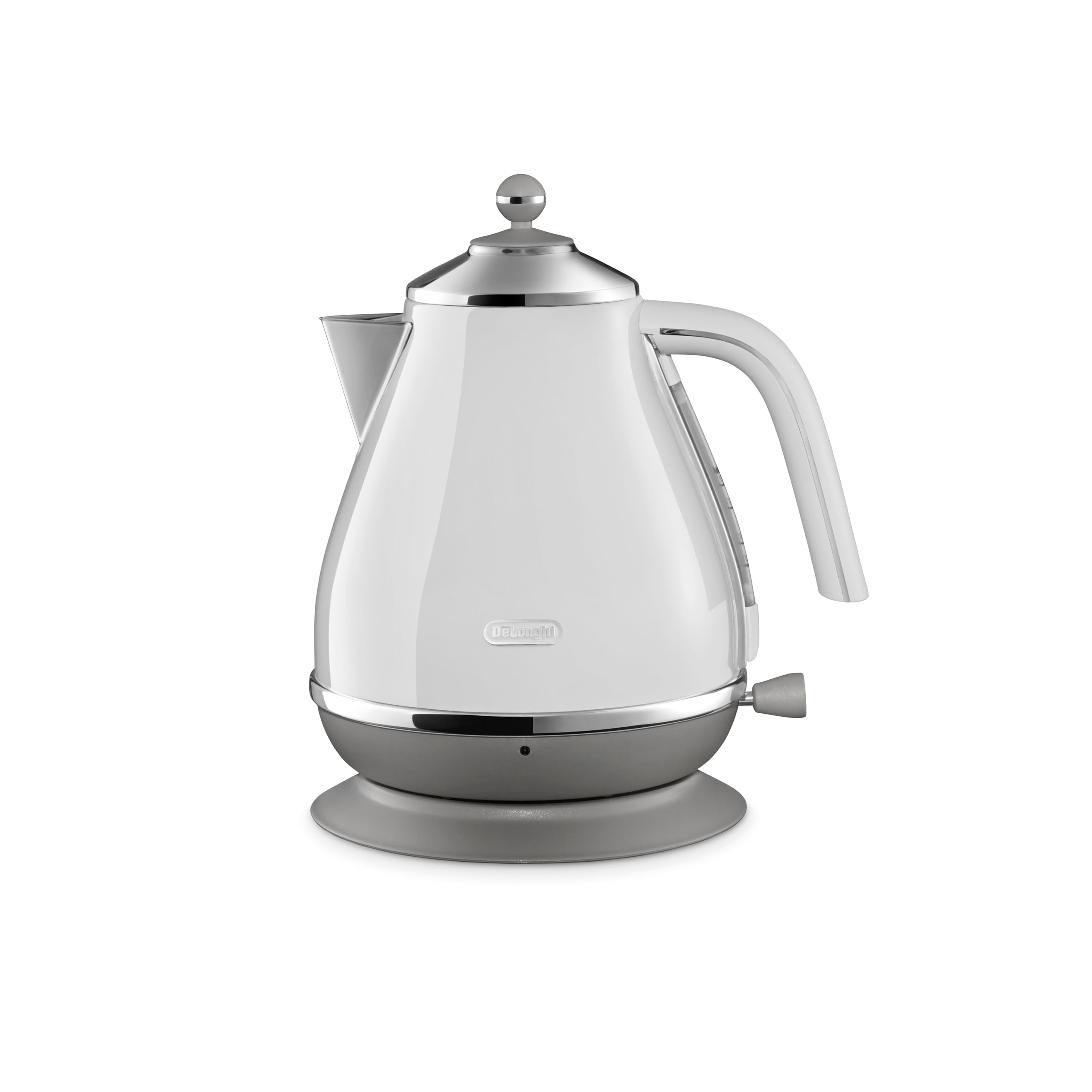
Figure 1: The De'Longhi KBOC 2001.W Icona Capitals Kettle. This image displays the overall design of the kettle, including its handle, spout, lid, and power base.

Figure 2: Kettle placed on its 360-degree swivel base. The red arrows indicate the ability of the kettle to rotate freely on its power base, allowing for convenient placement and lifting from any angle.

Figure 3: Close-up view of the water level indicator. This transparent window on the side of the kettle shows clear markings for minimum (0.5L), 1.0L, 1.5L, and maximum (1.7L) water levels, ensuring accurate filling.
Key Components:
- Lid: Removable lid for easy filling.
- Spout: Designed for controlled pouring.
- Filter: Removable anti-scale filter located behind the spout.
- Handle: Ergonomically designed for comfortable grip.
- Water Level Indicator: Transparent window with markings to show water volume.
- On/Off Switch: Located at the base of the handle.
- Power Base: 360-degree swivel base with cord storage.
4. Setup
- Unpacking: Remove all packaging materials from the kettle and its base.
- First Use Cleaning: Before first use, fill the kettle with cold water up to the MAX level. Boil the water, then discard it. Repeat this process at least twice to remove any manufacturing residues.
- Positioning: Place the power base on a flat, stable, heat-resistant surface, away from the edge of the countertop. Ensure the power cord is not dangling or in contact with hot surfaces.
- Cord Storage: Adjust the length of the power cord by winding it around the cord storage facility under the base.
5. Operating Instructions
- Filling the Kettle: Open the lid and fill the kettle with the desired amount of cold water. Do not fill below the MIN mark or above the MAX mark on the water level indicator (Figure 3). Overfilling may cause boiling water to spill out.
- Closing the Lid: Ensure the lid is securely closed before operating the kettle.
- Placing on Base: Place the kettle firmly onto its power base (Figure 2).
- Connecting to Power: Plug the power cord into a suitable wall outlet.
- Switching On: Press the On/Off switch downwards. The indicator light will illuminate, signifying that the kettle is heating.
- Automatic Shut-off: The kettle will automatically switch off once the water has boiled. The indicator light will turn off.
- Pouring: Carefully lift the kettle from its base and pour the hot water. Be cautious of steam escaping from the spout.
- Re-boiling: If the kettle has just boiled, wait a few moments before pressing the switch again to allow the thermostat to reset.
6. Cleaning and Maintenance
Regular cleaning and maintenance will prolong the life of your kettle.
Exterior Cleaning:
- Always unplug the kettle and allow it to cool completely before cleaning.
- Wipe the exterior surface with a soft, damp cloth. Do not use abrasive cleaners or scouring pads, as these can damage the finish.
- Never immerse the kettle or its power base in water or any other liquid.
Filter Cleaning:

Figure 4: A hand demonstrating the removal of the anti-scale filter from the kettle's spout. The filter slides out for easy cleaning.
- The kettle is fitted with a removable anti-scale filter located behind the spout.
- To remove, open the lid and gently pull the filter upwards (Figure 4).
- Rinse the filter under running water and brush it with a soft brush if necessary.
- Reinsert the filter by sliding it back into its slot until it clicks into place.
Descaling:
Over time, mineral deposits (limescale) can build up inside the kettle, affecting its performance. Descale your kettle regularly, especially in hard water areas.
- Use a commercially available descaling solution suitable for kettles. Follow the manufacturer's instructions on the descaling product.
- Alternatively, you can use a solution of white vinegar and water (e.g., 1 part vinegar to 2 parts water). Fill the kettle with the solution and let it stand for an hour, or boil it if the scale is heavy.
- After descaling, empty the kettle and rinse it thoroughly several times with fresh water to remove any residue.
- Boil fresh water in the kettle and discard it at least twice before using the kettle for beverages.
7. Troubleshooting
If you encounter issues with your kettle, refer to the following common problems and solutions:
| Problem | Possible Cause | Solution |
|---|---|---|
| Kettle does not heat up. | Not plugged in; power switch not engaged; kettle not properly seated on base; power outage. | Check power connection; ensure switch is pressed down; reseat kettle on base; check household circuit breaker. |
| Kettle switches off before boiling. | Excessive limescale buildup; kettle overfilled or underfilled. | Descale the kettle (see Section 6); ensure water is between MIN and MAX levels. |
| Water tastes metallic or has particles. | New kettle residue; limescale particles. | Perform first-use cleaning (Section 4); descale the kettle (Section 6) and clean the filter. |
| Kettle leaks. | Lid not closed properly; kettle overfilled; seal damage. | Ensure lid is securely closed; do not overfill; if leakage persists, contact customer support. |
If the problem persists after trying these solutions, please contact De'Longhi customer support.
8. Specifications
| Brand: | De'Longhi |
| Model Number: | KBOC2001W |
| Color: | White |
| Capacity: | 1.7 Liters |
| Power: | 2000 Watts |
| Voltage: | 240 Volts |
| Material: | Stainless Steel |
| Dimensions (L x W x H): | 23.4 x 23.4 x 25 cm |
| Item Weight: | 1.3 Kilograms |
| Special Feature: | Portable |
9. Disposal
Do not dispose of electrical appliances as unsorted municipal waste. Use separate collection facilities. Contact your local government for information regarding the collection systems available. If electrical appliances are disposed of in landfills or dumps, hazardous substances can leak into the groundwater and get into the food chain, damaging your health and well-being.


