Introduction
This manual provides essential information for the installation, maintenance, and safe operation of your Chudeng Magnesium Flexible Water Heater Anode Rod. This anode rod is designed to protect your water heater tank from corrosion, thereby extending its service life. It is compatible with most water heaters, including models from Rheem, Reliance, Richmond, Kenmore, and GE, that utilize a standard 3/4" NPT anode rod connection.
Safety Information
Always prioritize safety when working with water heaters. Improper installation or maintenance can lead to property damage, injury, or death. If you are unsure about any step, consult a qualified professional.
- Disconnect Power: Before beginning any work, ensure the water heater's power supply (electrical or gas) is completely disconnected.
- Drain Water: Partially or fully drain the water heater tank to reduce pressure and water spillage during anode rod removal/installation.
- Hot Water Hazard: Water inside the tank can be extremely hot. Allow it to cool or handle with extreme caution to prevent burns.
- Pressure Relief: Open a hot water faucet in your home to relieve any remaining pressure in the system.
- Proper Tools: Use appropriate tools, including the provided hex socket tool, to prevent damage to the anode rod or water heater.
- Sealant Use: Apply Teflon tape to the threads of the new anode rod to ensure a watertight seal.
Product Overview and Components
The Chudeng Flexible Magnesium Water Heater Anode Rod kit includes the following components:
- Flexible Magnesium Anode Rod: A 44-inch long magnesium rod, segmented into four sections for easy installation in confined spaces. Features a 3/4" NPT thread for universal compatibility.
- 1-1/16" Hex Socket Tool: A specialized socket designed to assist in the removal of old anode rods and installation of the new one.
- Teflon Sealing Tape: Used to create a watertight seal on the anode rod threads.

Image: The complete Chudeng Flexible Magnesium Water Heater Anode Rod kit, showing the segmented anode rod, hex socket tool, and Teflon tape.
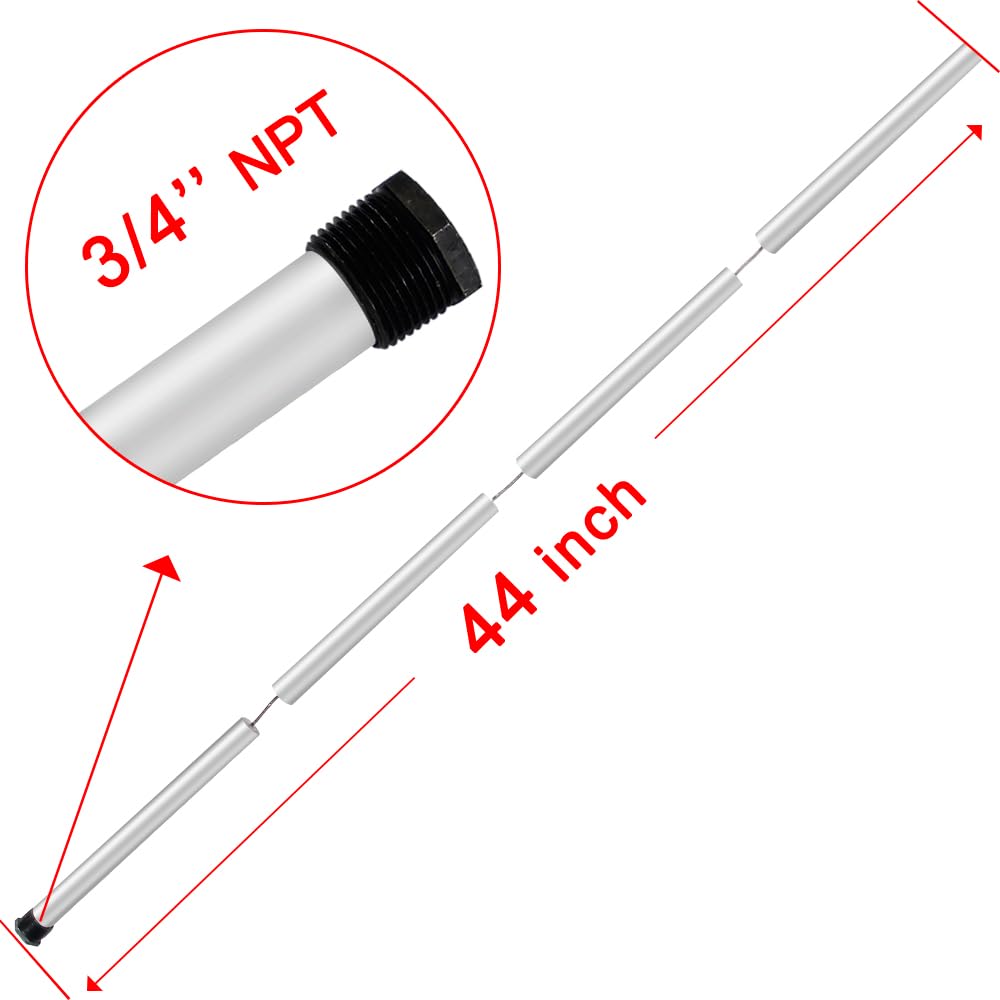
Image: Detailed view of the 44-inch flexible anode rod, highlighting its segmented design and the 3/4" NPT threaded connection.
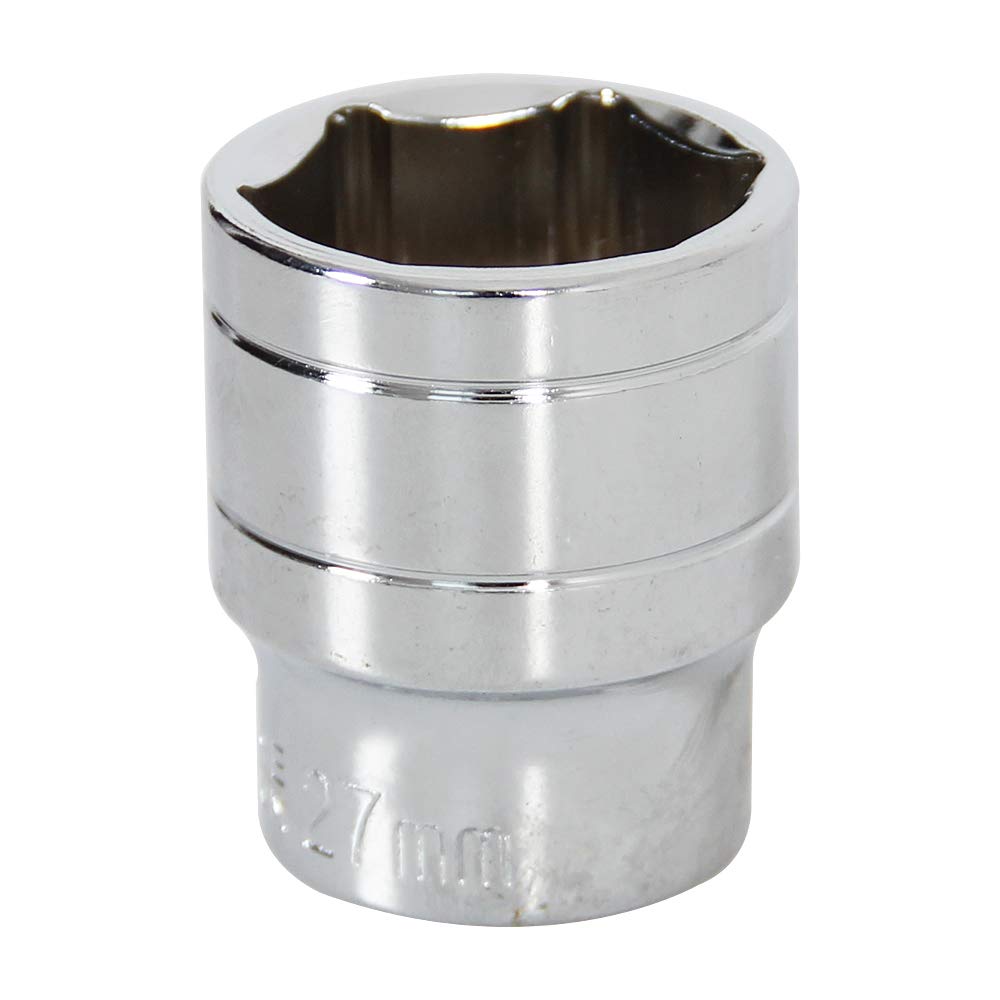
Image: Close-up of the included 1-1/16" hex socket tool, essential for anode rod replacement.
Installation Instructions
Follow these steps carefully to replace your water heater's anode rod:
- Prepare the Water Heater:
- Turn off the power supply to the water heater (gas valve or electrical breaker).
- Close the cold water supply valve to the water heater.
- Open a hot water faucet in your home to relieve pressure and allow air into the tank.
- Connect a garden hose to the drain valve at the bottom of the water heater and direct it to a suitable drain. Open the drain valve to partially drain the tank (at least a few gallons, or until the anode rod connection point is above the water level).
- Locate and Remove the Old Anode Rod:
- The anode rod is typically located on the top of the water heater, often under a plastic cap or insulation, near the hot water outlet. It will have a large hex head.
- Using the 1-1/16" hex socket tool and a breaker bar or impact wrench, carefully loosen and remove the old anode rod. This may require significant force as it can be corroded in place.
- Once loose, unscrew the old anode rod completely. Be prepared for some water spillage.
- Inspect and Clean (Optional):
- Inspect the old anode rod for signs of significant corrosion. This indicates it was performing its function.
- You may flush the tank at this point to remove sediment, though this is not strictly necessary for anode rod replacement.
- Install the New Flexible Anode Rod:
- Apply several wraps of the provided Teflon sealing tape clockwise around the threads of the new Chudeng flexible magnesium anode rod.
- Due to its flexible design, the rod can be easily maneuvered into tight spaces. Carefully insert the new anode rod into the opening on top of the water heater.
- Hand-tighten the rod until it is snug, then use the 1-1/16" hex socket tool and a wrench to tighten it securely. Do not overtighten, but ensure a firm, watertight seal.
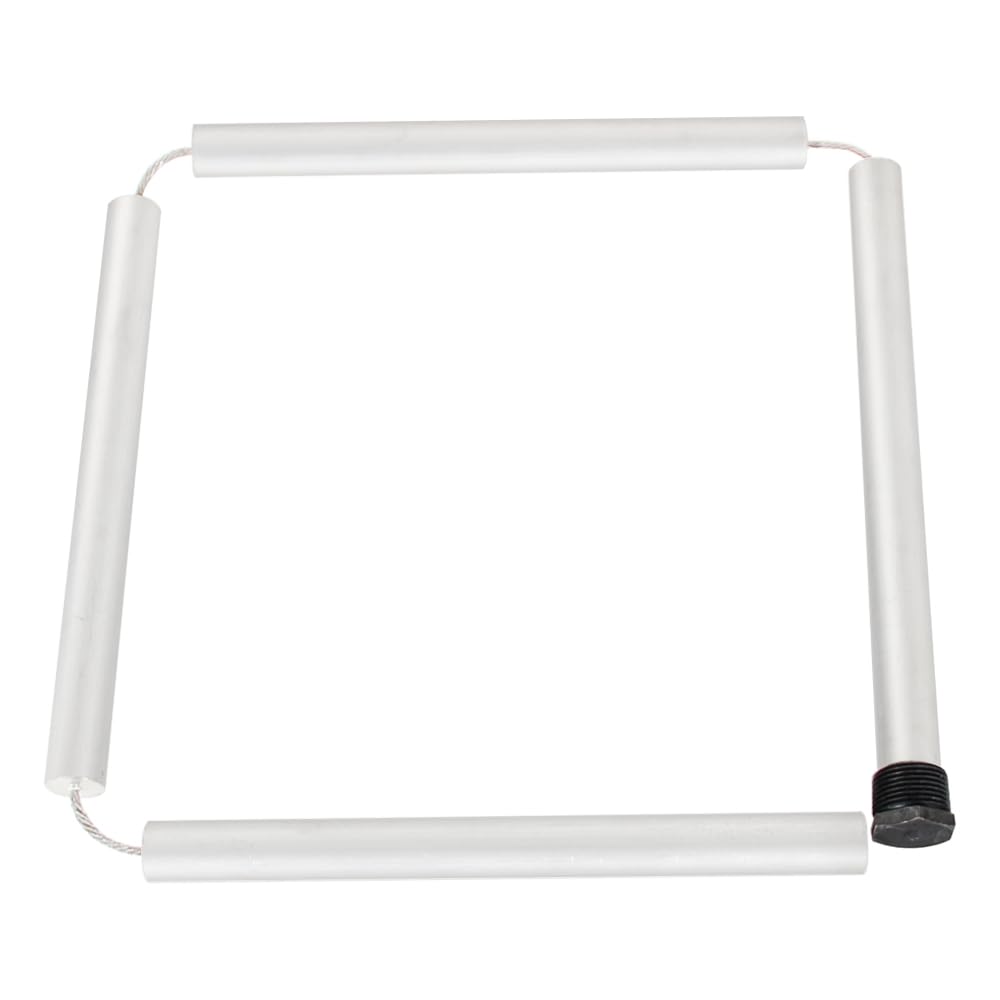
Image: The flexible anode rod demonstrating its ability to bend into a square shape, illustrating ease of installation in confined areas.
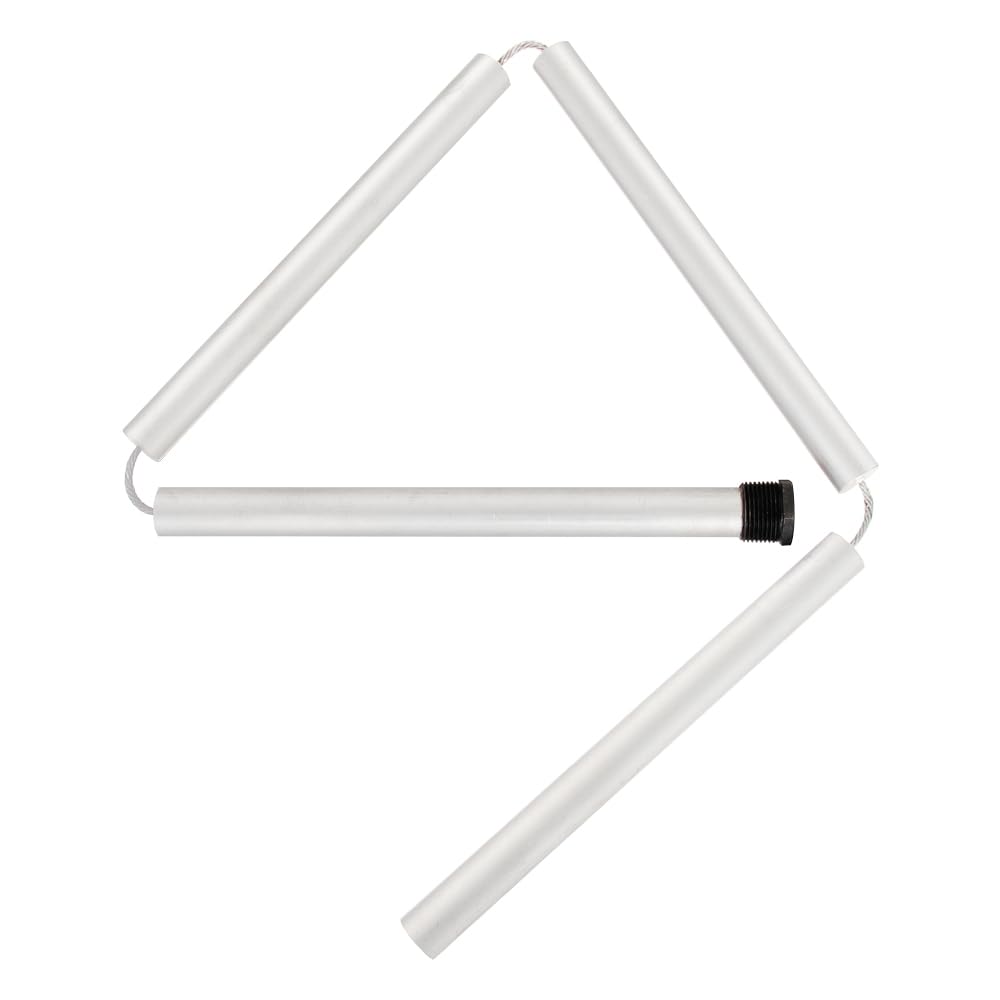
Image: The flexible anode rod bent into a triangular shape, further showcasing its adaptability for installation.
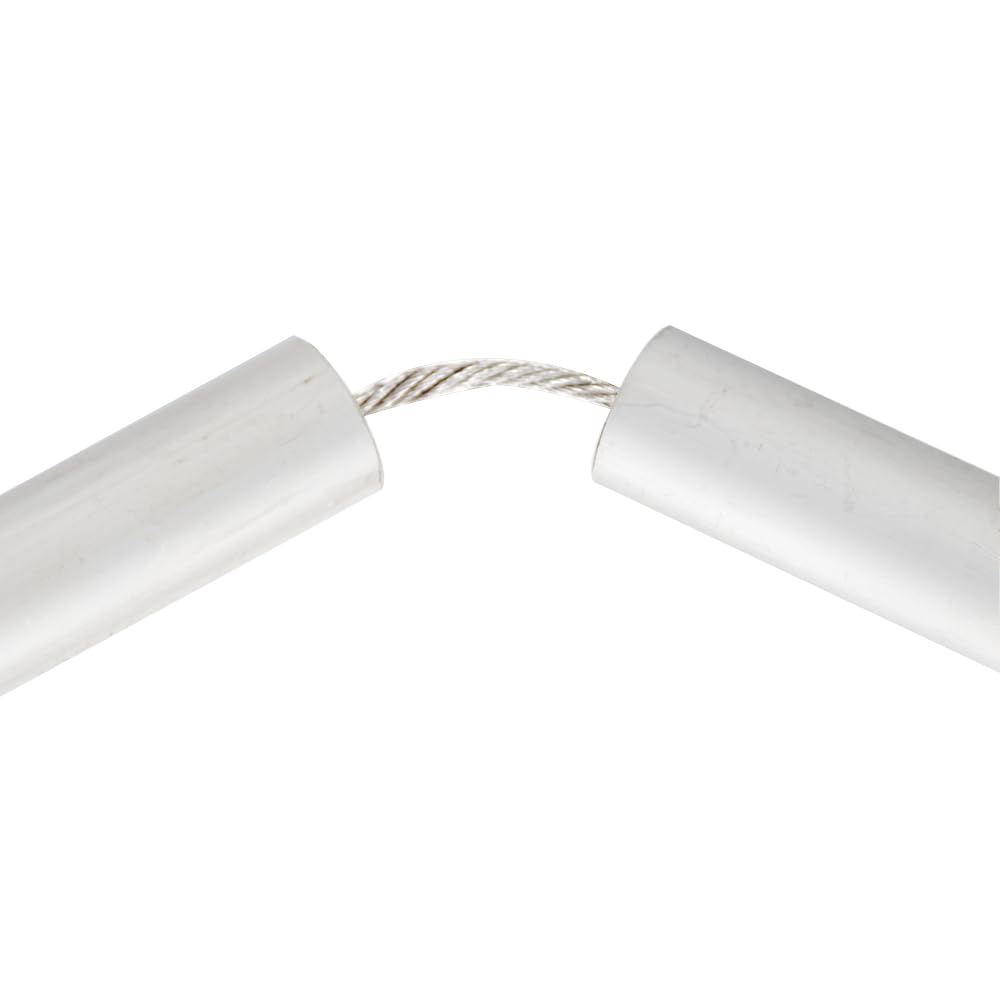
Image: A close-up view of the flexible connection points between the segments of the anode rod, highlighting its hinged design.
- Refill and Restore Power:
- Close the drain valve on the water heater.
- Open the cold water supply valve to the water heater.
- Allow the tank to fill completely. Once water flows steadily from the open hot water faucet in your home, close the faucet.
- Check for any leaks around the newly installed anode rod.
- Restore power to the water heater (turn on the gas valve or electrical breaker).
Operating Principle
The anode rod operates on the principle of galvanic corrosion. Water heater tanks are typically made of steel, which is susceptible to corrosion when exposed to water. The magnesium anode rod is designed to be more electrochemically active than the steel tank. This means that the magnesium will corrode preferentially, sacrificing itself to protect the steel tank. As the magnesium corrodes, it releases ions into the water, preventing the steel from rusting. This process extends the overall lifespan of your water heater.
Magnesium anode rods are generally more effective than aluminum anode rods due to magnesium's stronger metallic activity, providing superior protection against tank corrosion.
Maintenance
Regular inspection and replacement of the anode rod are crucial for maintaining your water heater's efficiency and longevity. The anode rod is a sacrificial component and will deplete over time.
- Inspection Frequency: It is recommended to inspect your anode rod every 2-3 years, or more frequently in areas with hard water or aggressive water chemistry.
- Replacement Indicators: Replace the anode rod when it is significantly corroded, pitted, or reduced to a thin wire. A severely depleted anode rod can no longer protect your tank effectively.
- Benefits of Replacement: Regular replacement prevents tank corrosion, reduces sediment buildup, maintains water quality, and can prevent issues like unstable water temperature or increased electricity bills due to inefficient heating.
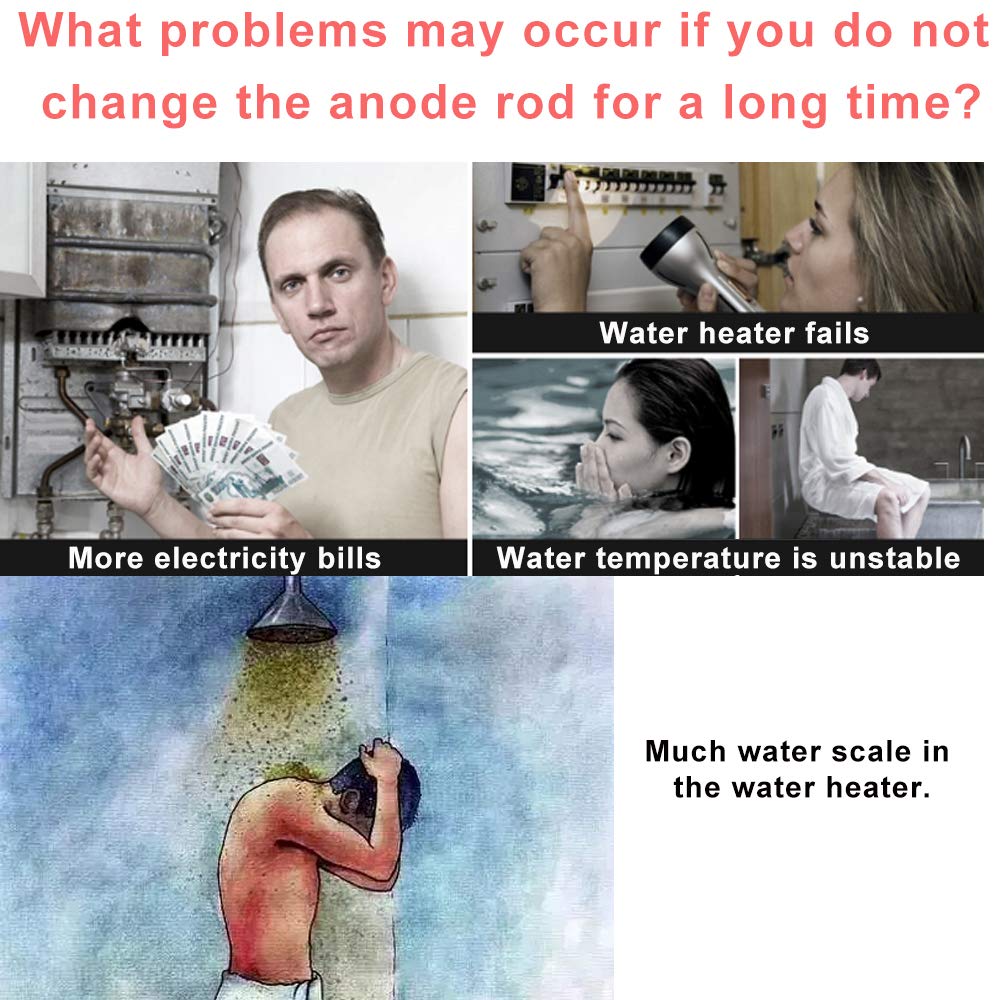
Image: Illustrates potential problems that can arise from neglecting anode rod replacement, such as water heater failure, increased electricity bills, unstable water temperature, and excessive water scale.
Troubleshooting
This section addresses common issues related to anode rod replacement.
| Problem | Possible Cause | Solution |
|---|---|---|
| Difficulty removing old anode rod | Corrosion, overtightening, lack of leverage. | Ensure water heater is drained and depressurized. Use a long breaker bar or an impact wrench for stubborn rods. Apply penetrating oil if necessary. |
| Water leakage after new rod installation | Insufficient tightening, improper application of Teflon tape, damaged threads. | Ensure threads are clean. Reapply Teflon tape generously (5-7 wraps clockwise). Tighten the rod firmly but do not overtighten. If threads are damaged, professional repair may be needed. |
| Socket slipping on anode rod hex head | Incorrect socket size, worn socket, rounded hex head on rod. | Ensure you are using the correct 1-1/16" (or 27mm) socket. If the hex head is rounded, specialized tools for stripped bolts may be required. |
| "Rotten egg" smell (sulfur) in hot water | Bacterial reaction with magnesium anode rod (common in some water chemistries). | This is a known issue with magnesium anode rods in certain water conditions. Flushing the tank with a chlorine solution may help temporarily. If persistent, consider switching to an aluminum/zinc anode rod or a powered anode rod (consult a plumber). |
Specifications
| Feature | Detail |
|---|---|
| Material | High-Quality Magnesium |
| Length | 44 Inches (flexible, segmented) |
| Diameter | 0.8 Inches (approximate, standard) |
| Thread Size | 3/4" NPT (National Pipe Taper) |
| Included Tools | 1-1/16" Hex Socket Tool, Teflon Sealing Tape |
| Compatibility | Universal fit for most water heaters with 3/4" NPT anode rod connection (e.g., Rheem, Reliance, Richmond, Kenmore, GE, A.O. Smith, State) |
| Item Weight | 0.76 Kilograms (1.68 Pounds) |
| Package Dimensions | 14.29 x 2.17 x 2.13 inches |
| UPC | 793398387968 |
Warranty and Support
For any questions, concerns, or support regarding your Chudeng Magnesium Flexible Water Heater Anode Rod, please contact your retailer or the manufacturer directly. While specific warranty details are not provided in this manual, most reputable manufacturers offer a limited warranty against defects in materials and workmanship. Keep your purchase receipt for warranty claims.
For further assistance, you may visit the Chudeng Store on Amazon.


