
1. Important Safety Information
Read and understand all instructions and warnings in this manual before operating the Ironton 12,000-Lb. DC Electric Truck Winch. Failure to follow these instructions may result in serious injury or property damage.
- Do not exceed the rated load capacity of 12,000 lbs.
- This winch is designed for pulling only. Do not use for overhead hoisting or lifting.
- Never transport people or animals using the winch.
- Always keep hands, clothing, and hair clear of the winch rope, hook, fairlead, and drum during operation.
- Wear ANSI Z87.1 compliant safety goggles and heavy-duty leather gloves during installation and operation.
- Do not engage or disengage the clutch while the winch is under load.
- Ensure all electrical connections are secure and properly insulated to prevent short circuits.
- Inspect the wire rope, hook, and all components for damage before each use. Replace damaged parts immediately.

2. Product Overview
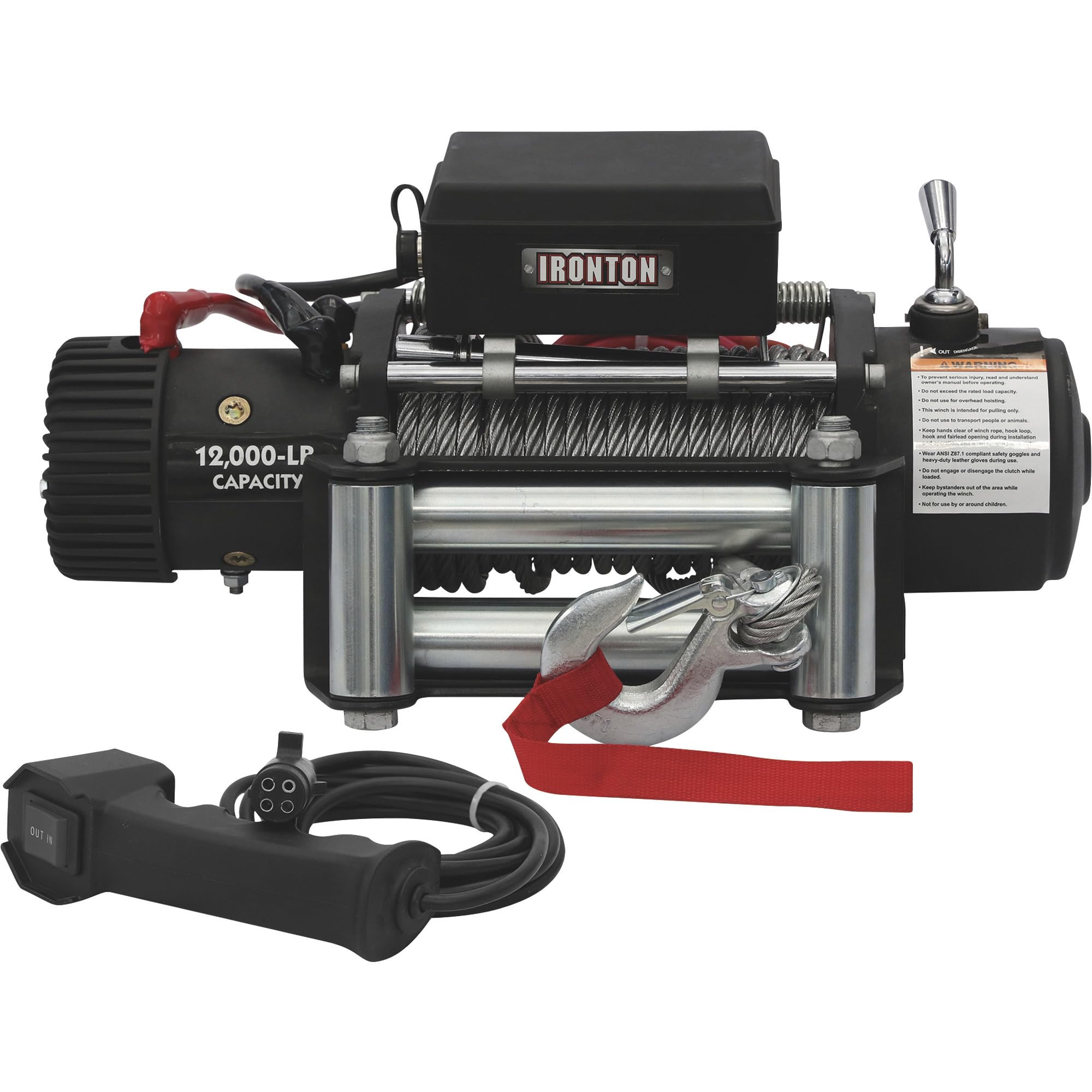
The Ironton 12,000-Lb. DC Electric Truck Winch is engineered for demanding recovery and pulling tasks. It features a robust 12V DC, 6 HP series-wound motor and a 3-stage planetary gear system for efficient operation.
Key Features:
- Pulling Capacity: 12,000 lbs.
- Motor: 12V DC, 6 HP series-wound motor for sustained performance.
- Gear System: 3-stage planetary gear for fast line speed.
- Wire Rope: 65 ft. x 3/16 in. aircraft-grade galvanized steel wire rope with a heavy-duty hook.
- Brake: Automatic load-holding brake for enhanced safety.
- Control: 12 ft. wired remote control for safe operation from a distance.

3. Setup and Installation
Proper installation is critical for safe and effective winch operation. Consult a qualified professional if you are unsure about any installation steps.
3.1 Mounting the Winch
The winch must be securely mounted to a flat, rigid surface capable of withstanding the maximum rated pulling force. This typically involves a winch plate or bumper designed for your vehicle.
- Position the winch on the mounting surface, ensuring proper alignment.
- Mark and drill any necessary mounting holes if not pre-drilled.
- Secure the winch using high-grade bolts, washers, and nuts, ensuring all fasteners are tightened to the manufacturer's specifications.
3.2 Electrical Connections
Connect the winch to a 12-volt DC vehicle battery. Use heavy-gauge cables appropriate for the winch's current draw to prevent overheating and voltage drop.
- Connect the red positive (+) cable from the winch to the positive (+) terminal of the battery.
- Connect the black negative (-) cable from the winch to the negative (-) terminal of the battery or a suitable chassis ground point.
- Ensure all connections are clean, tight, and protected from corrosion.
- Install a circuit breaker or fuse (not included) as close to the battery as possible, rated appropriately for the winch's maximum current draw.
3.3 Installing the Roller Fairlead
The roller fairlead guides the wire rope onto the drum and reduces wear. It should be mounted to the winch plate or bumper in front of the winch.
- Attach the roller fairlead to the mounting surface using the provided hardware.
- Ensure the rollers move freely and are not obstructed.

4. Operating Instructions
Familiarize yourself with the winch controls and proper winching techniques before attempting any recovery operations.
4.1 Engaging and Disengaging the Clutch
- To disengage the clutch (free spool the rope), turn the clutch lever to the "OUT" or "FREE SPOOL" position. This allows you to manually pull out the wire rope.
- To engage the clutch (prepare for winching), turn the clutch lever to the "IN" or "ENGAGED" position. Ensure the clutch is fully engaged before applying power.
4.2 Using the Remote Control
The 12 ft. wired remote control allows for safe operation from a distance, keeping you clear of the wire rope and winch drum.
- Connect the remote control cable to the winch's control box.
- Press the "IN" button to retract the wire rope and pull the load.
- Press the "OUT" button to extend the wire rope and release the load.
- Release the button to stop the winch.


4.3 Winching Techniques
- Anchor Point: Always use a strong, secure anchor point such as a tree saver strap around a tree or a rock, or a recovery anchor point on another vehicle.
- Straight Pull: Position your vehicle and the anchor point to allow for a straight pull whenever possible.
- Snatch Block: For heavier loads or angled pulls, use a snatch block to double the pulling power and reduce strain on the winch.
- Dampener: Place a winch dampener (e.g., a heavy blanket or specialized dampener) over the wire rope during operation to absorb energy in case of rope failure.
- Short Bursts: Operate the winch in short bursts to prevent overheating. Allow the motor to cool between pulls.
4.4 Spooling the Wire Rope
After use, always re-spool the wire rope neatly and under light tension to prevent kinking and damage.
- Engage the clutch.
- Connect the hook to a secure anchor point or a light load.
- Use the remote control to slowly retract the rope, guiding it evenly across the drum. Maintain light tension on the rope.
- Do not allow the rope to pile up on one side of the drum.

5. Maintenance
Regular maintenance ensures the longevity and safe operation of your Ironton winch.
- Wire Rope Inspection: Regularly inspect the entire length of the wire rope for frays, kinks, broken strands, or corrosion. Replace the rope if any damage is found.
- Hook Inspection: Check the hook for deformation, cracks, or excessive wear. Ensure the safety latch operates correctly.
- Electrical Connections: Periodically check all electrical connections for tightness and corrosion. Clean terminals as needed.
- Winch Housing: Keep the winch housing clean and free of dirt, mud, and debris.
- Lubrication: Consult a service professional for internal lubrication of the gear system if required. The motor is typically sealed and requires no user maintenance.
- Storage: When not in use, store the winch in a dry environment. If mounted on a vehicle, consider a winch cover to protect it from elements.
6. Troubleshooting
Refer to this section for common issues and their potential solutions.
| Problem | Possible Cause | Solution |
|---|---|---|
| Winch does not operate | No power to winch; Loose electrical connections; Faulty remote control; Engaged clutch. | Check battery voltage and connections; Ensure remote is properly connected; Test remote; Disengage clutch for free spooling, engage for powered operation. |
| Slow line speed or reduced power | Low battery voltage; Overloaded winch; Undersized wiring; Overheating motor. | Charge battery; Reduce load or use a snatch block; Ensure correct gauge wiring; Allow motor to cool. |
| Winch motor runs but rope does not move | Clutch disengaged; Internal gear damage. | Engage clutch fully; Contact customer support for service. |
| Winch makes unusual noises | Damaged gears; Lack of lubrication. | Discontinue use and contact customer support for inspection. |
7. Specifications
| Feature | Specification |
|---|---|
| Model Number | 3310928 |
| Manufacturer | Ironton |
| Pulling Capacity | 12,000 lbs. |
| Motor | 12V DC, 6 HP Series-Wound |
| Gear System | 3-Stage Planetary |
| Wire Rope | 65 ft. x 3/16 in. Galvanized Steel |
| Line Speed (Full Load) | 5 FPM (feet per minute) |
| Control | 12 ft. Wired Remote Control |
| Brake | Automatic Load-Holding |
| Item Weight | 83 lbs. |
| Package Dimensions | 24 x 14 x 11 inches |
8. Warranty and Support
For warranty information or technical assistance, please refer to the product packaging or contact Ironton customer support directly. Keep your purchase receipt for warranty claims.
For further assistance, you may visit the Ironton Store on Amazon.
