
Product Overview
The Bussmann AD6 is a high-quality, centre bolted TAG fuse designed for robust electrical protection. This fuse is engineered to provide reliable overcurrent protection in various industrial and commercial applications, ensuring the safety and longevity of electrical systems. It complies with BS88 standards and offers a high breaking capacity.
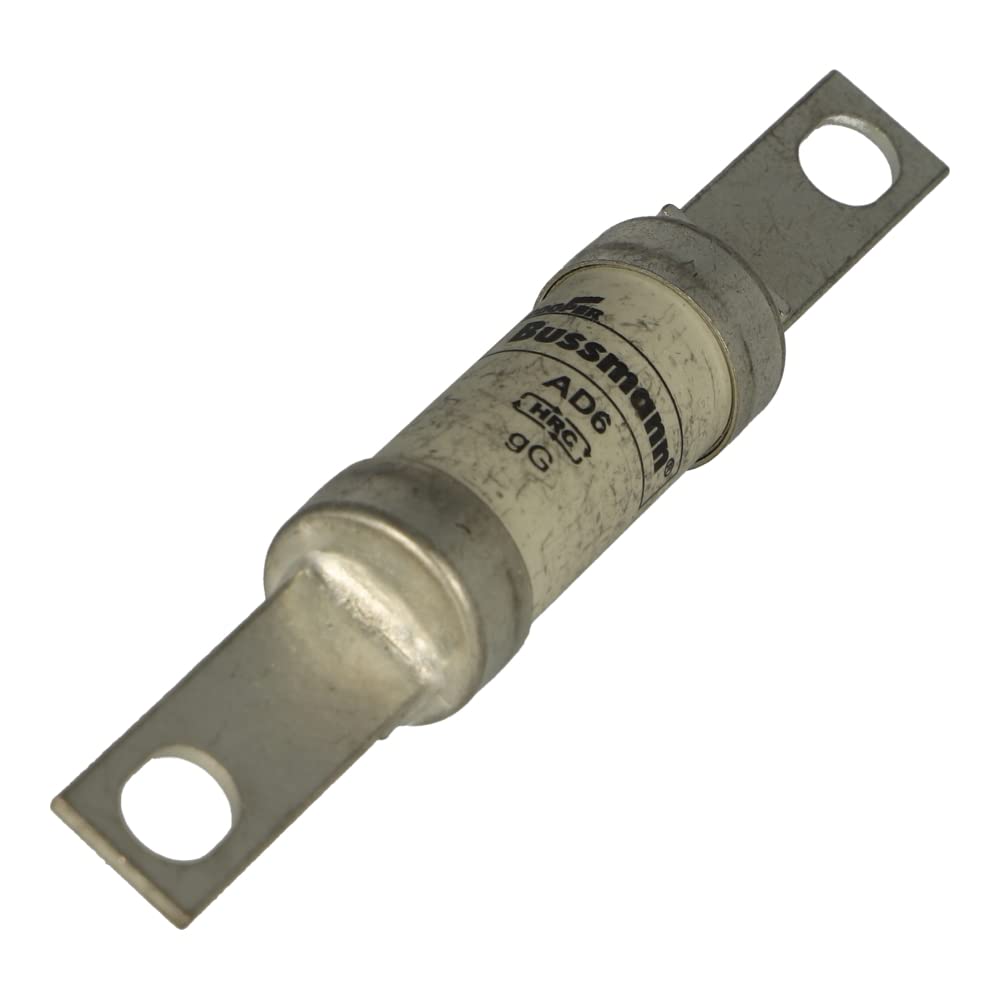
Image: A Bussmann AD6 Centre Bolted TAG Fuse. The fuse is cylindrical with metal tags on both ends for bolting into a circuit. The body of the fuse is light-colored with "Bussmann AD6 HRC gG" printed on it.
Important Safety Information
Always adhere to the following safety guidelines when handling or installing electrical components, including this fuse:
- Qualified Personnel Only: Installation and maintenance should only be performed by qualified electricians or trained personnel.
- De-energize Circuit: Always ensure the power supply to the circuit is completely disconnected and locked out before installing, inspecting, or replacing fuses.
- Correct Rating: Use only fuses with the correct voltage and current ratings for the specific application. Mismatched fuses can lead to system damage or fire.
- Personal Protective Equipment (PPE): Wear appropriate PPE, including insulated gloves and safety glasses, when working with electrical systems.
- Avoid Contact: Do not touch live electrical parts.
- Inspect for Damage: Before installation, visually inspect the fuse for any signs of physical damage. Do not install damaged fuses.
Setup and Installation
The Bussmann AD6 fuse is designed for bolted installation. Follow these general steps for proper setup:
- Power Disconnection: Ensure all power to the circuit where the fuse will be installed is turned off and verified as de-energized.
- Identify Fuse Holder: Locate the appropriate fuse holder or mounting points designed for centre bolted TAG fuses.
- Position Fuse: Carefully align the fuse's bolted tags with the corresponding terminals in the fuse holder.
- Secure Connections: Use appropriate bolts, washers, and nuts to securely fasten the fuse tags to the terminals. Ensure connections are tight to prevent arcing and overheating. Refer to equipment manufacturer's torque specifications.
- Verify Installation: Double-check all connections for tightness and proper alignment.
- Restore Power: Once installation is complete and verified, restore power to the circuit.
Note: Always consult the specific equipment manual for detailed installation instructions and wiring diagrams.
Operating Principles
A fuse is a safety device designed to protect an electrical circuit from overcurrent. The Bussmann AD6 fuse contains a metallic wire or filament that melts when the current flowing through it exceeds a safe level for a certain duration. This melting action breaks the circuit, preventing damage to electrical equipment and reducing the risk of fire due to excessive current.
The "gG" characteristic indicates a general purpose fuse, providing protection for cables and conductors against both overload and short-circuit currents. The "HRC" (High Rupturing Capacity) designation means the fuse can safely interrupt very high fault currents without exploding or causing damage to the surrounding equipment.
Maintenance
Fuses like the Bussmann AD6 are passive protection devices and generally require no routine maintenance. They are designed to operate reliably until an overcurrent event causes them to blow. Once a fuse has blown, it must be replaced with a new fuse of the identical type and rating.
Regularly inspect fuse holders and connections for signs of corrosion, overheating, or loose connections, especially in environments subject to vibration or extreme temperatures. Address any issues promptly to ensure continued circuit integrity.
Troubleshooting
If a circuit protected by the Bussmann AD6 fuse loses power, the fuse may have blown. Follow these steps:
- De-energize Circuit: Immediately disconnect power to the affected circuit.
- Identify Blown Fuse: Visually inspect the fuse. Some fuses have indicators, but for the AD6, you may need to test continuity with a multimeter if no visual indication is present. A blown fuse will show infinite resistance (open circuit).
- Determine Cause: Before replacing the fuse, investigate the cause of the overcurrent. Common causes include short circuits, overloaded circuits, or faulty equipment. Replacing a fuse without addressing the underlying issue will likely result in the new fuse blowing as well.
- Replace Fuse: Once the cause is identified and rectified, replace the blown fuse with a new Bussmann AD6 fuse of the exact same current and voltage rating. Never use a fuse with a higher rating, as this can lead to severe damage or fire.
- Restore Power: After replacement, restore power and monitor the circuit.
If the fuse continues to blow, consult a qualified electrician.
Technical Specifications
| Attribute | Value |
|---|---|
| Model Number | AD6 |
| Brand | Bussmann |
| Current Rating | 6A |
| Voltage Rating (AC) | 550VAC |
| Voltage Rating (DC) | 250VDC |
| Breaking Capacity (AC) | 80KA at 550VAC |
| Fuse Type | Centre Bolted TAG |
| Standard | BS88 |
| Characteristic | gG (General Purpose) |
| Manufacturer | Bussmann |
| ASIN | B07HCKWPRF |
| Date First Available | July 17, 2019 |
Warranty and Support
For information regarding warranty, technical support, or product inquiries, please contact Bussmann directly or refer to their official website. Ensure you have your product model number (AD6) and any relevant purchase details available when seeking support.
Bussmann is a brand of Eaton, a global power management company. For further assistance, you may visit the Eaton Bussmann Fuses website.