
1. Product Overview
The ChickenGuard Self-Locking Predator-Proof Chicken Coop Door is designed to provide enhanced security for your poultry. This robust door features a unique self-locking mechanism that engages when the door is fully lowered, preventing predators from lifting it. Constructed from durable materials, it offers reliable protection for your flock.

Figure 1: A clear front view of the ChickenGuard Self-Locking Chicken Coop Door, showcasing its robust aluminum construction and integrated runners.
Key Features:
- Self-Locking Mechanism: Unique wings engage upon full closure, preventing predators like foxes and raccoons from lifting the door.
- Predator-Proof Design: Provides an additional layer of security for your chicken coop, hen house, or other poultry enclosures.
- Durable Construction: Made from powder-coated aluminum for the door and tough, durable plastic for the runners, ensuring longevity.
- Weatherproof: Materials are designed to resist warping, cracking, or swelling due to moisture, and strengthen over time with exposure to elements.
- Compatibility: Designed to integrate with most existing coop setups and can be used with automatic door openers (sold separately) or operated manually.
2. Installation Guide
This section outlines the steps for installing your ChickenGuard Self-Locking Coop Door. The door is designed for straightforward installation into most existing coop structures.
Components:
- Self-Locking Aluminum Door (10" x 12" / 25cm x 30cm)
- Durable Plastic Runners (23.5" / 59.5cm length)
- Mounting hardware (screws, etc. - typically included with the door)
Preparation:
- Ensure the installation area on your coop is clean and free from obstructions.
- Measure the opening to confirm it accommodates the door dimensions (10" x 12").
- Identify a suitable flat surface for mounting the runners, ensuring they are plumb and parallel.
Mounting the Runners:
- Position one runner vertically alongside the coop opening. Mark the screw holes.
- Drill pilot holes if necessary, then secure the first runner using appropriate screws.
- Repeat for the second runner, ensuring it is parallel to the first and spaced correctly to allow the door to slide freely.
- Ensure there is a bottom edge or sill for the door to rest on when closed, which is crucial for the locking mechanism to function correctly.
Inserting the Door:
- Carefully slide the aluminum door into the installed runners.
- Test the door's movement, ensuring it slides smoothly up and down without binding.
- Verify that the self-locking wings engage automatically when the door is fully lowered.
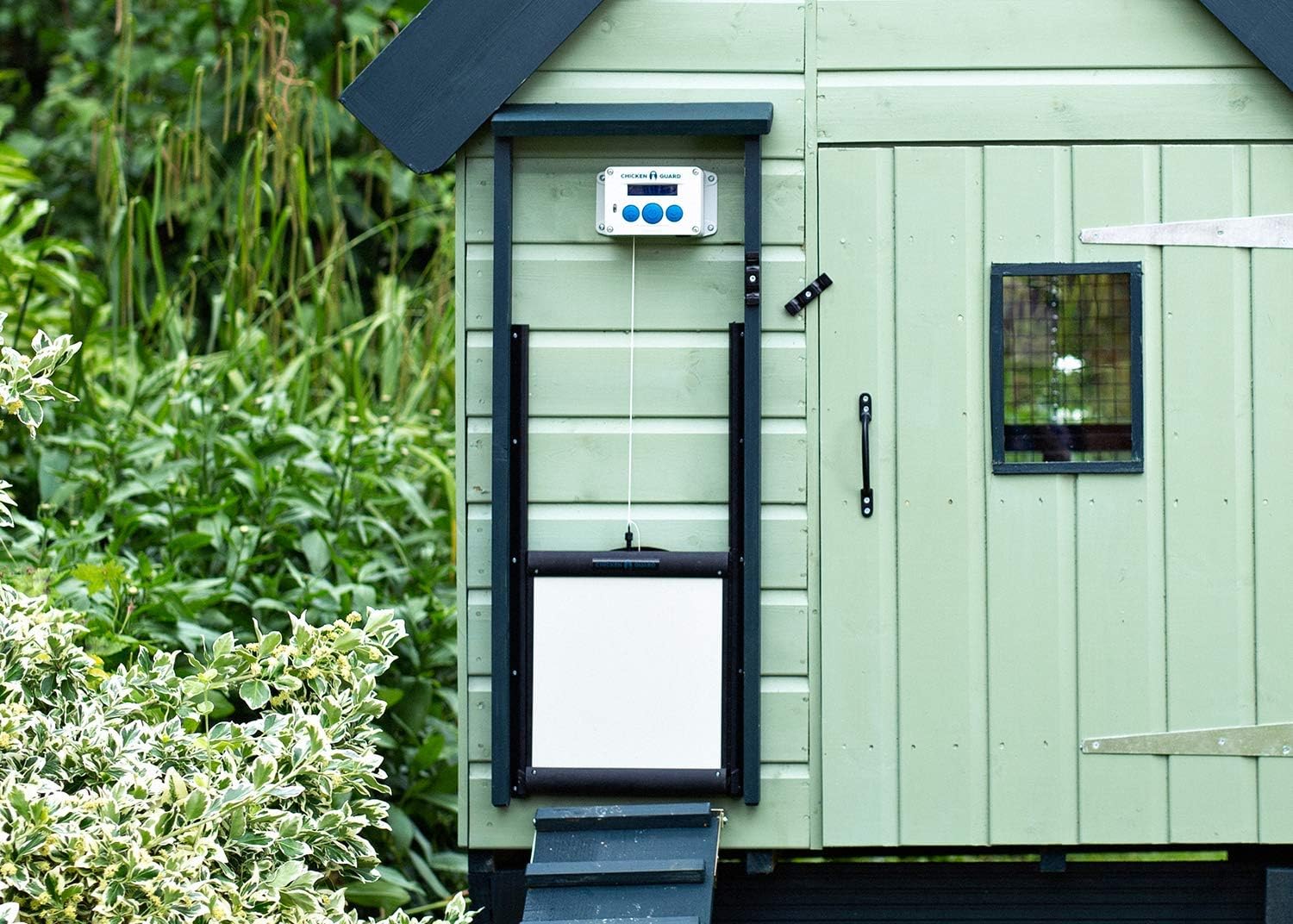
Figure 2: The ChickenGuard door is shown installed on a light green wooden chicken coop, positioned below an automatic door opener unit. The door is in the open position, allowing access to the coop.

Figure 3: The ChickenGuard door is shown installed on a wooden chicken coop, illustrating its compatibility with various coop setups.
3. Operating Instructions
The ChickenGuard Self-Locking Door can be operated manually or integrated with an automatic door opener (sold separately).
Manual Operation:
To open the door, simply lift it upwards along the runners until it reaches the desired open position. To close, lower the door until it rests fully on the bottom edge of the opening. The self-locking wings will automatically engage.
Automatic Operation:
If you are using an automatic chicken coop door opener, attach the opener's cord or mechanism to the designated attachment point on the top of the ChickenGuard door. Refer to your automatic opener's manual for specific attachment and programming instructions. The self-locking feature of this door will work in conjunction with your automatic opener, providing predator protection upon closure.
Self-Locking Mechanism:
The unique self-locking wings are designed to deploy and secure the door in place once it has fully descended. This prevents any upward movement by predators, ensuring your flock remains safe inside the coop.
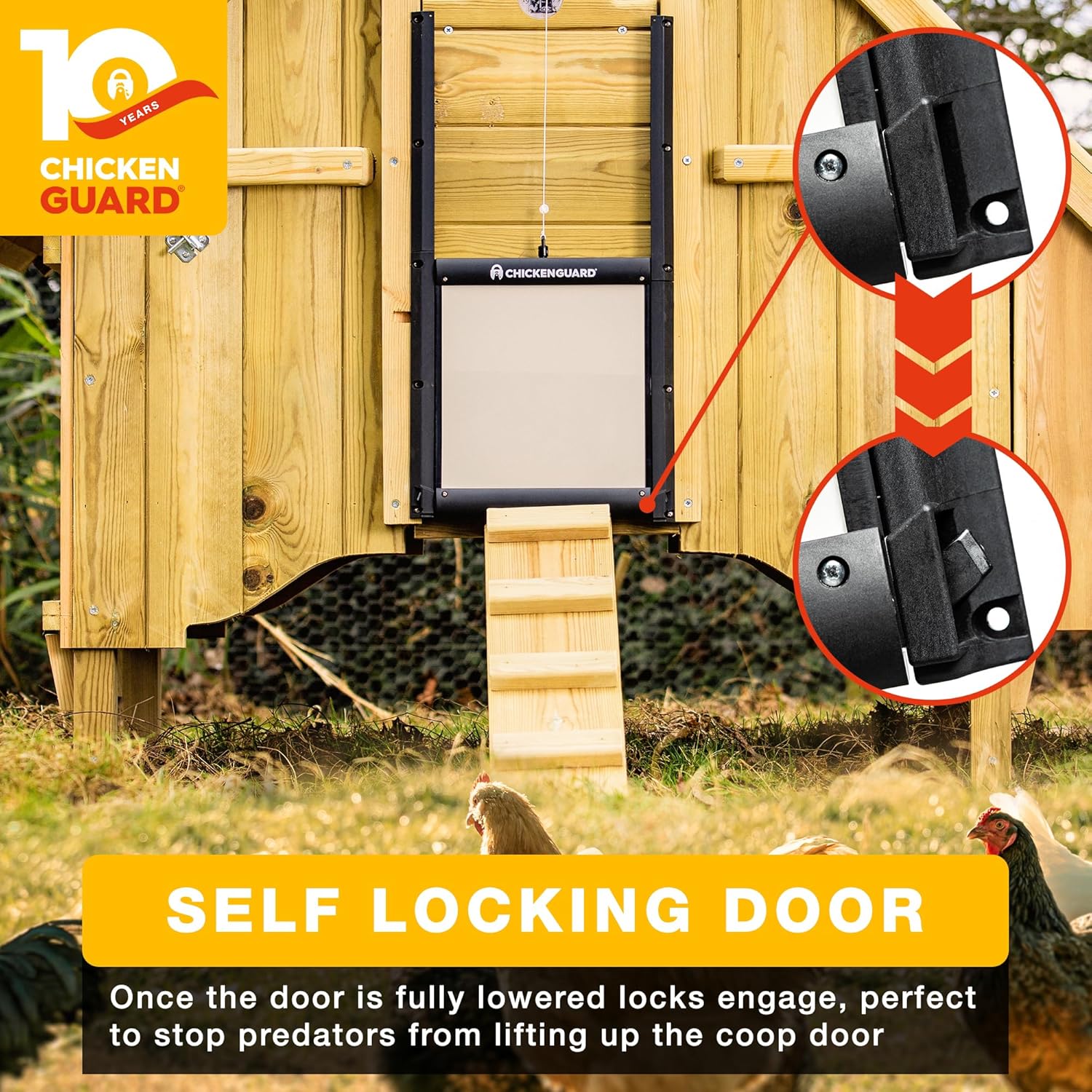
Figure 4: A detailed view illustrating how the self-locking wings of the ChickenGuard door engage when the door is fully lowered, preventing predators from lifting it.

Figure 5: The ChickenGuard door installed on a wooden chicken coop, with a rooster and hen nearby. The image emphasizes the increased security provided by the door's design.
4. Care and Maintenance
The ChickenGuard door is designed for minimal maintenance due to its durable materials.
Cleaning:
- Periodically inspect the runners and the door for any accumulation of dirt, sawdust, or debris.
- Clean the runners and door surface with a damp cloth to ensure smooth operation. Avoid abrasive cleaners.
Material Durability:
The powder-coated aluminum door and tough plastic runners are weatherproof. They are designed not to warp, crack, or swell with moisture. The materials are engineered to harden and strengthen over time when exposed to sunlight and outdoor elements, contributing to long-term durability.

Figure 6: A chicken peeks out from the ChickenGuard door, which is installed on a blue wooden coop. This image demonstrates the door's weather-resistant properties.
5. Troubleshooting
Door Jamming or Mechanism Issues:
- Symptom: Door does not slide smoothly or the locking mechanism fails to engage/disengage.
- Possible Cause: Accumulation of debris (sawdust, dirt) in the runners or around the locking mechanism.
- Solution: Thoroughly clean the runners and the area around the self-locking wings. Ensure no foreign objects are obstructing movement.
- Possible Cause: Misalignment of internal components (e.g., the 'foot' at the end of the rod that operates the locking mechanism).
- Solution: If the door consistently jams due to internal component misalignment, it may require opening the door casing to realign the part. If uncomfortable performing this, contact customer support.
6. Product Specifications
| Brand | CHICKENGUARD |
| Model Number | CHICKENGUARD Self Locking Chicken Coop D |
| Door Dimensions | 25 cm (10") L x 30 cm (12") H |
| Runner Length | 59.5 cm (23.5") |
| Overall Product Dimensions | 40.64 x 33.02 x 2.54 cm; 900 g (approx.) |
| Material | Aluminum (door), Durable Plastic (runners) |
| Special Features | Powder coated Aluminium Door, Self-Locking mechanism, Tough & Durable Plastic Runners |
| Manufacturer | ChickenGuard |
| Country of Origin | United Kingdom |
7. Warranty and Support
For information regarding product warranty, returns, or technical support, please contact ChickenGuard directly through their official website or the retailer from whom the product was purchased. Keep your proof of purchase for any warranty claims.