
1. Introduction and Overview
Thank you for choosing the Fender CD-60S Dreadnought Acoustic Guitar. This instrument is designed to provide a rich, balanced tone and comfortable playability for musicians of all skill levels. This manual will guide you through the setup, operation, maintenance, and troubleshooting of your new guitar, ensuring you get the most out of your playing experience.
Key Features:
- Dreadnought body style for powerful projection.
- Solid spruce top with scalloped "X"-bracing for enhanced resonance.
- Mahogany back and sides for a balanced tone.
- Easy-to-play neck with comfortably rolled fingerboard edges.
2. Setup
2.1 Unboxing and Initial Inspection
Carefully remove your Fender CD-60S guitar from its packaging. Inspect the instrument for any signs of damage that may have occurred during shipping. Ensure all components are present.
2.2 Tuning Your Guitar
Before playing, your guitar will need to be tuned. Use a digital tuner for accuracy. The standard tuning for a 6-string acoustic guitar from thickest to thinnest string is E-A-D-G-B-e.
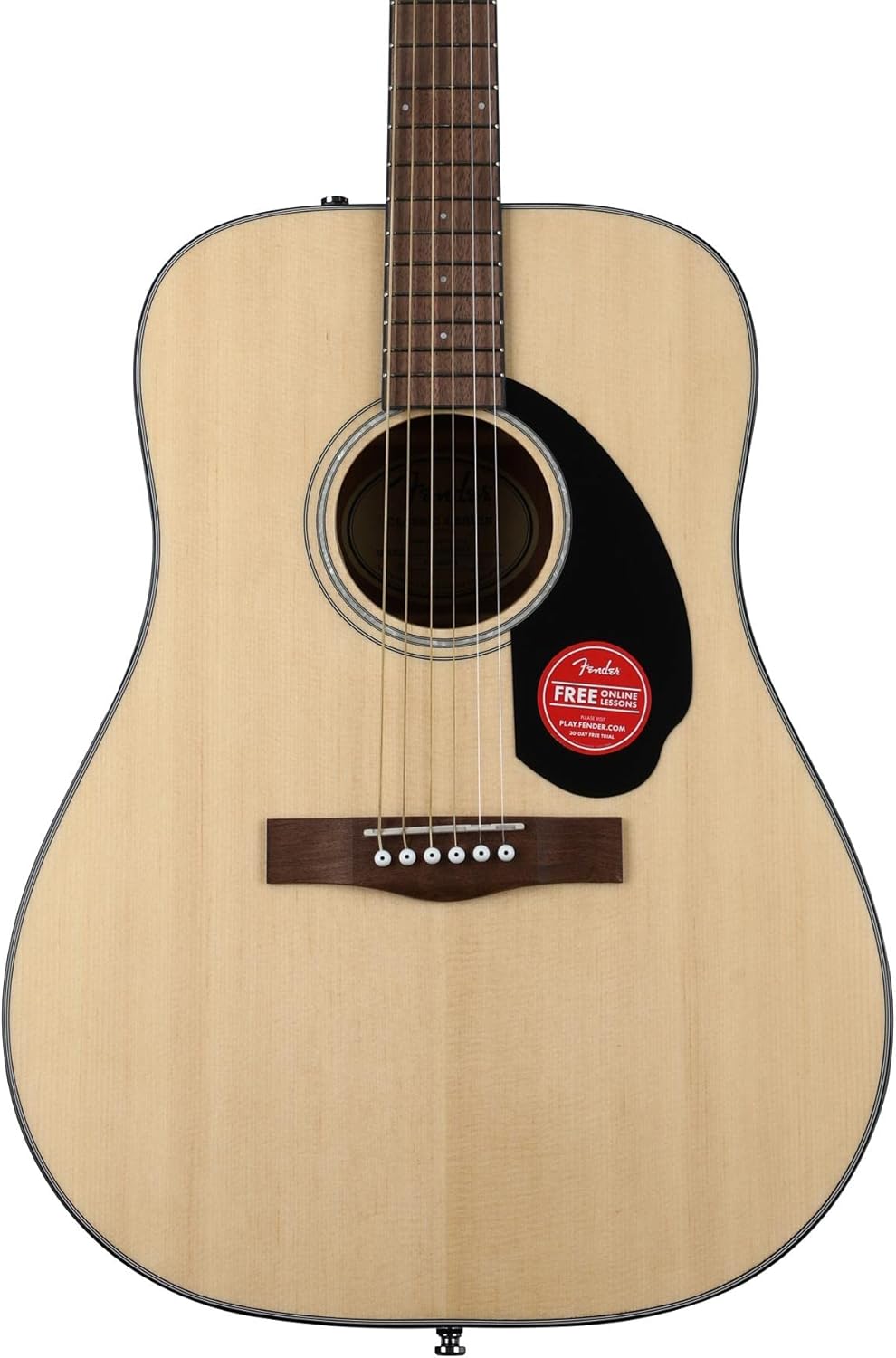
Figure 2.1: The Fender CD-60S Dreadnought Acoustic Guitar in Natural finish. This image displays the full body of the guitar, highlighting its dreadnought shape, spruce top, and mahogany back and sides.
2.3 Attaching a Guitar Strap (Optional)
Your Fender CD-60S is equipped with strap buttons for attaching a guitar strap. One button is located at the base of the body, and the other is on the upper bout near the neck joint. Securely attach your strap to both buttons.

Figure 2.2: Side view of the Fender CD-60S, showing the body depth and the strap button location on the lower bout.
3. Operating Your Guitar
3.1 Holding the Guitar
When seated, rest the guitar on your right thigh (for right-handed players) with the waist of the guitar body resting comfortably. The neck should be angled slightly upwards. When standing, use a properly adjusted guitar strap to hold the instrument at a comfortable height.
3.2 Basic Strumming and Chords
Begin by practicing basic strumming patterns. Hold a pick between your thumb and index finger, or use your bare fingers. Experiment with different strumming directions (downstrokes and upstrokes) and rhythms. For chords, place your fingertips firmly behind the frets to produce clear notes. Start with simple open chords like G, C, and D.
4. Maintenance
4.1 Cleaning
Regularly wipe down your guitar with a soft, lint-free cloth to remove dust, sweat, and fingerprints. For a deeper clean, use guitar-specific cleaning products. Avoid abrasive cleaners or household chemicals, as these can damage the finish.
4.2 String Replacement
Guitar strings should be replaced periodically, typically every 1-3 months depending on playing frequency, or when they sound dull or show signs of corrosion. Replace strings one at a time to maintain neck tension. Refer to the specifications for recommended string gauge.
4.3 Storage
Store your guitar in a stable environment, away from extreme temperature changes, direct sunlight, and high humidity. A guitar case provides the best protection against physical damage and environmental fluctuations.

Figure 4.1: Back view of the Fender CD-60S, showcasing the mahogany wood grain and glossy finish. Proper care helps maintain this aesthetic.
5. Troubleshooting
5.1 Fret Buzz
If you experience a buzzing sound when playing notes, it could be due to several factors:
- Improper Finger Placement: Ensure your fingertips are pressing firmly just behind the fret.
- Low Action: The strings might be too close to the frets. This may require a professional setup.
- Uneven Frets: In rare cases, uneven frets can cause buzzing. A luthier can address this.
5.2 Tuning Instability
If your guitar frequently goes out of tune:
- New Strings: New strings stretch and require frequent tuning for the first few days.
- Improper String Winding: Ensure strings are properly wound around the tuning pegs.
- Environmental Changes: Fluctuations in temperature and humidity can affect wood and string tension.
- Worn Tuning Machines: If tuning pegs slip, they may need adjustment or replacement.
6. Specifications
| Feature | Detail |
|---|---|
| Model Number | 970110021 |
| Body Style | Dreadnought |
| Top Material | Spruce Wood |
| Back Material | Mahogany Wood |
| Body Material | Mahogany |
| Neck Material Type | Mahogany |
| Fretboard Material | Walnut Wood |
| Number of Strings | 6 |
| Scale Length | 25.3 Inches |
| String Gauge | Light |
| String Material | Phosphor Bronze |
| Hand Orientation | Right |
| Item Weight | 8.3 pounds |
| Product Dimensions | 46.1 x 17 x 7.4 inches |
7. Warranty Information
The Fender CD-60S Dreadnought Acoustic Guitar comes with a 2-Year Warranty, covering manufacturing defects and workmanship. Please retain your proof of purchase for warranty claims.
Extended protection plans are also available for purchase separately, offering additional coverage beyond the standard warranty period. For details on these plans, please refer to the product's purchase page or contact your retailer.
8. Support
For further assistance, product registration, or to explore other Fender products, please visit the official Fender website or contact Fender customer support.
You can also visit the Fender Store on Amazon for more information.


