
APC 600M1
APC Smart-UPS 600 VA Battery Backup System User Manual
Model: 600M1
1. Introduction
This manual provides essential information for the safe and efficient operation of your APC Smart-UPS 600 VA Battery Backup System. This Uninterruptible Power Supply (UPS) is designed to provide temporary battery power during power outages and protect your electronic equipment from power surges and fluctuations. Please read this manual thoroughly before installation and use.
2. Important Safety Information
Observe the following safety precautions during installation, operation, and maintenance of the UPS unit.
- Do not open the UPS enclosure. There are no user-serviceable parts inside.
- Do not dispose of the battery in a fire as it may explode.
- Do not connect non-computer related items, such as medical equipment, life support equipment, microwave ovens, or vacuum cleaners, to the UPS.
- Ensure the UPS is connected to a grounded AC power outlet.
- Operate the UPS in a well-ventilated area, free from excessive dust, corrosive fumes, and conductive contaminants.
3. Package Contents
Verify that all items are present upon unpacking:
- APC Smart-UPS 600 VA Battery Backup System
- User Manual (this document)
- USB Communication Cable (if applicable)

Figure 3.1: Front view of the APC Smart-UPS 600 VA Battery Backup System, showing the power button and outlets.
4. Product Overview
4.1. Components and Controls
Familiarize yourself with the key components of your UPS unit.
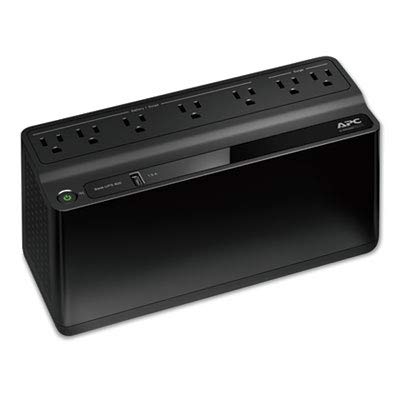
Figure 4.1: Top-down view of the UPS, highlighting the seven power outlets. Four outlets are for battery backup and surge protection, and three are for surge protection only.
- Power Button: Turns the UPS on or off.
- Battery Backup & Surge Protected Outlets (4): Provide battery power during outages and protect against surges.
- Surge Protected Only Outlets (3): Provide surge protection but no battery backup.
- USB Charging Port (1.5A): For charging mobile devices.
- AC Input Cord: Connects the UPS to wall power.
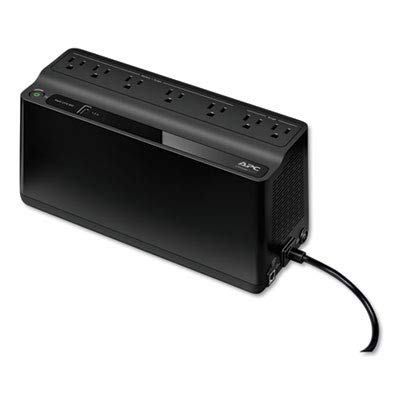
Figure 4.2: Rear view of the UPS, showing the integrated power cord and ventilation grilles.
5. Setup
5.1. Placement
Place the UPS on a flat, stable surface away from direct sunlight, heat sources, and excessive moisture. Ensure adequate airflow around the unit.
5.2. Initial Battery Connection
The UPS battery is disconnected for safety during shipping. Before initial use, connect the battery as follows:
- Lay the UPS on its side.
- Locate the battery compartment cover.
- Remove the cover and connect the battery terminal.
- Replace the cover.
5.3. Connecting Equipment
Connect your computer, monitor, and other critical equipment to the Battery Backup & Surge Protected Outlets. Connect less critical peripherals, such as printers or scanners, to the Surge Protected Only Outlets.
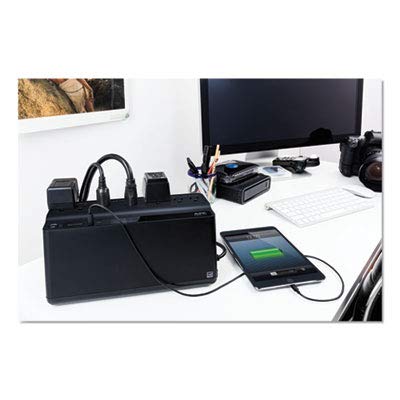
Figure 5.1: The UPS connected to a typical desktop computer setup, providing power and protection to the computer, monitor, and other accessories.
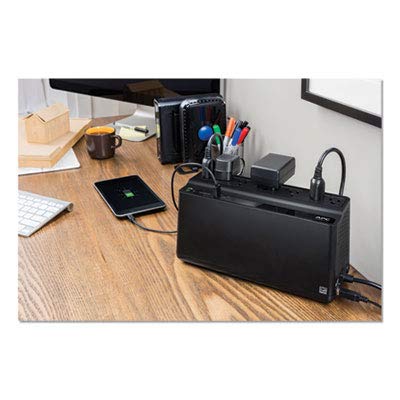
Figure 5.2: The UPS providing power and surge protection to multiple office devices, including a smartphone charging via the USB port.
5.4. Connecting to AC Power
Plug the UPS power cord directly into a grounded 2-pole, 3-wire wall receptacle. Avoid using extension cords or surge strips with the UPS.
6. Operating the UPS
6.1. Turning On/Off
- To Turn On: Press the power button once. The UPS will emit a short beep, and the power indicator will illuminate.
- To Turn Off: Press and hold the power button until the UPS beeps and the power indicator turns off.
6.2. Battery Charging
The UPS battery charges automatically when connected to AC power. Allow the battery to charge for at least 8 hours before initial use to ensure full runtime capacity.
6.3. Power Outage Operation
During a power outage, the UPS will automatically switch to battery power. It will emit a series of beeps to indicate it is operating on battery. The duration of battery power depends on the load connected. Save your work and shut down your equipment gracefully when the battery is low.
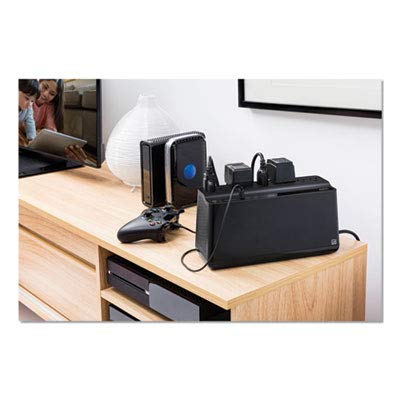
Figure 6.1: The UPS integrated with a home entertainment system, providing backup power for devices like a gaming console and media server.
7. Maintenance
7.1. Battery Replacement
The battery in your UPS is designed for a service life of 3-5 years under normal operating conditions. Battery replacement should only be performed by qualified service personnel. Contact APC support for battery replacement options.
7.2. Cleaning
Clean the exterior of the UPS with a soft, dry cloth. Do not use liquid or aerosol cleaners. Ensure ventilation openings are free from dust and debris.
8. Troubleshooting
Refer to the table below for common issues and their solutions.
| Problem | Possible Cause | Solution |
|---|---|---|
| UPS does not turn on. | Battery not connected or low. | Ensure battery is connected. Charge UPS for 8 hours. |
| UPS beeps continuously. | Operating on battery power. | Save work and shut down equipment. Restore AC power. |
| No power to connected devices. | Overload or tripped circuit breaker. | Reduce load. Check and reset circuit breaker on UPS (if present). |
9. Specifications
| Feature | Detail |
|---|---|
| Model Number | 600M1 |
| Capacity | 600 VA / 490 J |
| Input Voltage | 120 Volts |
| Amperage | 1.6 Amps |
| Outlets | 7 (4 Battery Backup & Surge, 3 Surge Only) |
| Battery Type | Lithium Ion |
| Color | Black |
| Dimensions (L x W x H) | 10.7 x 5.47 x 4.13 inches |
| Manufacturer | AMERICAN POWER CONVERSION |
| Date First Available | March 16, 2017 |
10. Warranty and Support
For warranty information and technical support, please visit the official APC website or contact their customer service. Keep your purchase receipt as proof of purchase.
Manufacturer: AMERICAN POWER CONVERSION (APC)
Website: www.apc.com
Ask a question about this manual
Ask about setup, troubleshooting, compatibility, parts, safety, or missing instructions. Manuals+ will review the question and use this page’s manual context to help answer it.