
PNY VCQP4000-BLK
PNY NVIDIA Quadro P4000 Professional Graphics Card User Manual
Model: VCQP4000-BLK
1. Introduction
The PNY NVIDIA Quadro P4000 is a professional graphics card designed for demanding visual computing workflows. It features a Pascal GPU architecture with 1792 CUDA cores, 8GB of GDDR5 memory, and advanced display technologies. This manual provides essential information for the installation, operation, maintenance, and troubleshooting of your Quadro P4000 graphics card.
This card is engineered to deliver the performance and features required for professional applications, supporting up to four 5K displays and utilizing a single-slot form factor.
2. What's in the Box
Verify that all components are present before proceeding with installation:
- PNY NVIDIA Quadro P4000 Professional Graphics Card
- (Additional accessories such as documentation, adapter cables, or driver CDs may be included depending on the specific package. Refer to your product packaging for a complete list.)
3. Product Overview

Figure 3.1: Angled view of the PNY NVIDIA Quadro P4000 graphics card, showcasing its single-slot design and cooling fan.

Figure 3.2: Side view of the Quadro P4000, highlighting the PCI Express interface and auxiliary power connector.
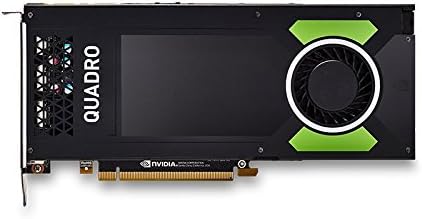
Figure 3.3: Top view of the Quadro P4000, showing the full length of the card and the fan shroud design.

Figure 3.4: Close-up view of the four DisplayPort outputs on the Quadro P4000, enabling multi-monitor setups.
4. Setup and Installation
4.1 System Requirements
- Available PCI Express 3.0 x16 slot
- Minimum 105W power supply with appropriate auxiliary power connector (if required by your system)
- Compatible operating system (Windows 10, 8.1, 7, Linux, macOS)
- Internet connection for driver download and updates
4.2 Hardware Installation
- Power Off System: Ensure your computer is completely powered off and unplugged from the wall outlet.
- Open Case: Open your computer's case to access the motherboard and expansion slots.
- Locate PCIe Slot: Identify an available PCI Express 3.0 x16 slot on your motherboard.
- Remove Slot Cover: Remove the metal slot cover from the back of your computer case corresponding to the chosen PCIe slot.
- Insert Graphics Card: Carefully align the Quadro P4000 with the PCIe slot and press down firmly until it is securely seated. Ensure the retention clip (if present) locks into place.
- Secure Card: Secure the graphics card to the computer case using the screw or latch mechanism.
- Connect Power (if applicable): If your system or the card requires it, connect the appropriate auxiliary power cable from your power supply to the graphics card. The Quadro P4000 has a maximum power consumption of 105W.
- Close Case: Close your computer's case and reconnect all cables.
4.3 Driver Installation
- Power On System: Power on your computer.
- Download Drivers: Navigate to the official NVIDIA website (www.nvidia.com/drivers) and download the latest Quadro drivers for your operating system and the P4000 model.
- Install Drivers: Run the downloaded driver installer and follow the on-screen prompts. It is recommended to perform a clean installation.
- Restart System: Restart your computer after the driver installation is complete.
5. Operating the Quadro P4000
5.1 Connecting Displays
The Quadro P4000 features four DisplayPort outputs. Use DisplayPort cables to connect your monitors to the card. It supports up to four 5K displays simultaneously.
5.2 NVIDIA Control Panel
After driver installation, the NVIDIA Control Panel will be accessible. This utility allows you to configure various display settings, manage 3D application profiles, set up multi-display configurations (NVIDIA Mosaic, Surround), and monitor GPU performance.
- Accessing: Right-click on your desktop and select "NVIDIA Control Panel" or find it in your operating system's control panel/settings.
- Key Features:
- Resolution and refresh rate adjustments
- Color settings
- Multi-display setup (Extend, Duplicate, Surround, Mosaic)
- 3D settings management for professional applications
- GPU utilization monitoring
5.3 Software Compatibility
The Quadro P4000 is optimized for professional design, engineering, and content creation applications. Ensure your software is updated to the latest versions to take full advantage of the card's capabilities, including Pascal GPU Architecture and Simultaneous Multi-Projection.
6. Maintenance
Proper maintenance ensures the longevity and optimal performance of your graphics card.
- Dust Removal: Periodically clean dust from the fan and heatsink using compressed air. Ensure the system is powered off and unplugged before cleaning.
- Driver Updates: Regularly check the NVIDIA website for the latest driver updates. Keeping drivers current can improve performance, stability, and add new features.
- System Ventilation: Ensure your computer case has adequate airflow to prevent overheating.
7. Troubleshooting
7.1 No Display Output
- Check Connections: Ensure the graphics card is fully seated in the PCIe slot and any auxiliary power cables are securely connected.
- Monitor Cables: Verify that display cables are securely connected to both the graphics card and the monitor.
- Input Source: Confirm your monitor is set to the correct input source (DisplayPort).
- Drivers: If possible, try booting into safe mode or using integrated graphics to install/reinstall the latest drivers.
7.2 Performance Issues
- Driver Updates: Ensure you have the latest NVIDIA Quadro drivers installed.
- Temperature: Monitor GPU temperatures using third-party software. Excessive heat can lead to throttling. Ensure proper case ventilation.
- Power Supply: Verify your power supply meets the minimum wattage requirement for your system, including the graphics card.
- Application Settings: Check the settings within your professional applications; some settings may be too demanding for your current workload.
7.3 Driver Installation Failures
- Clean Installation: During driver installation, select the "Perform a clean installation" option.
- Antivirus/Firewall: Temporarily disable antivirus software or firewalls that might interfere with the installation process.
- Corrupted Download: Re-download the driver package from the official NVIDIA website to ensure it's not corrupted.
8. Specifications
| Feature | Detail |
|---|---|
| Model Number | VCQP4000-BLK |
| Graphics Coprocessor | Quadro 4000 |
| Chipset Brand | NVIDIA |
| Graphics Card RAM Size | 8 GB GDDR5 |
| Memory Speed | 3802 MHz |
| Memory Bandwidth | 243 GB/s |
| CUDA Cores | 1792 |
| Peak Single Precision Performance | 5.3 TFLOPS |
| Video Output Interface | 4 x DisplayPort |
| Max Displays Supported | 4 (up to 5K resolution each) |
| Interface | PCI Express 3.0 x16 |
| Form Factor | Single-slot, 4.4" x 9.5" |
| Maximum Power Consumption | 105W |
| Item Weight | 1 pounds |
| Product Dimensions | 1 x 1 x 1 inches (Note: This appears to be a placeholder dimension, actual card dimensions are 4.4" x 9.5") |
| First Available Date | December 22, 2017 |
9. Warranty and Support
9.1 Warranty Information
PNY products are covered by a limited warranty. For specific warranty terms and conditions, please refer to the warranty documentation included with your product or visit the official PNY website. Keep your proof of purchase for warranty claims.
9.2 Technical Support
For technical assistance, driver issues, or troubleshooting beyond the scope of this manual, please contact PNY Technical Support. Support resources, including FAQs, knowledge bases, and contact information, can typically be found on the official PNY website:
PNY Support Website: www.pny.com/support
When contacting support, please have your product model number (VCQP4000-BLK) and purchase information ready.
Related documentsVCQP4000-BLK


Ask a question about this manual
Ask about setup, troubleshooting, compatibility, parts, safety, or missing instructions. Manuals+ will review the question and use this page’s manual context to help answer it.