
1. Introduction
This manual provides essential information for the safe and efficient installation, operation, and maintenance of your Packard Air Conditioner Condenser Fan Motor, Model 43730. Please read this manual thoroughly before installation or use to ensure proper function and safety. This motor is designed for use in air conditioning condenser units.
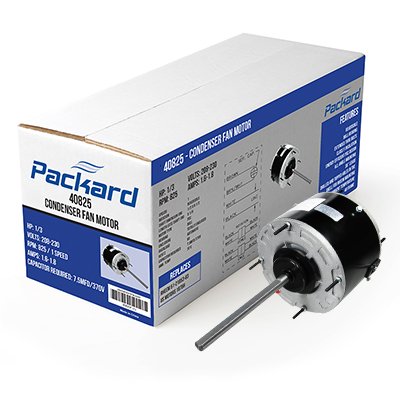
Image 1.1: Packard Air Conditioner Condenser Fan Motor 43730. This image displays the motor from a side angle, highlighting its cylindrical body, shaft, and electrical connections.
2. Safety Information
Always observe the following safety precautions to reduce the risk of electric shock, injury, or damage to the motor or equipment:
- Disconnect Power: Ensure all power to the air conditioning unit is disconnected at the circuit breaker before attempting any installation, maintenance, or repair.
- Qualified Personnel: Installation and servicing should only be performed by qualified and experienced technicians.
- Proper Grounding: Ensure the motor is properly grounded according to local electrical codes.
- Capacitor Handling: Capacitors can store a dangerous electrical charge. Always discharge the capacitor before handling.
- Wiring: Follow the wiring diagram printed on the motor and all applicable electrical codes. Incorrect wiring can cause motor damage or electrical hazards.
- Personal Protective Equipment (PPE): Wear appropriate PPE, including safety glasses and electrical gloves, when working with electrical components.
- Environmental Conditions: Do not operate the motor in environments exceeding its specified temperature or humidity ratings.
3. Product Specifications
| Specification | Value |
|---|---|
| Brand | Packard |
| Model Number | 43730 (Replaces GE 3730) |
| Horsepower (HP) | 0.5 HP (1/2 HP) |
| Revolutions Per Minute (RPM) | 1075 RPM |
| Voltage | 230 Volts |
| Amperage | 3.50 Amps |
| Phase | Single Phase |
| Motor Diameter | 5-5/8 inches |
| Frame Size | 48 Frame |
| Enclosure Type | TENV (Totally Enclosed Non-Ventilated) |
| Shaft Dimensions | 1/2 inch diameter x 6-1/2 inches length |
| Bearing Type | Sleeve Bearing |
| Thermal Protection | Yes, Thermally Protected |
| Capacitor Requirement | 10 mfd, 370 VAC (not included) |
| Rotation | Electrically Reversible |
| Mounting Options | All Angle Mounting, Belly band strap, Studs (4 studs, 3-5/8" apart C-C), Cradle mount, Rheem mount |
| Material | Copper |
| UPC | 840899112756 |
4. Setup and Installation
Proper installation is critical for the motor's performance and longevity. Refer to the wiring diagram printed on the motor label for specific electrical connections.
4.1 Pre-Installation Checks
- Verify that the motor specifications (voltage, HP, RPM) match the requirements of your air conditioning unit.
- Ensure you have the correct 10 mfd, 370 VAC run capacitor (not included) for operation.
- Inspect the motor for any visible damage from shipping.
4.2 Mounting
The motor supports various mounting configurations:
- Belly Band Strap: Secure the motor using a belly band strap around its body.
- Stud Mounting: Utilize the four mounting studs located 3-5/8 inches apart (center-to-center) at the shaft end or opposite shaft end.
- Cradle Mount: The motor can be mounted into a compatible cradle.
- Rheem Mount: The motor can be mounted into the shell of the motor with four evenly spaced points around the motor.
Ensure the motor is securely fastened to prevent vibration and misalignment. The motor is designed for all-angle mounting.
4.3 Shaft Adjustment
The 1/2 inch x 6-1/2 inch shaft can be cut down with a hacksaw if a shorter shaft length is required for your application. Exercise caution and ensure a clean cut.
4.4 Electrical Connections
- Capacitor Wiring: Connect the 10 mfd, 370 VAC run capacitor according to the motor's wiring diagram. The capacitor is essential for motor startup and continuous operation.
- Power Wiring: Connect the main power supply wires to the motor terminals as indicated on the motor's wiring diagram.
- Grounding: Connect the motor to a proper ground.
- Rotation: The motor is electrically reversible. Follow the wiring diagram to achieve the desired rotation direction for your fan blade.
Important: Always refer to the specific wiring diagram printed on your motor for accurate connections. If unsure, consult a qualified electrician.
5. Operating Instructions
Once installed and wired correctly, the motor is designed for continuous operation within its specified parameters.
- Initial Startup: After installation, restore power to the unit. The motor should start smoothly and reach its operating speed of 1075 RPM.
- Monitoring: During initial operation, observe the motor for any unusual noises, excessive vibration, or signs of overheating.
- Fan Blade Balance: Ensure the fan blade attached to the motor shaft is properly balanced to prevent excessive vibration and premature motor wear.
6. Maintenance
Regular maintenance helps ensure the longevity and efficient operation of your motor.
- Cleaning: Periodically clean the exterior of the motor to remove dust, dirt, and debris. As this is a Totally Enclosed Non-Ventilated (TENV) motor, internal cleaning is not typically required.
- Inspection: Annually inspect the motor for signs of wear, corrosion, or damage to wiring. Check mounting bolts for tightness.
- Bearings: This motor uses sleeve bearings, which are typically self-lubricating and do not require regular oiling. However, listen for any unusual bearing noises during operation.
- Capacitor Check: If the motor experiences starting issues, have a qualified technician check the run capacitor for proper capacitance.
7. Troubleshooting
This section addresses common issues you might encounter with the motor. For complex problems, consult a qualified technician.
7.1 Motor Does Not Start
- No Power: Check the circuit breaker and ensure power is supplied to the unit.
- Incorrect Wiring: Verify all electrical connections against the motor's wiring diagram.
- Faulty Capacitor: The run capacitor may be defective. A qualified technician should test and replace it if necessary.
- Thermal Overload: The motor's thermal protector may have tripped due to overheating. Allow the motor to cool down.
- Seized Bearings: Inspect the shaft for free rotation. If seized, the motor may need replacement.
7.2 Motor Overheats
- Restricted Airflow: Ensure the condenser coil and fan blades are clean and free of obstructions.
- Incorrect Fan Blade: Verify the fan blade is correctly sized and pitched for the motor and unit.
- Low Voltage: Check the supply voltage; low voltage can cause the motor to draw excessive current and overheat.
- Faulty Capacitor: A weak capacitor can cause the motor to run inefficiently and overheat.
7.3 Excessive Noise or Vibration
- Loose Mounting: Tighten all mounting bolts and straps.
- Unbalanced Fan Blade: Inspect the fan blade for damage or imbalance. Replace if necessary.
- Worn Bearings: If the noise is a grinding or squealing sound, the sleeve bearings may be worn. Motor replacement may be required.
- Obstruction: Check for any foreign objects contacting the fan blade or motor.
8. Warranty and Support
For warranty information and technical support regarding your Packard Air Conditioner Condenser Fan Motor, Model 43730, please contact the original seller or the manufacturer, Packard. Details regarding specific warranty periods and coverage are typically provided at the point of purchase or on the manufacturer's official website.
For product support, you may contact the seller, Voomi Supply, or visit the Packard website for further assistance.