
1. Introduction
The JOYING ELM 327 V2.1 Bluetooth OBD2 Diagnostic Scanner is a vehicle interface tool designed to communicate with your car's On-Board Diagnostics (OBD-II) system. It allows users to read and clear diagnostic trouble codes (DTCs), view live sensor data, and monitor various vehicle parameters using a compatible Android device and application. This manual provides instructions for the proper setup, operation, and maintenance of your diagnostic tool.

Figure 1: Front view of the JOYING ELM 327 V2.1 Bluetooth OBD2 Diagnostic Scanner, showing the "ELM327 MINI Interface Supports all OBDII protocols" label.
2. Product Features
- Reads and clears diagnostic trouble codes (DTCs).
- Displays the meaning of diagnostic trouble codes.
- Turns off the Malfunction Indicator Light (MIL), also known as the "Check Engine" light.
- Shows current sensor data in real-time.
- Bluetooth connectivity for wireless communication with Android devices.
- Supports various OBD-II protocols.
3. Specifications
| Parameter | Value |
|---|---|
| Processor | ELM327 v2.1 |
| Operating Voltage | 12V (with internal protection from short circuits/overvoltages) |
| Nominal Idle Current | 45mA |
| Bluetooth Password | 1234 |
| Output Interface | Bluetooth |
| Applicable Scope | 5-10m / 16.4-32.8ft |
| Item Weight | 23g (0.81 oz) |
| Product Dimensions | 6.3 x 4.72 x 1.97 inches (approximate) |
| Manufacturer Part Number | 5824090411 |
Supported OBDII Protocols:
- ISO 9141-2 (5 baud init, 10.4 kbaud)
- ISO 14230-4 KWP (5 baud init, 10.4 kbaud)
- ISO 14230-4 KWP (fast init, 10.4 kbaud)
- ISO 15765-4 CAN (11 bit ID, 500 kbaud)
- ISO 15765-4 CAN (29 bit ID, 500 kbaud)
- ISO 15765-4 CAN (11 bit ID, 250 kbaud)
- ISO 15765-4 CAN (29 bit ID, 250 kbaud)
Notice: This device CANNOT work for PWM or VPW (SAE J1850) protocols.

Figure 2: Side view of the diagnostic scanner showing approximate dimensions: 1.95 inches length, 1 inch width, 1.25 inches height.
4. Setup Guide
4.1. Installation
- Locate your vehicle's OBD-II port. This port is typically found under the dashboard on the driver's side, but its exact location may vary by vehicle model. Refer to your vehicle's owner's manual if you cannot find it.
- Ensure your vehicle's ignition is turned off before plugging in the device.
- Firmly plug the JOYING ELM 327 V2.1 scanner into the OBD-II port. Do not force the connection.
- Once plugged in, turn your vehicle's ignition to the "ON" position (engine does not need to be running). The device should power on, indicated by an LED light.

Figure 3: Angled view of the diagnostic scanner, highlighting the 16-pin OBD-II connector.
4.2. Bluetooth Pairing with Android Device
- On your Android device, go to "Settings" and enable Bluetooth.
- Search for available Bluetooth devices. The scanner should appear as "OBDII" or a similar identifier.
- Select the device to pair. When prompted for a password, enter 1234.
- Once paired, your Android device is ready to connect with a compatible OBD2 application.
4.3. Software Installation
This diagnostic tool requires a third-party OBD2 application to function. Popular applications include "Torque Pro" (often preinstalled on JOYING car radios as "Torque_pro apk") or other compatible apps available on the Google Play Store.
- Download and install your preferred OBD2 application from the Google Play Store.
- Open the application and navigate to its settings.
- In the application settings, select "Bluetooth" as the connection type and choose the paired "OBDII" device.
- Follow the in-app instructions to establish a connection with the scanner.
5. Operating Instructions
Once the JOYING ELM 327 V2.1 scanner is connected to your vehicle and paired with your Android device and OBD2 application, you can begin diagnostics.
- Connect: Ensure the app indicates a successful connection to the OBD2 adapter and your vehicle's ECU.
- Read Fault Codes: Navigate to the "Fault Codes" or "DTCs" section within the app to scan for stored diagnostic trouble codes. The app will display the codes and their descriptions.
- Clear Fault Codes: If applicable, the app will provide an option to clear the fault codes. Clearing codes will also turn off the Malfunction Indicator Light (MIL). Note that if the underlying issue is not resolved, the codes may reappear.
- View Live Data: Access the "Realtime Information" or "Live Data" section to monitor various sensor readings such as engine RPM, vehicle speed, coolant temperature, fuel system status, and more.
- Other Functions: Depending on your chosen app, additional features like performance monitoring, fuel economy tracking, and graphing of sensor data may be available.
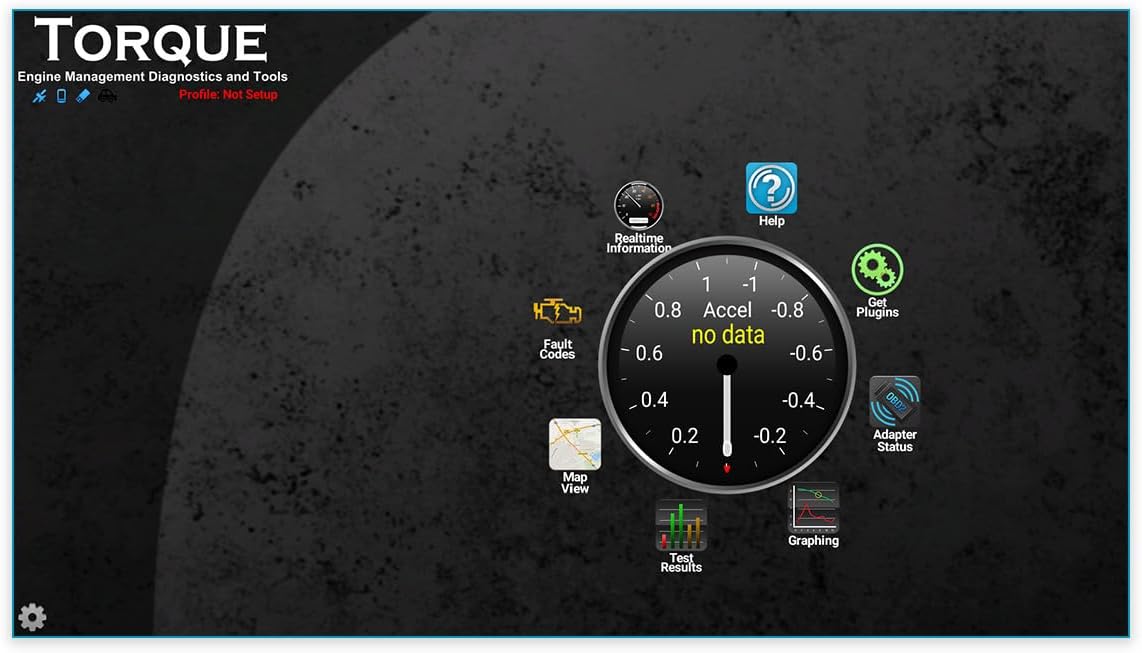
Figure 4: Example interface of a compatible OBD2 application (Torque Pro), showing options for Realtime Information, Fault Codes, Adapter Status, and Graphing.
For detailed instructions on specific features, please refer to the user manual or help section of your chosen OBD2 application.
6. Maintenance
The JOYING ELM 327 V2.1 diagnostic scanner requires minimal maintenance.
- Cleaning: Wipe the device with a soft, dry cloth. Do not use liquid cleaners or solvents.
- Storage: Store the device in a cool, dry place away from direct sunlight and extreme temperatures when not in use.
- Handling: Avoid dropping the device or subjecting it to strong impacts.
7. Troubleshooting
If you encounter issues with your JOYING ELM 327 V2.1 diagnostic scanner, refer to the following common troubleshooting steps:
- Device Not Powering On:
- Ensure the device is firmly plugged into the vehicle's OBD-II port.
- Verify the vehicle's ignition is in the "ON" position.
- Check your vehicle's fuse box for any blown fuses related to the OBD-II port (consult your vehicle's manual).
- Bluetooth Pairing Issues:
- Make sure Bluetooth is enabled on your Android device.
- Ensure the scanner is powered on.
- Try unpairing and re-pairing the device. The default Bluetooth password is 1234.
- Ensure no other devices are actively connected to the scanner via Bluetooth.
- App Not Connecting to Scanner:
- Confirm that the scanner is successfully paired with your Android device via Bluetooth settings.
- In your OBD2 application's settings, verify that "Bluetooth" is selected as the connection type and the correct "OBDII" device is chosen.
- Try restarting both the app and your Android device.
- Some apps may require specific settings or configurations. Consult the app's documentation.
- Ensure the app is compatible with ELM327 v2.1 devices.
- No Data or Incorrect Readings:
- Verify that your vehicle supports the OBD-II protocols listed in the specifications. This device does not support PWM or VPW (SAE J1850) protocols.
- Ensure the app is correctly configured for your vehicle's protocol (if applicable).
- Check if your vehicle's engine is running or ignition is in the "ON" position.
- Device Not Compatible with iOS:
- This device is designed for use with Android operating systems only and is not compatible with iOS devices.
If problems persist after attempting these steps, please contact JOYING customer support or refer to their official website for further assistance.
8. Warranty and Support
For information regarding warranty coverage, technical support, or service inquiries, please refer to the documentation included with your purchase or visit the official JOYING website.
Manufacturer: JOYING
Website: JOYING Official Store on Amazon (or refer to product packaging for direct manufacturer contact information)