
Playz 43227-307
Playz Edible Candy Making Science Kit Instruction Manual
Model: 43227-307 | Brand: Playz
Introduction
Welcome to the world of edible science with the Playz Edible Candy Making Science Kit! This kit is designed for children aged 8-12 years old to explore fundamental food science and chemistry principles through engaging, hands-on experiments. You will learn to create various types of candies, understand chemical reactions, and observe physical changes in ingredients. This manual provides essential information for safe and successful experimentation.

Image Description: The main product image displays the Playz Edible Candy Making Science Kit box, along with various components laid out. These include gummy candies, gelatin packets, a silicone mold, plastic spoons, a beaker with liquid, and a small instruction booklet, all arranged on a colorful background.
Safety Information
- Adult Supervision Required: This kit contains ingredients and requires procedures that necessitate adult supervision for children aged 8-12.
- Read All Instructions: Before beginning any experiment, carefully read all instructions in the included lab guide and this manual.
- Food Allergies: Review all ingredient labels for potential allergens. If you have known allergies, consult a medical professional before use.
- Hygiene: Always wash hands thoroughly before and after handling ingredients and equipment. Ensure a clean workspace.
- Do Not Ingest Non-Food Items: Only consume items explicitly stated as edible. Keep all non-food components away from mouth.
- Heat Safety: Some experiments may involve heating. Use caution with hot liquids and equipment. An adult must handle all heating processes.
- Storage: Store all ingredients and components in a cool, dry place, out of reach of small children and pets.
Kit Contents
The Playz Edible Candy Making Science Kit includes a variety of tools and ingredients to facilitate over 40 experiments. Please verify that all components listed below are present in your kit.
- 32-page Activities and Lab Guide
- Various food-grade ingredients (e.g., gelatin, jelly mix, citric acid)
- Silicone candy molds
- Plastic measuring spoons
- Beakers or measuring cups
- Stirring sticks
- Other specialized tools for candy making
Note: Some experiments may require additional common household supplies not included in this kit (e.g., sugar, water, microwave, refrigerator, paper straws). Refer to the specific experiment instructions in the lab guide for a complete list of required items.

Image Description: A close-up view of various components from the kit, including packets of gelatin and jelly mix, a pink silicone mold with animal shapes, a plastic pacifier-shaped mold, clear plastic sheets, blue and white plastic spoons, and a wooden stick. These items are arranged on a white surface.
Setup
- Prepare Your Workspace: Choose a clean, flat, and stable surface for your experiments. Cover it with newspaper or a plastic sheet for easy cleanup.
- Gather Additional Supplies: Before starting an experiment, read the instructions in the lab guide to identify any household items you may need (e.g., bowls, spoons, microwave-safe containers, water, sugar).
- Organize Kit Components: Lay out all the kit components and additional supplies so they are easily accessible.
- Wash Hands: Ensure all participants wash their hands thoroughly with soap and water before handling any ingredients.
Operating: Conducting Experiments
The core of the Playz Edible Candy Making Science Kit is its comprehensive 32-page Activities and Lab Guide, which details over 40 unique experiments. Each experiment is designed to be educational and fun, guiding you through the process of creating various edible treats while learning about scientific principles.
General Experiment Steps:
- Select an Experiment: Choose an experiment from the lab guide.
- Read Instructions Carefully: Thoroughly read all steps for the chosen experiment before starting. Pay attention to safety warnings and required household items.
- Prepare Ingredients and Tools: Measure out all necessary ingredients and have all tools ready as specified in the guide.
- Follow Step-by-Step: Execute each step precisely as described. Adult supervision is crucial, especially for steps involving heat or sharp objects.
- Observe and Record: Pay attention to the changes occurring during the experiment. The lab guide often includes sections for observations and scientific explanations.
- Enjoy Your Creations: Once completed and cooled (if applicable), enjoy your edible science creations!
Example Experiment: Making Gummy Bears (Refer to Lab Guide for full details)
This experiment, detailed in your lab guide, demonstrates the properties of gelatin and how it forms a solid structure.
- Materials: Gelatin, jelly mix, water, microwave, microwave-safe cup, gummy bear mold, paper straws (optional).
- Procedure:
- Combine gelatin, jelly mix, and water in a microwave-safe cup.
- Heat in the microwave for a short duration (e.g., 10-15 seconds), stirring until dissolved.
- Carefully pour the mixture into the gummy bear mold.
- Refrigerate for 1-2 hours until firm.
- Once set, remove the gummy bears from the mold.
- Scientific Principle: This process illustrates gelation, where protein molecules in gelatin form a network that traps water, creating a semi-solid, elastic structure.

Image Description: An open 32-page lab guide from the kit, displaying colorful illustrations and step-by-step instructions for two experiments: "Gummy bears" and "Jellyfish Experiment." The text is clear and accompanied by diagrams showing the process.
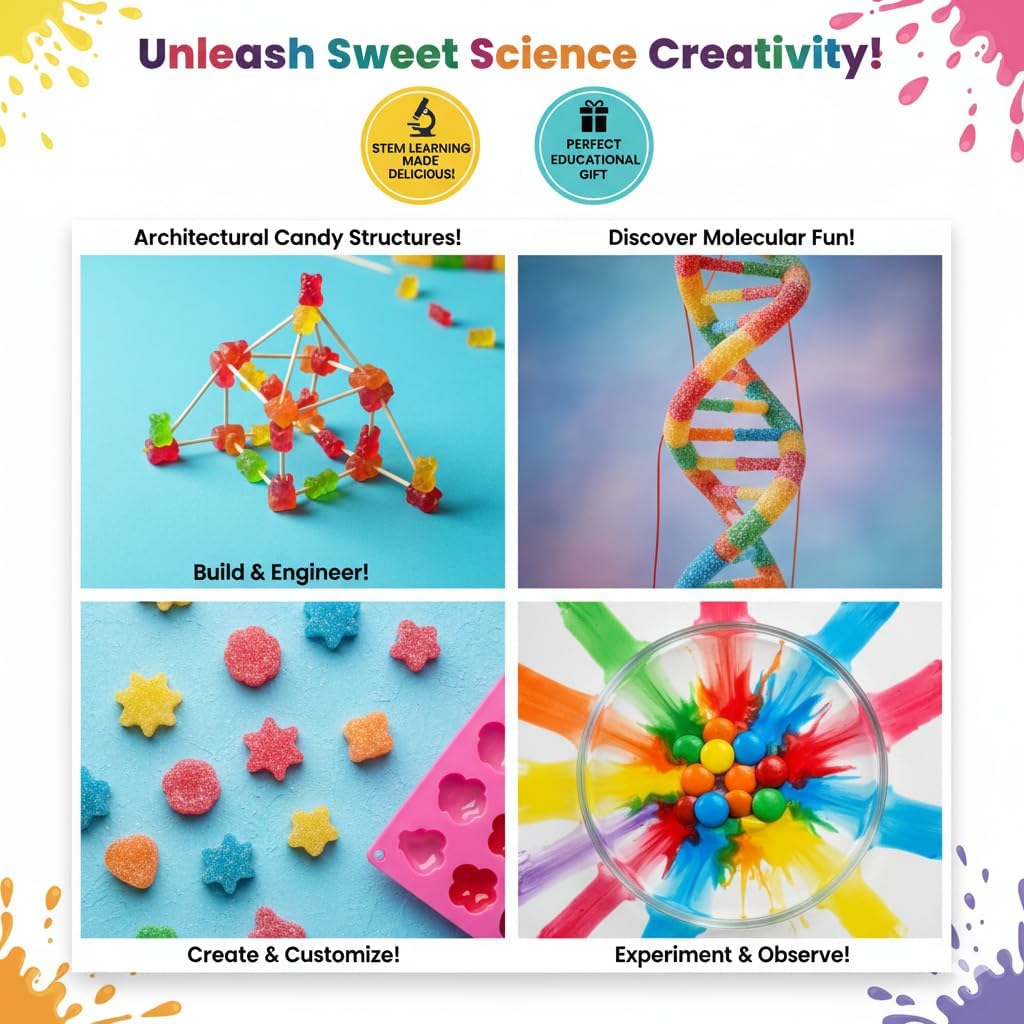
Image Description: A collage of four images demonstrating different candy science activities. Top left shows architectural structures built with gummy bears and toothpicks. Top right shows a colorful candy DNA helix. Bottom left displays various custom-shaped candies. Bottom right illustrates color diffusion with candies in water.

Image Description: A collage of four images showcasing additional candy creations. Top left features sparkling crystal candy. Top right shows colorful rainbow gummy creations. Bottom left displays jewel jiggle candies. Bottom right illustrates frosted dream swirls made from candy.
Maintenance
- Cleaning Tools: After each experiment, wash all reusable tools (molds, spoons, beakers) with warm, soapy water. Rinse thoroughly and allow to air dry completely before storing.
- Storing Ingredients: Keep all unused ingredients in their original packaging or in airtight containers. Store in a cool, dry place away from direct sunlight. Check expiration dates before use.
- Disposal: Dispose of any leftover edible creations or waste materials according to local guidelines.
- Kit Storage: Store the entire kit in its original box or a designated storage container to keep all components together and protected.
Troubleshooting
| Problem | Possible Cause | Solution |
|---|---|---|
| Candy not setting/too soft | Incorrect ingredient ratios, insufficient cooling time, not enough gelatin. | Double-check measurements. Ensure adequate refrigeration time. Verify gelatin is fully dissolved. |
| Candy is grainy/crystallized | Sugar not fully dissolved, mixture overheated, rapid cooling. | Ensure sugar is completely dissolved before heating. Avoid overheating. Allow to cool gradually if possible. |
| Difficulty removing candy from molds | Candy not fully set, mold not properly prepared. | Ensure candy is completely firm. Lightly grease molds if recommended by the experiment. Gently flex the mold. |
| Experiment results differ from guide | Variations in temperature, humidity, or ingredient quality; steps not followed precisely. | Review instructions carefully. Ensure accurate measurements. Environmental factors can sometimes influence results. |
Specifications
- Product Dimensions: 15 x 11.5 x 3.3 inches
- Item Weight: 1.46 pounds
- Item Model Number: 43227-307
- Manufacturer: Playz
- Recommended Age: 8-12 years old
- Number of Experiments: Over 40
- Lab Guide: 32 pages
Warranty and Support
Playz is committed to providing high-quality educational science kits. We stand by our products with the Playz Promise.
- Satisfaction Guarantee: If you are unhappy with your purchase for any reason, please contact Playz customer support.
- Contact Support: For any questions, concerns, or issues regarding your kit, please refer to the contact information provided on the product packaging or visit the official Playz website for support options.
- Returns/Refunds: As per the Playz Promise, you may contact us anytime for a refund if you are unsatisfied.
Ask a question about this manual
Ask about setup, troubleshooting, compatibility, parts, safety, or missing instructions. Manuals+ will review the question and use this page’s manual context to help answer it.