
1. Product Overview
The TRUPOW 4226GPH Flow Frequency Electric Inline Garden Submersible Pond Filter Pump operates at 140W, providing a maximum output of 4226 gallons per hour (GPH). It is suitable for various water recycling applications including ponds, rockeries, aquariums, and waterfalls. The pump utilizes variable frequency technology for efficient operation, offering high flow and head with minimal noise. Its design incorporates a ceramic shaft for wear resistance and extended service life, compatible with both fresh and saltwater environments as it contains no copper elements. The pump features tool-free disassembly for easy cleaning and a multi-stage outlet for various pipe diameter connections. A locked-rotor protection function automatically cuts power if the impeller jams, enhancing safety and durability. This pump offers up to 60% energy savings due to its variable frequency technology.

Figure 1: TRUPOW 4226GPH Pond Pump highlighting its key attributes.
Key Features:
- Submersible and Inline Operation: Designed for versatile use in various water features.
- Energy Efficient: Features variable frequency technology for reduced power consumption.
- Quiet Operation: Engineered for minimal noise during use.
- Easy Maintenance: Tool-free disassembly for simplified cleaning.
- Durable Construction: Equipped with a wear-resistant ceramic shaft, suitable for fresh and saltwater.
- Safety Features: Includes locked-rotor protection to prevent damage.
- Flexible Connectivity: Multi-stage outlet accommodates various hose sizes (1", 1-1/4", 1-1/2", 2").
2. Product Components and Usage Modes
Understanding the pump's components and its two primary usage modes is essential for proper installation and operation.
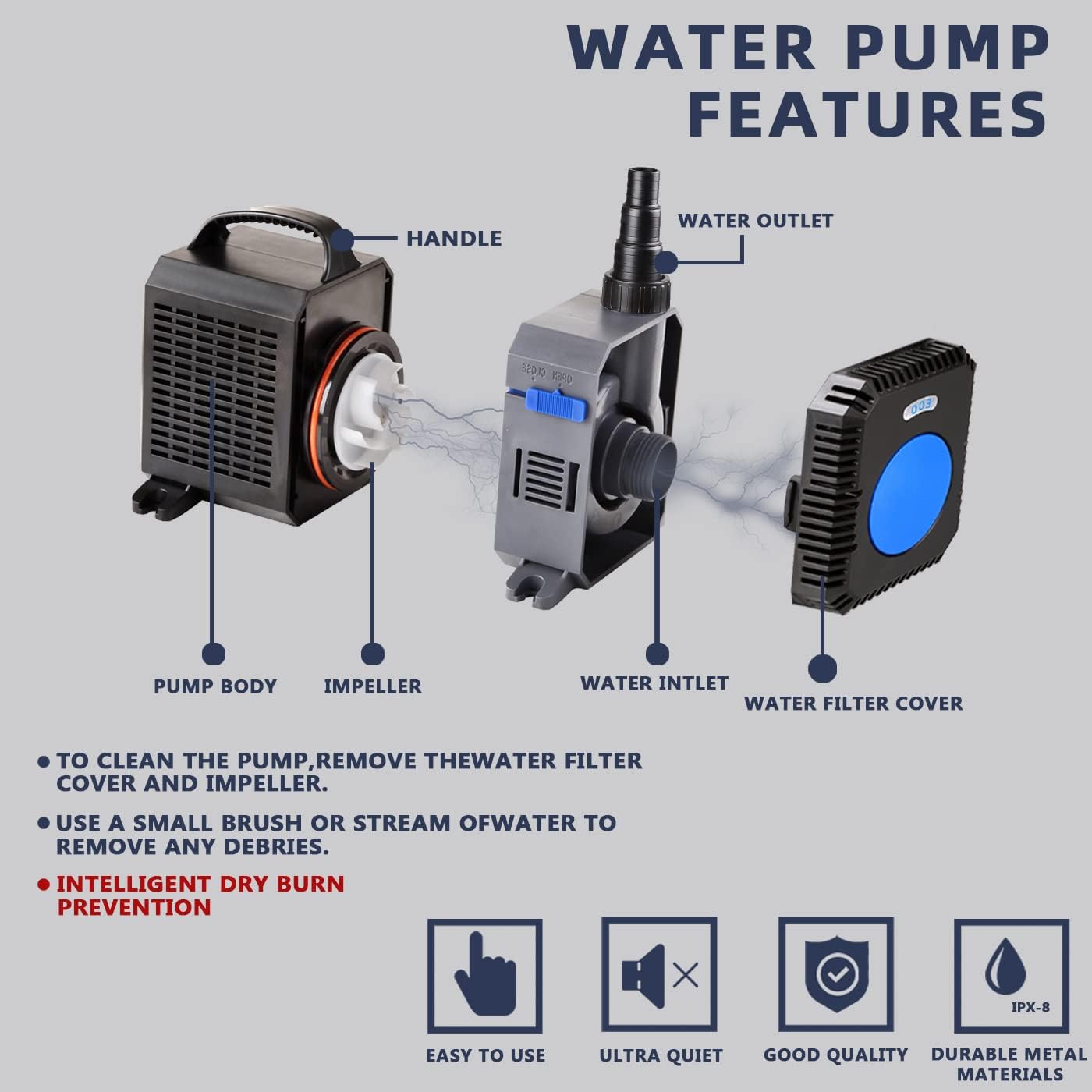
Figure 2: Exploded view of the pump components including handle, pump body, impeller, water inlet, water outlet, and water filter cover.
Usage Modes:

Figure 3: Visual guide for submersible and inline pump configurations.
Submersible Use:
For submersible applications, the pump is placed directly into the water. Ensure the pump is fully submerged to prevent dry running and optimize cooling. This mode is ideal for aquariums, ponds, and fountains where the pump can be hidden beneath the water surface.
Inline Use:
For inline applications, remove the water filter cover on the pump head. Connect a suction hose to the inlet. The pump should be positioned lower than the water level to facilitate proper priming and operation. This setup is suitable for external filtration systems or when the pump needs to be outside the water body.
3. Setup and Installation
Before installation, ensure the power supply matches the pump's requirements (110V-120V/60Hz). Select the appropriate hose adapter size (1", 1-1/4", 1-1/2", or 2") for your plumbing system.
General Installation Steps:
- Positioning: For submersible use, place the pump on a stable, level surface at the bottom of your pond or tank. For inline use, position the pump below the water level of the source.
- Hose Connection: Attach the appropriate hose adapter to the pump's outlet. Connect your desired hose or piping securely. For inline use, also connect a suction hose to the inlet after removing the filter cover.
- Electrical Connection: Ensure your hands are dry. Plug the UL-certified power cord (16.4FT length) into a grounded electrical outlet. Avoid using extension cords if possible; if necessary, use a heavy-duty outdoor-rated cord.
- Initial Start-up: Once connected, power on the pump. Observe for proper water flow and check for any leaks.
Important: Never run the pump dry. Ensure the pump is always submerged in water or has a continuous water supply for inline applications to prevent damage.
4. Operating Instructions
The TRUPOW pump is designed for continuous operation in various water features. Once installed and powered, it will begin circulating water. The variable frequency technology automatically adjusts to maintain efficient flow.
Applications:

Figure 4: Examples of the pump's diverse applications.
- Fish Tanks & Aquariums: Provides essential water circulation and filtration.
- Ponds & Koi Ponds: Ideal for maintaining water quality and creating water movement.
- Fountains & Waterfalls: Powers decorative water features.
- Hydroponics: Circulates nutrient solutions in hydroponic systems.
Monitor the water flow regularly to ensure optimal performance. If flow decreases, check for blockages or consider cleaning the pump.
5. Maintenance and Cleaning
Regular cleaning and maintenance will extend the life of your TRUPOW pump and ensure efficient operation. The tool-free design makes this process straightforward.
Cleaning Steps:
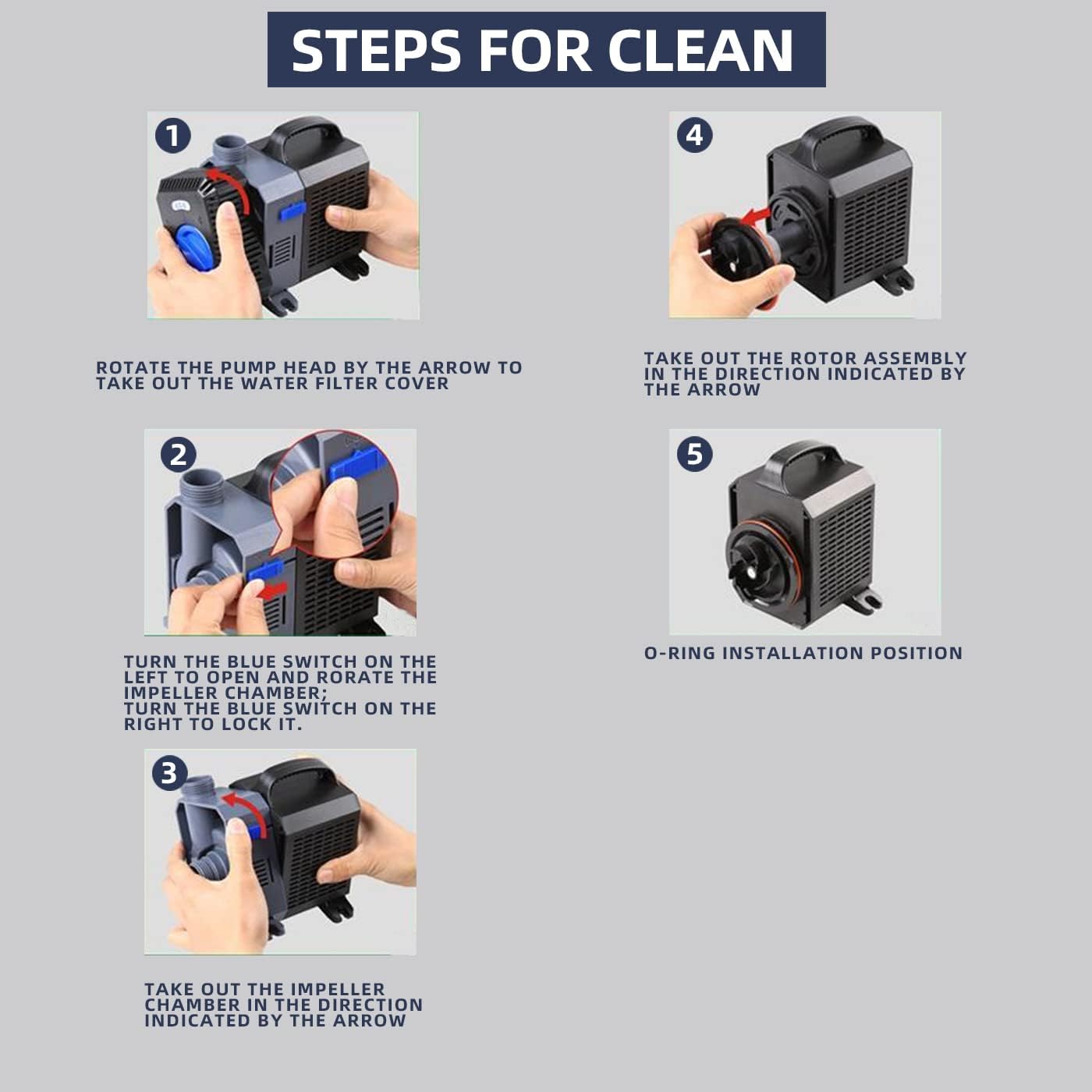
Figure 5: Step-by-step guide for pump cleaning.
- Disconnect Power: Always unplug the pump from the power source before performing any maintenance.
- Remove Water Filter Cover: Rotate the pump head in the direction indicated by the arrow to detach the water filter cover.
- Open Impeller Chamber: Turn the blue switch on the left to open the impeller chamber. Rotate the impeller chamber to access the impeller. Turn the blue switch on the right to lock it after opening.
- Remove Impeller Chamber: Carefully pull out the impeller chamber in the direction indicated by the arrow.
- Remove Rotor Assembly: Take out the rotor assembly (impeller) in the direction indicated by the arrow. Note the O-ring installation position for reassembly.
- Clean Components: Use a small brush and a stream of water to remove any debris, algae, or mineral buildup from the impeller, impeller chamber, and filter cover.
- Reassemble: Reassemble the pump by reversing the disassembly steps, ensuring all parts are securely in place and the O-ring is correctly seated.
6. Troubleshooting
If your pump is not operating as expected, refer to the following common issues and solutions:
| Problem | Possible Cause | Solution |
|---|---|---|
| Pump does not start | No power; Impeller jammed; Faulty wiring | Check power connection; Clean impeller (see Maintenance); Consult an electrician. |
| Reduced water flow | Clogged intake/impeller; Kinked hose; Low water level | Clean pump and intake; Straighten hose; Ensure adequate water level. |
| Pump is noisy | Debris in impeller; Dry running; Worn parts | Clean impeller; Ensure pump is submerged/primed; Contact support if parts are worn. |
| Pump stops intermittently | Overheating; Locked-rotor protection activated | Check for blockages; Ensure proper water flow for cooling; Clean pump. |
7. Technical Specifications
| Specification | Value |
|---|---|
| Model Number | CTP-16000 |
| Power | 140W |
| Voltage | 110V-120V/60Hz |
| Max Flow Rate | 4226 GPH (70.4 Gallons Per Minute) |
| Max Delivery Height | 24.6 FT (16.4 Feet) |
| Cord Length | 16.4 FT |
| Hose Adapter Sizes | 1", 1-1/4", 1-1/2", 2" |
| Material | Plastic |
| Item Weight | 8.58 Pounds |
| Style | Submersible |
8. Warranty and Support Information
TRUPOW products are manufactured to high-quality standards. For warranty claims, technical assistance, or replacement parts, please contact TRUPOW customer support. Keep your purchase receipt as proof of purchase.
For further assistance, please visit the official TRUPOW website or contact their customer service department directly. Contact information can typically be found on the product packaging or the brand's official online presence.