
Introduction
Welcome to the official owner's manual for your 2013 Ford Explorer. This manual contains important information regarding the operation, maintenance, and safety of your vehicle. Please read it thoroughly to ensure a complete understanding of your Explorer's features and capabilities. Keep this manual in your vehicle for quick reference.
For your safety, always pay attention to warning messages and symbols throughout this manual. Failure to follow instructions and warnings could result in serious injury or damage to your vehicle.
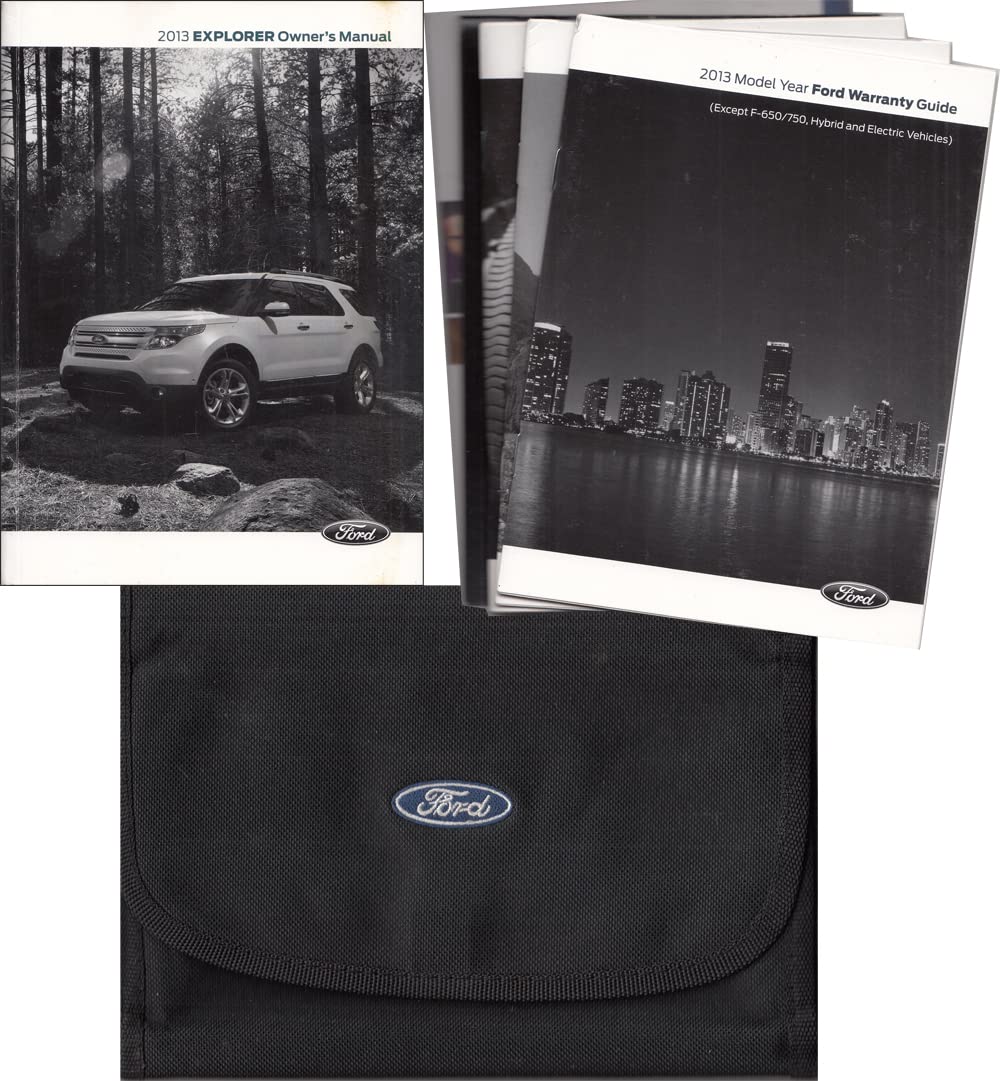
This image displays the front cover of the official owner's manual for the 2013 Ford Explorer, providing essential information for vehicle operation and maintenance.
Setup and Initial Familiarization
Before driving your 2013 Ford Explorer, it is important to familiarize yourself with its basic controls and features. This section covers initial setup procedures.
Key and Remote Control
- Unlocking/Locking: Press the unlock or lock button on your remote control.
- Starting the Engine: Insert the key into the ignition and turn it to the START position. For push-button start models, press the brake pedal and then the START/STOP button.
Seat and Steering Wheel Adjustment
- Seats: Adjust your seat for optimal comfort and control using the levers or power controls located on the side of the seat. Ensure you are a safe distance from the airbag.
- Steering Wheel: Use the lever below the steering column to adjust the steering wheel's tilt and telescope position. Lock it in place before driving.
Mirror Adjustment
- Side Mirrors: Use the control knob or joystick on the driver's door panel to adjust the left and right side mirrors.
- Rearview Mirror: Manually adjust the interior rearview mirror for a clear view of the rear.
Operating Your Vehicle
This section provides detailed instructions on how to operate various systems and features of your 2013 Ford Explorer.
Driving Controls
- Transmission: The automatic transmission features Park (P), Reverse (R), Neutral (N), Drive (D), and Low (L) or Sport (S) modes. Always apply the brake when shifting from Park.
- Brakes: The Explorer is equipped with anti-lock brakes (ABS). Apply firm, steady pressure during emergency braking.
- Cruise Control: To activate, press the ON button on the steering wheel. Set your desired speed by pressing SET+. Press CANCEL or the brake pedal to disengage.
Climate Control System
Your Explorer may feature a manual or automatic climate control system. Use the temperature dials or buttons to set your desired cabin temperature. Adjust fan speed and air distribution as needed.
Infotainment System (SYNC/MyFord Touch)
The SYNC or MyFord Touch system allows you to control audio, phone, navigation, and climate functions using voice commands, steering wheel controls, or the touchscreen display. Refer to the dedicated SYNC/MyFord Touch manual for detailed instructions on pairing devices and using advanced features.
Safety Features
- Airbags: Your vehicle is equipped with a comprehensive airbag system. Always wear your seatbelt.
- Seatbelts: Ensure all occupants are properly restrained with seatbelts.
- Traction Control/Stability Control: These systems automatically help maintain vehicle stability during adverse driving conditions.
Maintenance
Regular maintenance is crucial for the longevity and performance of your 2013 Ford Explorer. Follow the recommended service schedule.
Fluid Checks
- Engine Oil: Check oil level regularly using the dipstick. Add recommended oil type if low.
- Coolant: Ensure coolant level is between MIN and MAX marks when the engine is cool.
- Brake Fluid: Check the reservoir level. If low, consult a qualified technician.
- Windshield Washer Fluid: Keep the reservoir filled for clear visibility.
Tire Care
- Tire Pressure: Check tire pressure monthly, including the spare, when tires are cold. Refer to the tire placard on the driver's door jamb for recommended pressures.
- Tire Rotation: Rotate tires every 5,000-7,500 miles to ensure even wear.
- Tread Depth: Inspect tire tread for wear indicators. Replace tires when tread depth is low.
Service Schedule
Refer to the maintenance schedule section in this manual for specific intervals for oil changes, filter replacements, inspections, and other services. Adhering to this schedule helps maintain your vehicle's warranty and performance.
Troubleshooting
This section addresses common issues you might encounter with your 2013 Ford Explorer and provides basic troubleshooting steps.
Warning Lights
- Check Engine Light: If illuminated, it indicates an emission control system issue. Consult a technician.
- Oil Pressure Light: If illuminated, pull over safely and shut off the engine immediately. Check oil level. Do not drive if oil pressure is low.
- Battery Light: Indicates a charging system problem. Have the system checked by a technician.
- Tire Pressure Monitoring System (TPMS) Light: Indicates low tire pressure in one or more tires. Check and adjust tire pressures.
Engine Won't Start
- Battery: Check battery terminals for corrosion and ensure they are tight. If the battery is dead, jump-start the vehicle.
- Fuel: Ensure there is sufficient fuel in the tank.
- Ignition: Ensure the key is fully inserted or the brake pedal is pressed for push-button start.
Flat Tire
Refer to the 'Changing a Flat Tire' section in your manual for detailed instructions on how to safely replace a flat tire with your spare. Ensure the vehicle is on a level surface and the parking brake is engaged.
Specifications
Key specifications for the 2013 Ford Explorer. Note that specifications may vary based on trim level and options.
| Category | Specification |
|---|---|
| Engine Options | 3.5L V6, 2.0L EcoBoost I4 (FWD only) |
| Transmission | 6-speed automatic |
| Fuel Tank Capacity | Approximately 18.6 - 21.0 gallons (depending on configuration) |
| Seating Capacity | 7 passengers |
| Overall Length | Approximately 197.1 inches |
| Overall Width (without mirrors) | Approximately 78.9 inches |
| Curb Weight | Approximately 4,400 - 4,900 lbs (depending on configuration) |
For precise specifications for your specific vehicle, refer to the detailed specifications section within the physical owner's manual or your vehicle's documentation.
Warranty and Support
Your 2013 Ford Explorer comes with a limited warranty. Details regarding coverage, duration, and terms are provided in a separate Warranty Guide booklet that accompanied your vehicle. Please consult this guide for comprehensive information.
For technical assistance, service appointments, or parts inquiries, please contact your authorized Ford dealership. They are equipped with trained technicians and genuine Ford parts to ensure your vehicle receives the best care.
- Ford Customer Service: Refer to the contact information provided in your Warranty Guide or on the official Ford website.
- Roadside Assistance: Information for Ford Roadside Assistance is typically found on a separate card or within the Warranty Guide.


