
1. Introduction
This manual provides essential information for the safe and efficient operation, installation, and maintenance of your Goodyear Pneumatic Oil Transfer Pump, Model OP-123. Please read this manual thoroughly before using the pump to ensure proper function and to prevent injury or damage.

Figure 1: Goodyear Pneumatic Oil Transfer Pump, Model OP-123. This image displays the main unit of the pump, highlighting its robust construction and pneumatic input.
2. Safety Information
Adherence to safety guidelines is paramount when operating pneumatic equipment. Failure to follow these instructions may result in serious injury or equipment damage.
- Personal Protective Equipment (PPE): Always wear appropriate safety glasses or protective eyewear when operating or maintaining the pump. Gloves are also recommended.
- Air Supply: Ensure the compressed air supply is clean, dry, and regulated within the specified pressure range of 70-115 PSI (5-8 bar). Contaminated air can damage the pump.
- Fluid Compatibility: This pump is designed for oils and fluids up to SAE130 viscosity. DO NOT use this pump for gasoline, diesel, or other flammable/corrosive liquids unless explicitly stated by the manufacturer.
- Secure Installation: Ensure the pump is securely mounted to a barrel, cart, or wall before operation to prevent tipping or movement.
- Disconnect Air: Always disconnect the air supply before performing any maintenance, adjustments, or when the pump is not in use.
- Pressure Release: Before disconnecting any hoses or components, ensure all pressure is safely released from the system.
- Ventilation: Operate the pump in a well-ventilated area.
3. Setup and Installation
Follow these steps for proper setup and installation of your oil transfer pump.
- Unpacking: Carefully remove all components from the packaging. Inspect for any signs of damage during transit.
- Bung Adapter Installation: The pump includes a 2-inch adjustable bung adapter for easy installation on standard drums. Thread the lower part of the adapter into the drum's bung opening, then tighten the upper part to secure the pump at the desired height.
- Pickup Tube: The pump's pickup tube may require an extension to reach the bottom of certain drums (e.g., 55-gallon drums). An extension kit is sold separately. Ensure the pickup tube is fully submerged in the fluid for optimal performance.
- Mounting Options:
- Barrel Mount: Utilize the integrated bung adapter for direct mounting onto a fluid drum.
- Cart Mount: The pump can be mounted onto a transfer cart for mobility.
- Wall Mount: A wall mount kit is available separately for fixed installations.
- Air Inlet Connection: Connect your clean, dry, and regulated air supply hose to the 1/4-inch air inlet connection on the pump. Ensure a secure, leak-free connection.
- Oil Outlet Connection: Connect the fluid transfer hose to the 1/2-inch male oil outlet connection. Ensure all connections are tight to prevent leaks.

Figure 2: Diagram illustrating the key components of the Goodyear Oil Transfer Pump, including the air pressured motor, silencer, bung adapter, aluminum tube, and oil filter.
4. Operation
Once the pump is properly installed and all connections are secure, follow these steps to operate the pump.
- Verify Fluid Type: Confirm that the fluid to be transferred is compatible with the pump and within the recommended viscosity range (up to SAE130). Typical fluids include motor oil, gear oil, hydraulic oil, and automatic transmission fluid.
- Connect Air Supply: Connect the regulated air supply to the pump's air inlet. Ensure the air pressure is set between 70-115 PSI (5-8 bar).
- Initiate Pumping: Open the air valve to begin the transfer process. The pump is double-acting and self-priming, designed for rapid and precise flow rates.
- Monitor Operation: Observe the fluid transfer. The pump has a maximum flow rate of 3.2 GPM (12 LPM).
- Shut Down: Once the desired amount of fluid has been transferred, close the air valve to stop the pump.
- Release Pressure: Before disconnecting any hoses, ensure all residual pressure in the fluid line is safely released.
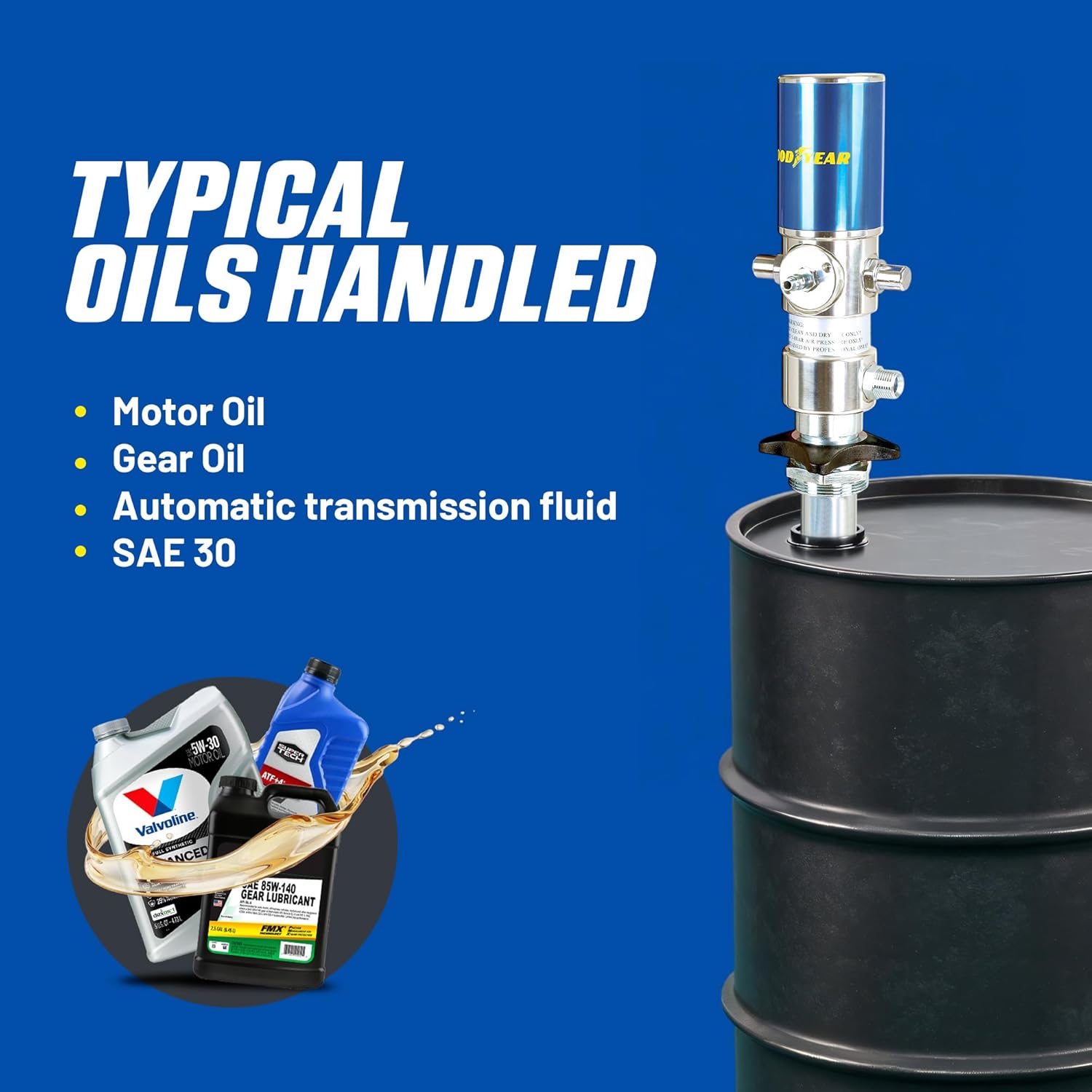
Figure 3: The Goodyear pump shown in operation, illustrating its capability to transfer typical oils such as motor oil, gear oil, automatic transmission fluid, and SAE 30 from a drum.
5. Maintenance
Regular maintenance ensures the longevity and optimal performance of your Goodyear pump.
- Air Supply Quality: Continuously ensure your air supply is clean and dry. Moisture and contaminants in the air can lead to internal corrosion and reduced pump life.
- Connections Inspection: Periodically check all air and fluid connections for leaks. Tighten any loose fittings.
- Oil Filter: The pump is equipped with an oil filter. Inspect and clean or replace the filter as needed to prevent debris from entering the pump mechanism.
- General Cleaning: Keep the exterior of the pump clean. Wipe off any spilled fluids immediately.
- Storage: When not in use for extended periods, disconnect the air supply and store the pump in a clean, dry environment.
6. Troubleshooting
Refer to this section for common issues and their potential solutions.
| Problem | Possible Cause | Solution |
|---|---|---|
| Pump not operating or low flow rate |
|
|
| Fluid leaks from connections |
|
|
| Pump not reaching bottom of drum |
|
|
7. Specifications
Detailed technical specifications for the Goodyear Pneumatic Oil Transfer Pump.
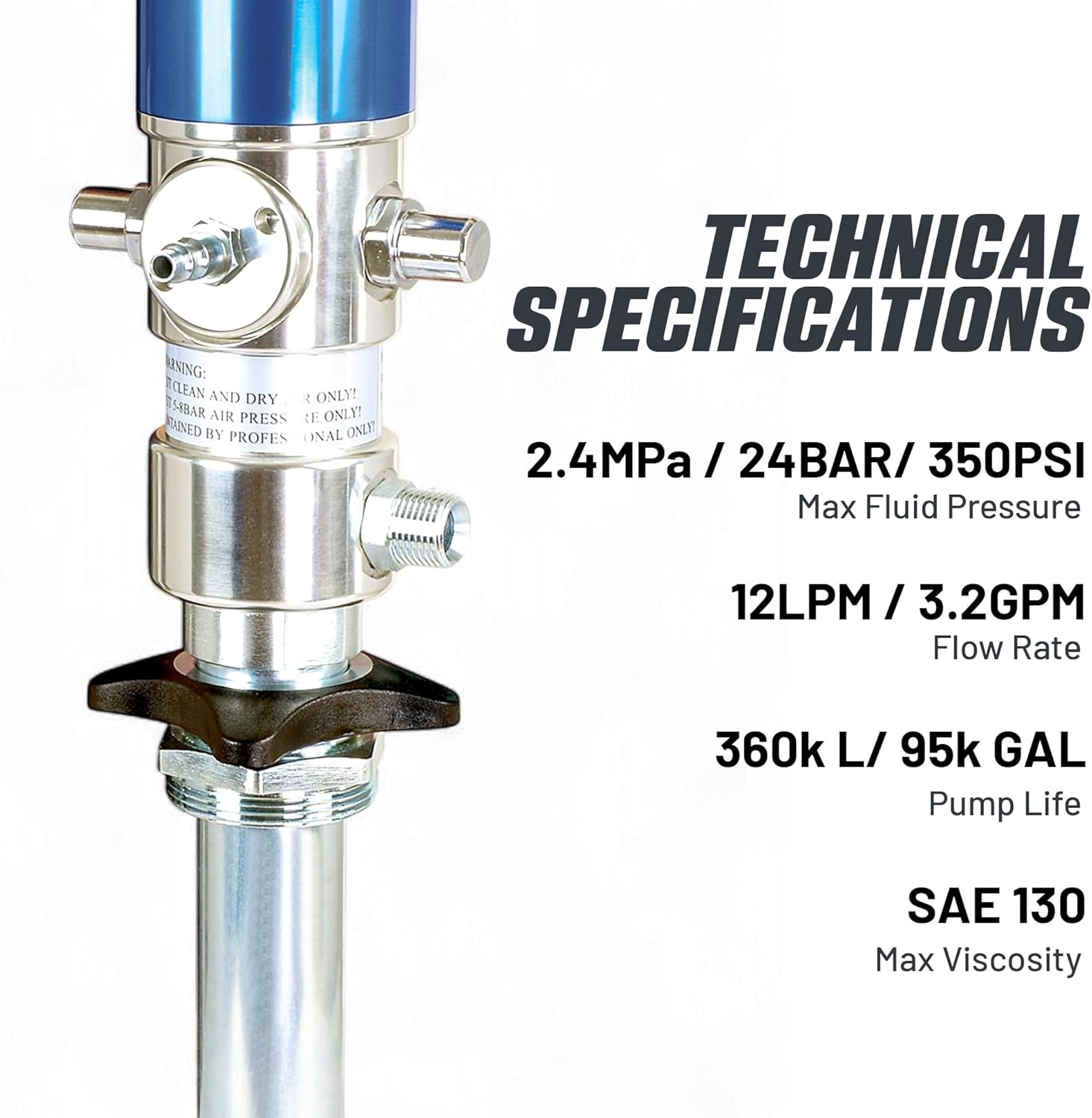
Figure 4: Visual representation of key technical specifications including flow rate, pump life, and maximum viscosity.
| Specification | Value |
|---|---|
| Model Number | OP-123 |
| Manufacturer Part Number | 1701031G-UK |
| Flow Rate (Max) | 3.2 GPM / 12 LPM |
| Pressure Ratio (Max) | 3:1 |
| Air Input Pressure (Max) | 5-8 bar / 70-115 PSI |
| Liquid Pressure (Max) | 8 bar / 115 PSI |
| Air Motor Diameter | 63 mm / 2.5 inches |
| Air Consumption (@ 8BAR / 115PSI) | 110L / 3.9 CFM |
| Air Inlet Connection | 1/4 inch |
| Oil Outlet Connection | 1/2 inch male |
| Pump Life (Approx.) | 360k liters / 95k+ gallons |
| Max Viscosity | SAE130 |
| Material | Aluminum |
| Product Dimensions (L x W x H) | 12.95 x 12.95 x 61.98 cm |
| Product Weight | 3.8 kg |
| Universal Fit | Yes |
| Automotive Service Type | Truck, Tractor |
8. Warranty and Support
Information regarding product warranty and customer support was not available in the provided product data. Please refer to the product packaging or the manufacturer's official website for details on warranty coverage and how to contact customer support for assistance.
