
MagnaFlow 52478
MagnaFlow Catalytic Converter 52478 Instruction Manual
OEM Grade, Direct-Fit, For 2015-2020 Dodge Charger, For 2015-2020 Dodge Challenger (EPA Compliant)
Product Overview
The MagnaFlow Catalytic Converter 52478 is an OEM-grade, direct-fit replacement designed for the 2015-2020 Dodge Challenger and 2015-2020 Dodge Charger. This converter replicates the original equipment (OE) spun body design, utilizing a single laser fusion weld to minimize potential leaks. Its compact, low-mass construction enhances thermal efficiency. It is engineered to meet or exceed Federal emissions requirements set by the EPA, ensuring compliance for OBDII Federally registered vehicles with California or Federal/EPA Emission systems. This part interchanges with OE parts 68281724AA and 5181970AB.
Important Legal Disclaimer: Not for use or sale in California, Colorado, New York.
Key Features
- FEDERAL/EPA COMPLIANT: Extensive testing and certification processes ensure this converter meets Federal EPA emissions standards.
- DIRECT-FIT INSTALLATION: Designed for a perfect fit using state-of-the-art 3D scanning, allowing for do-it-yourself installation. All necessary hardware is included.
- SPUN BODY DESIGN: Features durable stainless-steel construction, mandrel bent piping, precisely manufactured flared receivers, OEM-like O2 port locations, and integrated butt joints for easy installation and optimal performance. Provides excellent corrosion resistance.
- OEM GRADE: Built to OEM Grade standards, matching the performance and quality of your vehicle’s original catalytic converter.
- 5 YEAR / 50,000-MILE LIMITED WARRANTY: Includes a 5-year/50,000-mile construction and emissions warranty for peace of mind.
Installation Guide
Pre-Installation Checks
- Verify the catalytic converter model 52478 is compatible with your 2015-2020 Dodge Challenger or Charger.
- Ensure the vehicle's exhaust system is cool before beginning work.
- Gather all necessary tools, including wrenches, sockets, and a jack/jack stands for safe vehicle elevation.
- Inspect the existing exhaust system for any other damage or leaks that may need addressing.
Direct-Fit Installation Steps
The MagnaFlow 52478 catalytic converter is designed for a direct, bolt-on installation, eliminating the need for fabrication or welding. This simplifies the replacement process for both professional technicians and DIY enthusiasts.
- Safely lift and support the vehicle using appropriate jack stands.
- Locate the existing catalytic converter in your vehicle's exhaust system.
- Disconnect any oxygen sensors (O2 sensors) from the existing converter.
- Unbolt and carefully remove the old catalytic converter. Note the orientation for the new installation.
- Position the new MagnaFlow 52478 catalytic converter, ensuring proper alignment with the existing exhaust pipes.
- Secure the new converter using the provided hardware. Ensure all connections are tight to prevent exhaust leaks.
- Reconnect the oxygen sensors to their respective ports on the new converter.
- Lower the vehicle safely.
- Start the engine and check for any exhaust leaks. A slight exhaust smell may be present initially as the new converter burns off manufacturing residues.

Image: This illustration demonstrates the precision engineering involved in MagnaFlow's direct-fit catalytic converters, utilizing state-of-the-art 3D scanning to ensure a perfect fit for your vehicle. This design facilitates a straightforward bolt-on installation without the need for fabrication or welding.
Video: This video highlights the direct-fit design of MagnaFlow catalytic converters, emphasizing the ease of bolt-on installation without requiring any fabrication or welding. It visually demonstrates how the components are designed to seamlessly integrate with your vehicle's existing exhaust system.
Operating Principles
A catalytic converter is a crucial component of your vehicle's exhaust system, designed to reduce harmful emissions. It converts toxic pollutants in exhaust gas into less toxic pollutants by catalyzing redox reactions. The MagnaFlow 52478 uses a ceramic or metallic honeycomb structure coated with precious metals (such as platinum, palladium, and rhodium) to facilitate these chemical reactions. As exhaust gases pass through, carbon monoxide, unburnt hydrocarbons, and nitrogen oxides are transformed into carbon dioxide, water vapor, and nitrogen gas.

Image: A detailed view of the MagnaFlow Catalytic Converter 52478, showcasing its robust construction and direct-fit design, ready for installation into compatible Dodge Challenger and Charger models.

Image: This graphic emphasizes that MagnaFlow catalytic converters are 100% EPA compliant, indicating that they undergo extensive testing and certification to meet federal emissions standards. The image features a car driving on a scenic road, symbolizing clean emissions.
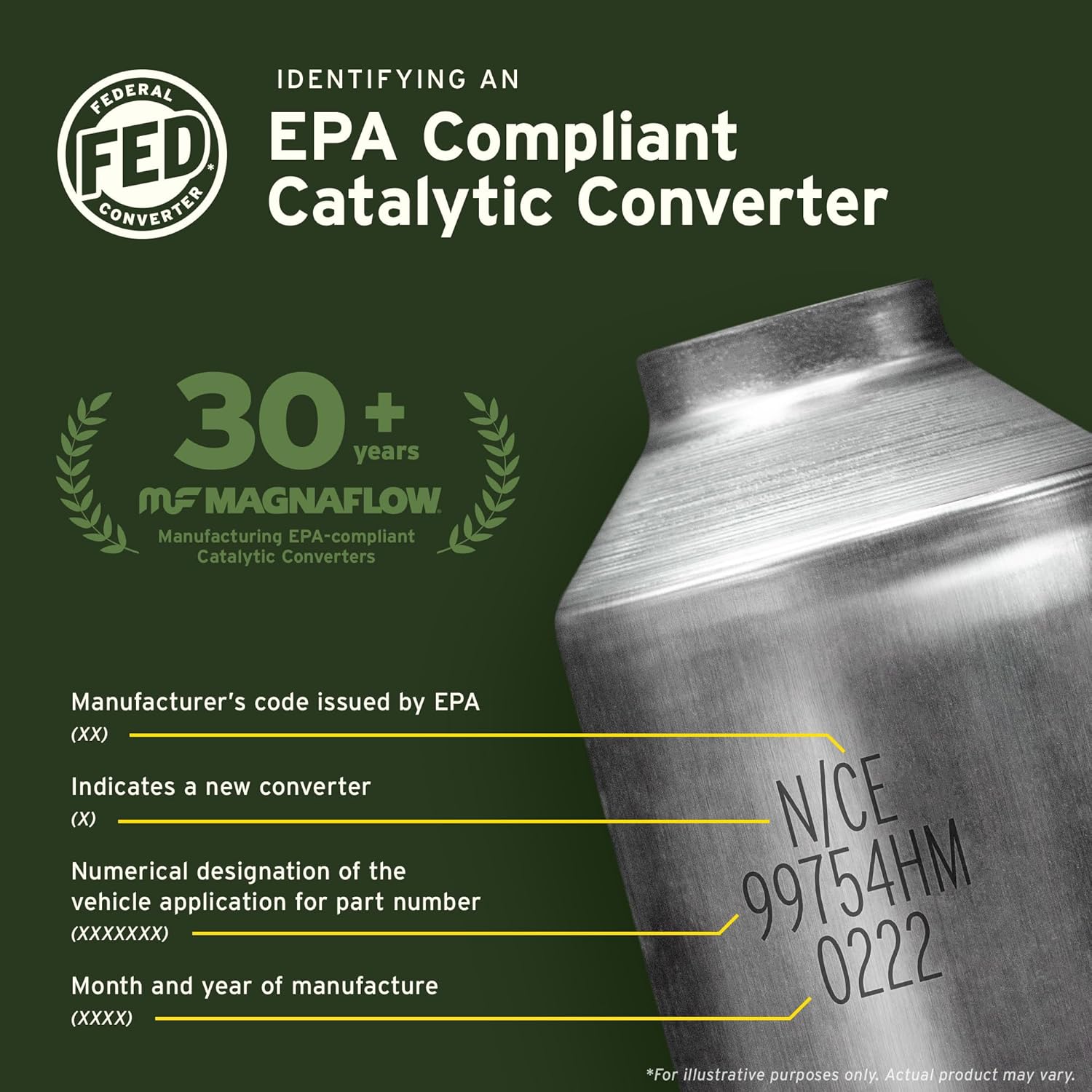
Image: This image provides a guide on how to identify an EPA compliant catalytic converter, detailing the markings such as manufacturer's code, new converter indicator, numerical designation for part number, and month/year of manufacture. This ensures authenticity and compliance.
Maintenance and Care
Catalytic converters are generally designed to be maintenance-free and last the lifetime of the vehicle. However, their longevity can be affected by the overall health of your engine and exhaust system. To ensure optimal performance and extend the life of your MagnaFlow catalytic converter:
- Regular Engine Maintenance: Ensure your engine is running efficiently. Misfires, excessive oil consumption, or rich fuel mixtures can lead to unburnt fuel entering the converter, causing it to overheat and fail prematurely.
- Check Engine Light: Address any "Check Engine" light warnings promptly. These often indicate issues that could impact the converter's performance or lifespan.
- Fuel Quality: Use recommended fuel types and avoid leaded gasoline, which can contaminate the catalyst.
- Exhaust System Integrity: Periodically inspect the entire exhaust system for leaks, cracks, or damage that could affect back pressure or allow unmetered air to enter.
Troubleshooting
If you experience issues after installing your catalytic converter, consider the following common problems and solutions:
| Problem | Possible Cause | Solution |
|---|---|---|
| Check Engine Light (P0420/P0430) | Catalyst efficiency below threshold; often due to underlying engine issues (e.g., misfires, faulty O2 sensors, exhaust leaks). | Diagnose and repair underlying engine problems. Ensure O2 sensors are correctly installed and functioning. Check for exhaust leaks. |
| Reduced Engine Performance | Clogged or restricted catalytic converter. | While rare for new converters, ensure proper installation and check for any foreign objects. If the issue persists, consult a professional. |
| Rattling Noise from Exhaust | Loose heat shield or internal substrate damage (rare for new units). | Inspect heat shields for loose bolts or damage. If the noise is internal, contact MagnaFlow support. |
| Strong Sulfur (Rotten Egg) Smell | Converter not operating efficiently, often due to rich fuel mixture. | Have your vehicle's fuel system and engine tuning inspected by a qualified mechanic. |
For persistent issues or concerns, it is recommended to consult a certified automotive technician or contact MagnaFlow customer support.
Specifications
| Attribute | Detail |
|---|---|
| Brand | MagnaFlow |
| Model Number | 52478 |
| OEM Part Number | 68281724AA |
| Product Dimensions | 44 x 10 x 8 inches |
| Item Weight | 13 pounds |
| Exterior Material | Stainless Steel |
| Position | Left |
| Compliance | Federal/EPA Compliant |
| Vehicle Fitment | 2015-2020 Dodge Charger, 2015-2020 Dodge Challenger |
Warranty and Support
The MagnaFlow Catalytic Converter 52478 comes with a comprehensive 5-year / 50,000-mile limited warranty. This warranty covers defects in construction and emissions, providing peace of mind for your investment.

Image: This graphic highlights the "Enjoy Peace of Mind" aspect of MagnaFlow products, emphasizing that EPA compliant catalytic converters are protected against defects in construction for the first 5 years/50,000 miles and emissions for 25,000 miles.
For warranty claims, technical assistance, or any product-related inquiries, please refer to the official MagnaFlow website or contact their customer support directly. Keep your purchase receipt and product information readily available.
Related documents52478


Ask a question about this manual
Ask about setup, troubleshooting, compatibility, parts, safety, or missing instructions. Manuals+ will review the question and use this page’s manual context to help answer it.