
Introduction
This manual provides comprehensive instructions for the John Deere 4650 and 4850 Tractors. It covers proper operation, preventative maintenance, lubrication points, fluid capacities, tune-up procedures, and minor adjustments for components such as the clutch and brakes. This 254-page document is a historically accurate reproduction of the original operator's manual, designed to assist owners in understanding and maintaining their equipment.
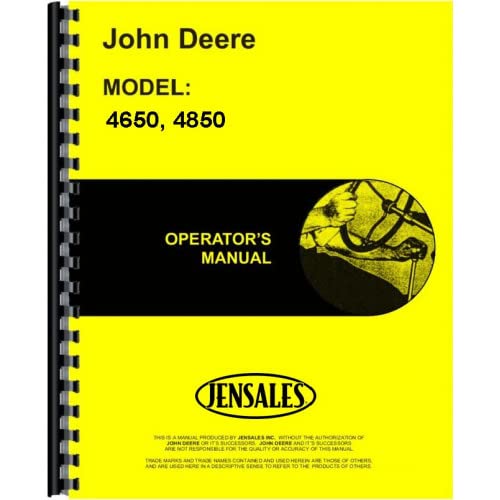
Figure 1: Front cover of the John Deere 4650 and 4850 Tractor Operator's Manual. The image displays a green John Deere tractor in a field, indicating the subject of the manual.
Safety Information
Always prioritize safety when operating or maintaining your John Deere tractor. Read and understand all safety decals on the machine and in this manual before operation. Ensure all guards and shields are in place. Wear appropriate personal protective equipment (PPE) including safety glasses, hearing protection, and sturdy footwear. Never allow unauthorized personnel to operate the tractor. Disconnect power and relieve hydraulic pressure before performing any maintenance.
Setup and Pre-Operation Checks
Before each use, perform the following checks to ensure safe and efficient operation:
- Fluid Levels: Check engine oil, hydraulic fluid, coolant, and fuel levels. Refer to the 'Fluid Capacities' section for correct specifications.
- Tire Pressure: Verify tire pressure is at recommended levels for optimal traction and stability.
- Lights and Signals: Ensure all lights, turn signals, and warning lights are functional.
- Brakes: Test brake pedal free play and effectiveness. Adjust if necessary.
- Safety Devices: Confirm that the Roll-Over Protective Structure (ROPS) and seatbelt are in good condition and properly utilized.
- Attachments: If using attachments, ensure they are securely mounted and properly connected to the Power Take-Off (PTO) or hydraulic system.
Operating Instructions
Starting the Engine
- Ensure the transmission is in neutral and the parking brake is engaged.
- Turn the ignition key to the 'ON' position and wait for indicator lights to cycle.
- Turn the key to 'START' and release once the engine begins to run. Do not crank for more than 15 seconds.
- Allow the engine to warm up for a few minutes before engaging in heavy work.
Driving the Tractor
- Always operate the tractor from the operator's seat.
- Select the appropriate gear for the task and terrain.
- Engage the clutch smoothly to prevent sudden jerks.
- Maintain a safe speed, especially on uneven terrain or when turning.
- When stopping, depress the clutch, apply brakes, and shift to neutral. Engage the parking brake.
Maintenance Procedures
Regular maintenance is crucial for the longevity and performance of your John Deere tractor. Refer to the detailed maintenance schedule within this manual for specific intervals.
Lubrication Points
Periodically lubricate all grease fittings using the recommended grease type. Common lubrication points include kingpins, tie rod ends, PTO shafts, and pivot points for linkages. A detailed diagram of lubrication points is provided on page 75 of the manual.
Fluid Capacities and Types
| Fluid System | Capacity (Approx.) | Recommended Type |
|---|---|---|
| Engine Oil | 18-20 Quarts | John Deere Plus-50 II |
| Hydraulic/Transmission | 40-45 Quarts | John Deere Hy-Gard |
| Coolant | 25-30 Quarts | John Deere Cool-Gard II |
| Fuel Tank | 80-90 Gallons | Diesel Fuel (No. 2-D) |
Note: Always consult the specific section in the manual for exact capacities and the latest recommendations.
Tune-Up Procedures
Regular tune-ups ensure optimal engine performance and fuel efficiency. This includes checking and adjusting valve clearances, inspecting fuel injectors, replacing air and fuel filters, and checking battery terminals. Detailed steps for each procedure are outlined in the 'Engine Maintenance' section of this manual.
Clutch and Brake Adjustments
Proper adjustment of the clutch and brakes is vital for safe operation. The manual provides step-by-step instructions for checking free play and making necessary adjustments to ensure correct engagement and disengagement of the clutch, and effective braking performance. Refer to pages 120-135 for detailed procedures.
Troubleshooting Common Issues
This section addresses common operational problems and provides guidance for diagnosis and resolution. For complex issues, consult a certified John Deere technician.
- Engine Fails to Start:
- Check fuel level.
- Ensure battery connections are clean and tight.
- Verify transmission is in neutral and parking brake is engaged.
- Inspect fuel filter for clogging.
- Loss of Hydraulic Power:
- Check hydraulic fluid level.
- Inspect hydraulic lines for leaks or damage.
- Ensure PTO is correctly engaged if applicable.
- Overheating Engine:
- Check coolant level.
- Clean radiator fins of debris.
- Inspect fan belt tension.
- Verify thermostat operation.
Specifications
The John Deere 4650 and 4850 Tractors are designed for heavy-duty agricultural applications. Key specifications include:
- Engine Type: John Deere 6-cylinder diesel
- Horsepower: (Refer to specific model section for exact figures, e.g., 4650: 170 HP, 4850: 200 HP)
- Transmission: Power Shift or Quad-Range options
- Weight: (Varies by configuration, typically 18,000 - 22,000 lbs)
- Fuel Capacity: Approximately 80-90 US Gallons
- Hydraulic System: Closed-center, pressure-compensated system
For a complete list of detailed specifications, including dimensions, tire options, and PTO speeds, please refer to the dedicated 'Specifications' chapter in this manual.
Warranty and Support
This operator's manual is a reproduction and does not include specific warranty information for new equipment. For details regarding the original manufacturer's warranty or any current support options for your John Deere 4650 or 4850 Tractor, please contact an authorized John Deere dealer or visit the official John Deere website. This manual is intended as a guide for operation and maintenance.
For further assistance or to locate a dealer, please visit: www.deere.com


