
1. Introduction and Overview
This manual provides essential information for the installation, operation, and maintenance of your EVGA GeForce GTX 1080 SC GAMING ACX 3.0 graphics card. The EVGA GeForce GTX 1080 features NVIDIA's "Pascal" graphics processor, designed for high-performance gaming and immersive virtual reality experiences. This model incorporates EVGA's ACX 3.0 cooling technology, which includes optimized fan blades, double ball bearings, and an extreme low power motor for efficient cooling and quiet operation.

Image 1.1: EVGA GeForce GTX 1080 SC GAMING ACX 3.0 graphics card and packaging.
2. Package Contents
Please verify that all items listed below are included in your product package. If any items are missing or damaged, please contact EVGA customer support.
- EVGA GTX 1080 SC GAMING ACX 3.0 Graphics Card
- Driver CD
- Installation Guide
- 6-Pin (x2) to 8-Pin Power Adapter
- EVGA Gaming Poster
- Powered by EVGA Case Badge
- EVGA Enthusiast Built Sticker

Image 2.1: Included accessories and documentation.
3. Product Features
The EVGA GeForce GTX 1080 SC GAMING ACX 3.0 graphics card offers a range of features designed to enhance your computing and gaming experience:
- High Performance: Real Base Clock of 1708 MHz and Real Boost Clock of 1847 MHz.
- Advanced Memory: 8192MB GDDR5X memory for demanding applications and games.
- Efficient Cooling: EVGA ACX 3.0 cooling technology for optimal thermal performance and quiet operation.
- DirectX 12 Support: Full support for DirectX 12 with OSD (On-Screen Display) via EVGA Precision XOC software.
- Operating System Compatibility: Supports Windows 10 (32/64bit), Windows 8 (32/64bit), and Windows 7 (32/64bit).
- VR Ready: Designed to deliver immersive virtual reality experiences.
- Display Connectivity: Multiple output options including DVI, DisplayPort, and HDMI.
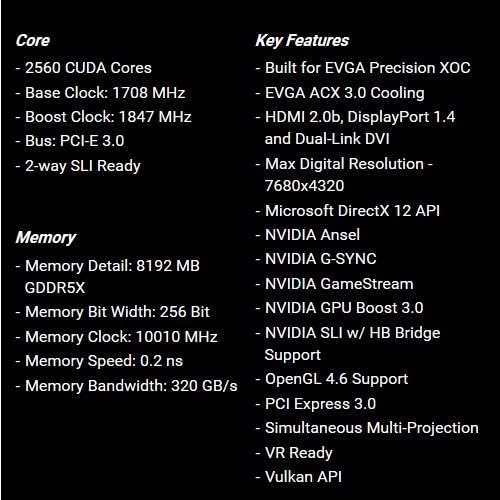
Image 3.1: Core and memory specifications, along with key features.
4. Installation Guide (Setup)
Follow these steps to properly install your EVGA GeForce GTX 1080 SC GAMING ACX 3.0 graphics card into your computer system. Ensure your system meets the minimum requirements before proceeding.
- Prepare Your System: Power off your computer and unplug all cables from the power outlet. Open your computer case.
- Locate PCIe Slot: Identify an available PCI Express x16 slot on your motherboard. This is typically the longest slot.
- Remove Slot Covers: Remove the metal slot covers from the back of your computer case corresponding to the PCIe slot you will use.
- Insert Graphics Card: Carefully align the graphics card with the PCIe slot and press down firmly until it is securely seated. You should hear a click from the slot's retention clip.
- Secure Card: Use screws to secure the graphics card to the computer case at the back panel.
- Connect Power: Connect the required 8-pin PCIe power connector(s) from your power supply to the graphics card. If your power supply only has 6-pin connectors, use the included 6-pin to 8-pin adapter. Ensure all power connections are firm.
- Close Case: Close your computer case and reconnect all external cables.
- Install Drivers: Power on your computer. Once the operating system loads, install the latest graphics drivers from the included Driver CD or download them from the official EVGA website (www.evga.com/drivers).

Image 4.1: Front view of the graphics card.

Image 4.2: Rear I/O ports (DVI, DisplayPort, HDMI).
5. Operating Instructions
After successful installation and driver setup, your graphics card is ready for use.
- Display Connection: Connect your monitor(s) to the appropriate display outputs on the graphics card (DVI, DisplayPort, or HDMI).
- Driver Updates: Regularly check for and install the latest graphics drivers from the NVIDIA or EVGA website to ensure optimal performance and compatibility with new games and applications.
- EVGA Precision XOC: For advanced control, monitoring, and overclocking, install the EVGA Precision XOC software. This utility allows you to adjust fan curves, monitor temperatures, and customize RGB LED lighting (if applicable to your specific model).
- System Requirements: Ensure your system meets the recommended power supply wattage and other hardware requirements for stable operation.
6. Maintenance
Proper maintenance can extend the lifespan and ensure consistent performance of your graphics card.
- Dust Removal: Periodically clean dust from the graphics card fans and heatsink using compressed air. Ensure the computer is powered off and unplugged before cleaning.
- Airflow: Maintain good airflow within your computer case to prevent heat buildup. Ensure case fans are functioning correctly and cables are managed to avoid obstructing airflow.
- Driver Updates: Keep your graphics drivers updated. New drivers often include performance optimizations and bug fixes.
7. Troubleshooting
If you encounter issues with your graphics card, refer to the following common troubleshooting steps:
- No Display Output:
- Ensure the monitor cable is securely connected to both the graphics card and the monitor.
- Verify that the graphics card is fully seated in the PCIe slot.
- Check that all required PCIe power connectors are securely attached to the graphics card.
- Test with a different display cable or monitor if possible.
- Driver Issues:
- Perform a clean installation of the latest graphics drivers. Uninstall existing drivers before installing new ones.
- If issues persist, try an older, stable driver version.
- Overheating:
- Ensure proper airflow within your computer case.
- Clean dust from the graphics card fans and heatsink.
- Monitor temperatures using EVGA Precision XOC or similar software.
- System Instability/Crashes:
- Verify your power supply unit (PSU) meets the recommended wattage for your system, including the graphics card.
- Ensure the graphics card is not excessively overclocked. Reset to default settings if necessary.
- Check for system memory (RAM) issues.
For further assistance, refer to the official EVGA support website or contact their technical support team.
8. Specifications
| Feature | Detail |
|---|---|
| Model Number | 08G-P4-6183-KR |
| Graphics Processor | NVIDIA GeForce GTX 1080 |
| CUDA Cores | 2560 |
| Base Clock | 1708 MHz |
| Boost Clock | 1847 MHz |
| Memory Type | 8GB GDDR5X |
| Memory Bit Width | 256-bit |
| Memory Clock | 10010 MHz |
| Memory Bandwidth | 320 GB/s |
| Max Digital Resolution | 7680x4320 |
| Video Output Interface | DVI, DisplayPort, HDMI |
| Bus Interface | PCI Express 3.0 |
| Cooling Solution | EVGA ACX 3.0 |
| Dimensions (LxWxH) | 10.5 x 1.5 x 4.38 inches |
| Item Weight | 3 pounds |
| Operating System Support | Windows 10/8/7 (32/64bit) |

Image 8.1: Angled view of the graphics card, highlighting its cooling design.

Image 8.2: Rear view of the graphics card, showing the backplate.
9. Warranty and Support
For detailed warranty information, please refer to the official EVGA website or the documentation included with your product. EVGA provides customer support and resources for their products.
- Official User Manual (PDF): For a comprehensive guide, you can download the official user manual here.
- EVGA Support: Visit the EVGA support page for drivers, FAQs, and contact information: www.evga.com/support.


