
Introduction
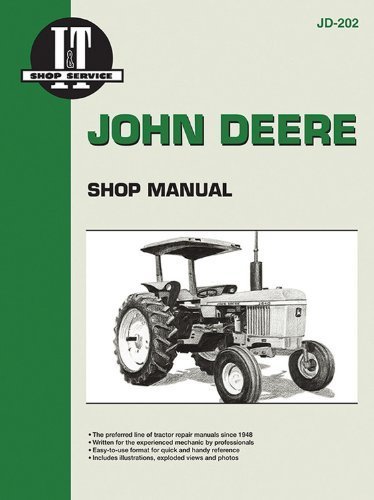
This manual provides detailed service and repair information for various John Deere tractor models. It covers both gasoline and diesel engines, offering guidance on maintenance, troubleshooting, and overhaul procedures.
Refer to the specific sections for your tractor model to ensure correct procedures are followed.
Safety Information
Always prioritize safety when performing any maintenance or repair work on your John Deere tractor. Read and understand all safety warnings and instructions before beginning any task.
- Wear appropriate personal protective equipment (PPE) such as safety glasses, gloves, and sturdy footwear.
- Ensure the tractor is turned off, parked on a level surface, and the parking brake is engaged before working on it.
- Disconnect the battery before performing electrical work.
- Allow hot components to cool before handling.
- Use proper lifting equipment when necessary.
Model Identification
This manual covers the following John Deere tractor models:
- Gasoline Models: 2510, 2520
- Diesel Models: 2040, 2240, 2440, 2510, 2520, 2630, 2640, 4040, 4240, 4440, 4640, 4840
Locate your tractor's model number and serial number plate, typically found on the chassis or engine block, to confirm your specific model.
Setup and Preparation
Before beginning any service or repair, ensure you have the necessary tools, replacement parts, and a clean, well-lit workspace. Refer to the specific section for your task to identify required tools and materials.
Important: Always consult the safety information section before starting any work.
Operating Procedures (General Guidance)
While this is primarily a service manual, understanding basic operating principles is crucial for proper maintenance and troubleshooting. For detailed operating instructions, refer to your tractor's original operator's manual.
Pre-Operation Checks:
- Check fluid levels (engine oil, coolant, hydraulic fluid).
- Inspect tires for proper inflation and damage.
- Verify all lights and safety devices are functional.
- Ensure all controls are in neutral or park position.
Starting the Engine:
Follow the manufacturer's recommended starting procedure for your specific model, which typically involves:
- Engage the parking brake.
- Ensure the transmission is in neutral.
- Turn the ignition key to the "ON" position.
- Turn the ignition key to the "START" position until the engine starts.
- Release the key once the engine is running.
Maintenance Schedule and Procedures
Regular maintenance is essential for the longevity and optimal performance of your John Deere tractor. This section outlines general maintenance tasks. Refer to the detailed chapters within the manual for specific instructions for each model.
Routine Maintenance (Every 50-100 Hours or Annually):
- Engine Oil and Filter Change: Drain old oil, replace filter, and refill with recommended engine oil.
- Air Filter Inspection/Replacement: Check air filter for dirt and debris; replace if necessary.
- Fuel Filter Replacement: Replace fuel filter to ensure clean fuel delivery.
- Coolant Level Check: Verify coolant level and top up if needed. Inspect hoses for leaks.
- Lubrication: Grease all specified points using the recommended lubricant.
Advanced Maintenance (As Needed or Periodically):
- Brake Adjustment: Inspect and adjust brakes for proper operation.
- Clutch Adjustment: Check and adjust clutch free play.
- Hydraulic System Service: Check hydraulic fluid, filter, and inspect for leaks.
- Electrical System Check: Inspect battery, alternator, and wiring for corrosion or damage.
Troubleshooting Common Issues
This section provides a general guide to diagnosing and resolving common problems. For detailed troubleshooting trees and specific repair procedures, refer to the relevant chapters in this manual.
| Symptom | Possible Cause | Suggested Action |
|---|---|---|
| Engine Fails to Start | Dead battery, no fuel, faulty starter, clogged fuel filter. | Check battery charge, verify fuel level, inspect starter connections, replace fuel filter. |
| Loss of Power | Clogged air filter, fuel system issues, engine timing, worn spark plugs (gasoline). | Inspect/replace air filter, check fuel delivery, verify engine timing, replace spark plugs. |
| Hydraulic System Malfunction | Low hydraulic fluid, clogged filter, faulty pump, relief valve issues. | Check fluid level, replace filter, inspect pump, test relief valve. |
| Overheating Engine | Low coolant, clogged radiator, faulty thermostat, worn fan belt. | Check coolant level, clean radiator, test thermostat, inspect/replace fan belt. |
Specifications
This manual provides detailed specifications for various components and systems across the covered John Deere models. Always refer to the specific chapter for your model and component for precise measurements and tolerances.
General Specifications (Example - refer to manual for specific models):
- Engine Type: Gasoline / Diesel (model dependent)
- Oil Capacity: Varies by model (e.g., 8-12 quarts)
- Coolant Capacity: Varies by model (e.g., 15-25 quarts)
- Tire Pressure: Refer to tire manufacturer specifications and tractor load.
- Torque Specifications: Detailed in relevant sections for engine, transmission, and chassis components.
Warranty and Support
This shop manual is a third-party publication designed to assist with the repair and maintenance of John Deere tractors. It does not provide warranty information for your specific tractor. For warranty details, please refer to the original purchase documentation provided by John Deere or your authorized dealer.
For official John Deere support, parts, or service, please contact your local authorized John Deere dealership or visit the official John Deere website.
Publisher: Haynes Manuals N. America, Inc.
Publication Date: June 8, 2000


