
1. Introduction
This manual provides detailed instructions for the installation, operation, and maintenance of your TMEZON 8-Channel 1080N 5-in-1 Security Recorder. Please read this manual thoroughly before using the product to ensure proper functionality and to prevent damage.
2. Product Overview
2.1 Front Panel
The front panel of the TMEZON DVR features indicator lights for power (PWR) and hard disk drive activity (HDD). The TMEZON logo and "Digital Video Recorder" are also displayed.

Image: Front view of the TMEZON 8-Channel DVR unit.
2.2 Rear Panel Connections
The rear panel provides all necessary ports for connecting cameras, monitors, audio devices, and network cables.
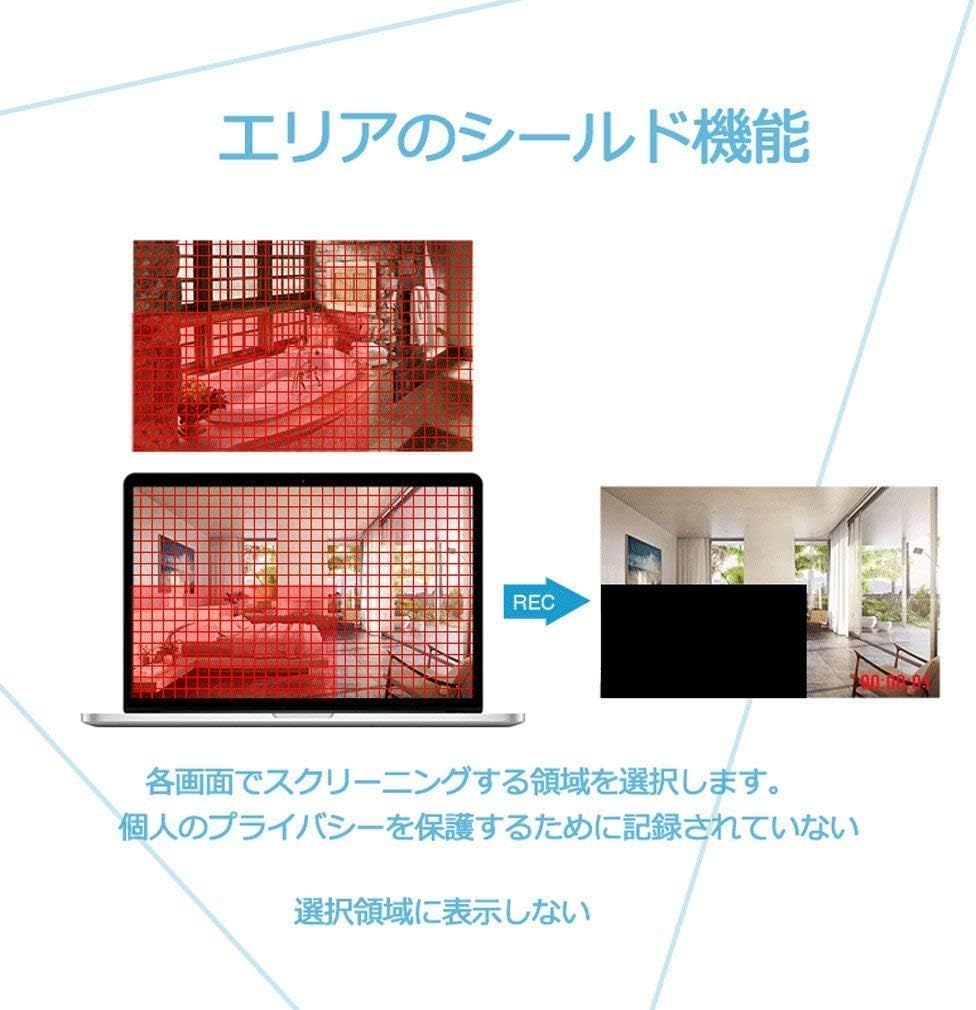
Image: Rear panel showing video input (8 channels), video output (HDMI, VGA), audio input/output, network port, USB ports, and power input.

Image: Illustrates compatibility with 3K/5MP TVI, 4MP AHD, 4MP CVI, CVBS, and 6MP IP cameras. SDI cameras are not supported.
2.3 Dimensions
The DVR unit measures approximately 26.5 cm (length) x 22 cm (width) x 4.2 cm (height).
3. Key Features
- 5-in-1 Compatibility: Supports traditional analog (CVBS), AHD, TVI, CVI, and IP cameras for broad system integration.
- Advanced Recording: Utilizes H.264 video compression for efficient storage of high-resolution footage over extended periods. Supports a single internal 3.5-inch SATA HDD up to 6TB (HDD not included).
- Motion Detection: Configurable motion detection zones with immediate email notifications upon detecting unusual activity.
- Remote Monitoring: Access live and recorded video from anywhere using a smartphone (iPhone/Android), tablet, or PC.
- Privacy Masking: Allows users to define specific areas on the screen that will not be recorded, protecting personal privacy.
- H.265+ Compression: Offers enhanced video compression for longer recording times and smoother video playback compared to H.264.
4. Setup Guide
4.1 Hardware Installation
- Hard Drive Installation: If not already installed, open the DVR casing and securely mount a 3.5-inch SATA hard drive. Connect the SATA data and power cables.
- Camera Connections: Connect your surveillance cameras to the corresponding video input ports on the rear panel. Ensure secure connections.
- Monitor Connection: Connect a monitor or TV to the DVR using either the HDMI or VGA output port.
- Audio Connections: If using external audio, connect microphones to the audio input ports and speakers to the audio output port.
- Network Connection: Connect an Ethernet cable from the DVR's network port to your router or network switch.
- Power Connection: Connect the power adapter to the DVR's power input and then plug it into an electrical outlet.
4.2 Initial Power-Up
Upon first power-up, the system may guide you through an initial setup wizard. Follow the on-screen prompts to configure basic settings such as language, date/time, and network parameters. It is recommended to set a strong password for the administrator account.
5. Operating Instructions
5.1 Recording Modes
The DVR supports various recording modes, including continuous recording and motion-triggered recording. These settings can be configured through the system menu.
5.2 Motion Detection Setup
To configure motion detection:
- Navigate to the motion detection settings in the DVR menu.
- Select the camera channel you wish to configure.
- Define specific detection zones within the camera's view.
- Set sensitivity levels and specify actions upon detection, such as recording, email alerts, or mobile notifications.

Image: Illustration of motion detection with customizable areas and notification options.
5.3 Privacy Masking
Privacy masking allows you to block out specific areas in the camera's view from being recorded, ensuring privacy for sensitive locations.
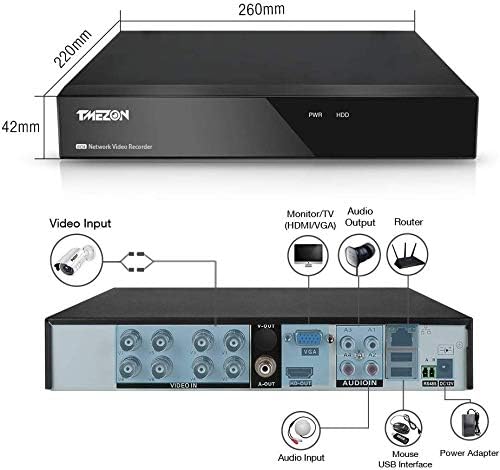
Image: Demonstrates how to select and mask areas on the screen to prevent recording of private spaces.
5.4 Remote Access (Mobile App)
To set up remote monitoring via a mobile device:
- Download the official TMEZON mobile application from your device's app store.
- Ensure your DVR is connected to the internet via an Ethernet cable to your router.
- Power on the DVR.
- Open the app and follow the instructions to add your device, typically by scanning a QR code displayed on the DVR's monitor or entering the device ID manually.

Image: Step-by-step guide for mobile app setup, including app download, network connection, power-up, and QR code scanning.

Image: Depicts a home layout with cameras connected to the DVR, accessible remotely.

Image: Shows various smartphones displaying live surveillance feeds, indicating remote access capabilities.
5.5 Video Playback
Access recorded footage through the DVR's menu interface or via the mobile application. You can search for recordings by date, time, and event type (e.g., motion detection).

Image: A smartphone screen showing video playback from the DVR, with a timeline for navigation.
5.6 Video Compression
The DVR supports H.265+ video compression, which optimizes storage space and network bandwidth while maintaining video quality. This allows for longer recording durations compared to older H.264 compression.

Image: Visual comparison demonstrating that H.265+ compression allows for more recording time than H.264 for the same storage capacity.
6. Maintenance
- Regular Cleaning: Keep the DVR unit free from dust and debris to ensure proper ventilation. Use a soft, dry cloth for cleaning.
- Firmware Updates: Periodically check the manufacturer's website for firmware updates to ensure optimal performance and security.
- Hard Drive Health: Monitor the health of your hard drive through the DVR's system settings. Replace the HDD if any issues are detected to prevent data loss.
- Power Supply: Ensure a stable power supply to the DVR. Use a surge protector to prevent damage from power fluctuations.
7. Troubleshooting
- No Video Output: Check all video cable connections (HDMI/VGA) to the monitor. Ensure the monitor is set to the correct input source. Try adjusting the DVR's display resolution if the monitor does not support the current setting.
- No Recording: Verify that a hard drive is properly installed and formatted. Check recording schedules and ensure motion detection settings are correctly configured if using that mode.
- Remote Access Issues: Ensure the DVR is connected to the internet and has a stable network connection. Check firewall settings on your router. Verify that the mobile app is correctly configured with the device ID.
- System Freezing/Lagging: Ensure adequate ventilation for the DVR. Check hard drive health. Reduce video quality or frame rate if necessary.
- Password Reset: Refer to the online electronic manual or contact customer support for password reset procedures.
8. Specifications
| Feature | Specification |
|---|---|
| Brand | TMEZON |
| Model Number | MZ-AHD-1208H |
| Channels | 8 |
| Video Input | CVBS, AHD, TVI, CVI, IP |
| Video Output | HDMI, VGA |
| Video Compression | H.264, H.265+ |
| HDD Support | 1 x 3.5-inch SATA HDD (up to 6TB, not included) |
| Product Dimensions | 26.5 x 22 x 4.2 cm |
| Product Weight | 1.2 kg |
| UPC | 763769066976 |
9. Warranty and Support
This product comes with a 1-year warranty and a 30-day money-back guarantee. For any questions or issues regarding the use of this product, please contact customer support.
Email: tmezoncctvsystem@yahoo.com
An electronic version of the instruction manual is available for download at: https://yahoo.jp/box/9ps3fN