
1. About This Manual
This document is a comprehensive parts manual for the John Deere 140 Lawn & Garden Tractor, specifically covering models with serial numbers ranging from 0 to 30,000. It is a digitally enhanced reproduction of the original manufacturer-issued manual, designed to assist with parts identification, assembly, disassembly, and ordering.
Key features of this manual include:
- Comb-binding: For increased durability and ease of use, allowing the manual to lay flat.
- Updated Information: Includes errata and information not available at the time of original printing.
- Valuable Tractor Data: Contains serial information, measurements, capacities, and specifications.
- Super-sharp Text and Images: Ensures clarity for all diagrams and text.
2. Understanding Manual Types
It is important to distinguish between different types of manuals to ensure you are using the correct resource for your needs. There are three primary manual types:
- Service Manual (SVC): Also known as a shop manual or repair manual, this document provides detailed instructions on how to disassemble, repair, and reassemble the tractor. It is written for mechanics and includes specifications, torque values, and ranges. Essential for serious repairs or restoration.
- Parts Manual (PTS): This manual, which you are currently viewing, features exploded views of all tractor components. It offers extensive detail on assembly and disassembly, along with a guide for ordering replacement parts. It is indispensable for identifying specific parts and understanding their arrangement.
- Operators Manual (OPT): Also known as an owner's manual, this document was originally supplied with the tractor. It provides instructions for operation, shift patterns, fluid capacities (e.g., antifreeze, crankcase oil), and adjustment procedures (e.g., brakes, clutch). This manual is crucial for daily operation and routine maintenance.
3. Using Your Parts Manual for Maintenance and Repair
This parts manual is an essential tool for anyone performing repairs or maintenance on their John Deere 140 Lawn & Garden Tractor. Follow these steps to effectively use this manual:
- Identify the System: Locate the section corresponding to the part or system you are working on (e.g., engine, transmission, steering, chassis).
- Review Exploded Views: Examine the exploded diagrams. These illustrations show all components of a system separated from each other, but in their correct relative positions, making assembly and disassembly clear.
- Locate the Part: Use the numerical callouts on the diagrams to identify the specific part you need.
- Cross-reference with Part List: Refer to the accompanying parts list, which will provide the part number, description, and quantity required for each numbered item in the diagram.
- Ordering Parts: Use the identified part numbers when ordering replacements to ensure you receive the correct components.
- Assembly Guidance: The exploded views also serve as a visual guide for correct reassembly of components after repair or replacement.
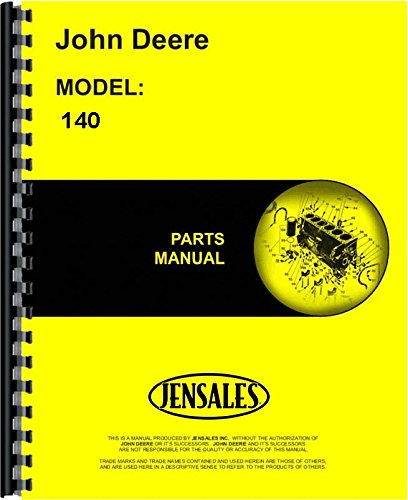
Image: The cover of the John Deere 140 Lawn & Garden Tractor Parts Manual, illustrating the product this guide pertains to.
4. Specifications and Data
This manual includes valuable tractor data to aid in maintenance and repair. While specific values are found within the manual's pages, the types of information you can expect to find include:
- Serial Number Information: Details on serial number ranges and their significance for part compatibility.
- Measurements: Key dimensions and tolerances for various components.
- Capacities: Fluid capacities for systems such as the engine oil, transmission, and hydraulic system.
- General Specifications: Other relevant technical specifications pertinent to the tractor's components.
Always refer to the specific pages within the manual for precise data relevant to your tractor's serial number range.
5. Troubleshooting with the Parts Manual
While a parts manual primarily focuses on identification, it can indirectly assist in troubleshooting by helping to visualize component relationships and potential points of failure. If you are experiencing an issue:
- Isolate the Problem Area: Determine which system or area of the tractor is malfunctioning.
- Consult Exploded Views: Review the relevant exploded diagrams to understand the assembly of components in that area. This can help identify missing, broken, or incorrectly installed parts.
- Identify Worn Parts: If a component is known to wear out (e.g., belts, seals, bearings), the manual helps you identify its exact part number for replacement.
- Verify Assembly: If a repair has been attempted, use the diagrams to verify that all parts are correctly installed and in their proper sequence.
For detailed diagnostic procedures and repair steps, a dedicated Service Manual (SVC) is recommended in conjunction with this Parts Manual.


