
Introduction
This manual provides essential information for the safe and efficient operation and maintenance of your John Deere 650 or 750 Compact Tractor. It is designed to assist operators in understanding the tractor's controls, features, and recommended service procedures. Adhering to the guidelines in this manual will help ensure the longevity and optimal performance of your equipment.
The content includes details on operating procedures, routine maintenance schedules, and troubleshooting common issues. For detailed repair instructions or part identification, refer to the specific Service Manual (SVC) or Parts Manual (PTS) for your model.
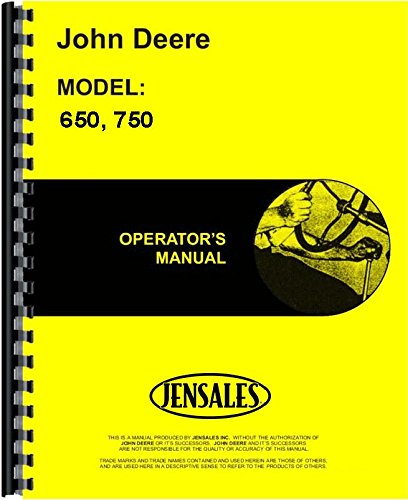
This image shows the cover of the John Deere 650 750 Compact Tractor Operators Manual, featuring the tractor model and manual title.
Safety Information
Always prioritize safety when operating or maintaining your John Deere compact tractor. Read and understand all safety decals on the machine and in this manual. Wear appropriate personal protective equipment (PPE) such as safety glasses, hearing protection, and sturdy footwear. Ensure all guards and safety devices are in place and functioning correctly before operation.
- Never allow unauthorized personnel to operate the tractor.
- Keep children and bystanders away from the operating area.
- Operate on level ground whenever possible and reduce speed on slopes.
- Before performing any maintenance, turn off the engine, remove the key, and engage the parking brake.
Setup and Pre-Operation Checks
Before each use, perform the following checks to ensure safe and efficient operation:
- Fluid Levels: Check engine oil, coolant, hydraulic fluid, and fuel levels. Replenish as needed according to specifications.
- Tire Pressure: Verify tire pressure is at recommended levels for stability and traction.
- Safety Devices: Inspect all safety shields, guards, and lights for damage or missing components. Ensure the Roll-Over Protective Structure (ROPS) is in good condition.
- Controls: Test all controls, including brakes, steering, and PTO engagement, to ensure they operate smoothly and correctly.
- Attachments: If using attachments, ensure they are securely mounted and properly connected to the tractor's hydraulic or PTO systems.
Operating Instructions
Starting the Engine
- Ensure the transmission is in neutral and the parking brake is engaged.
- Turn the ignition key to the "ON" position.
- If equipped, engage the glow plugs for cold starts.
- Turn the ignition key to the "START" position. Release the key once the engine starts.
- Allow the engine to warm up for a few minutes before operating under load.
Driving the Tractor
- Depress the clutch pedal (if applicable) and select the desired gear.
- Release the parking brake.
- Gradually release the clutch pedal while slowly increasing engine speed with the throttle.
- Always operate at a safe speed, especially on uneven terrain or when turning.
Stopping the Engine
- Reduce engine speed to idle.
- Engage the parking brake.
- Turn the ignition key to the "OFF" position.
- Remove the key to prevent unauthorized use.
Maintenance Schedule
Regular maintenance is crucial for the performance and longevity of your tractor. Refer to the detailed maintenance schedule in the original manual for specific intervals. General maintenance items include:
| Interval | Task |
|---|---|
| Daily / Every 10 Hours | Check engine oil, coolant, hydraulic fluid, tire pressure, and inspect for leaks. |
| Every 50 Hours | Lubricate grease fittings, check battery terminals, inspect air filter. |
| Every 200 Hours / Annually | Change engine oil and filter, replace fuel filter, inspect fan belt tension. |
| Every 400 Hours / Bi-annually | Replace hydraulic filter, check valve clearance (if applicable), inspect brake system. |
Note: These are general guidelines. Always consult your specific John Deere 650 or 750 operator's manual for precise maintenance schedules and procedures.
Troubleshooting Common Issues
This section addresses common operational problems you might encounter. For complex issues, consult a qualified service technician.
Engine Will Not Start
- Check Fuel Level: Ensure there is sufficient fuel in the tank.
- Battery: Verify battery charge and connections. Clean corroded terminals.
- Safety Switches: Confirm all safety interlock switches (e.g., neutral safety switch, PTO disengagement) are correctly engaged.
- Fuel System: Check for air in the fuel system or a clogged fuel filter.
Loss of Power
- Air Filter: Inspect and clean or replace the air filter if it is clogged.
- Fuel Filter: A restricted fuel filter can cause power loss. Replace if necessary.
- Engine Overheating: Check coolant level, radiator fins for blockage, and fan belt tension.
Specifications
The John Deere 650 and 750 compact tractors feature various specifications that are critical for operation and maintenance. For a complete list, refer to your specific model's manual. General specifications often include:
- Engine Type: Diesel
- Horsepower: Varies by model (e.g., 650: 14.5 HP, 750: 18 HP)
- Transmission: Gear or Hydrostatic options
- Fuel Capacity: Specific to model (e.g., 650: 4.5 gallons, 750: 5.5 gallons)
- Coolant Capacity: Specific to model
- Hydraulic System Capacity: Specific to model
- Weight: Varies based on configuration and model
Note: These specifications are illustrative. Always consult the official John Deere operator's manual for your specific 650 or 750 model for accurate and complete technical data.
Warranty and Support
Warranty information for your John Deere 650 or 750 Compact Tractor is typically provided at the time of purchase. Please refer to your original purchase documents for details regarding warranty coverage, terms, and conditions.
For technical support, parts inquiries, or authorized service, please contact your local authorized John Deere dealer. You can find dealer information and additional resources on the official John Deere website.
Official John Deere Website: www.deere.com


